High Impact Factor : 7.883
Submit your paper here

Impact Factor

7.883


Call For Paper

Volume: 12 Issue 03 March 2026


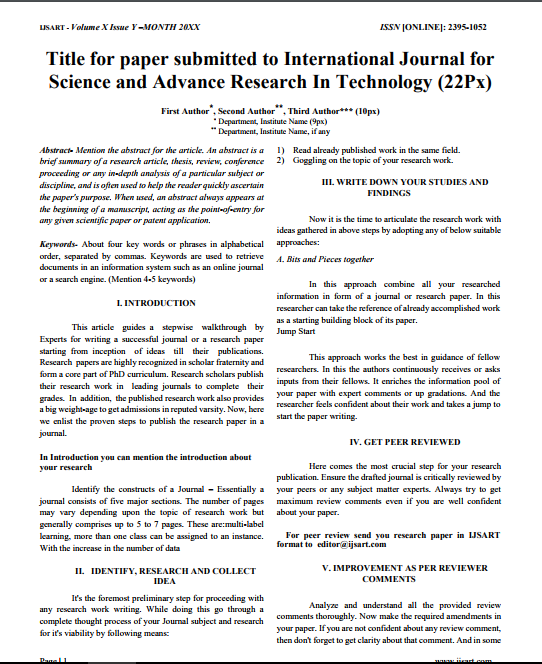
Download Paper Format


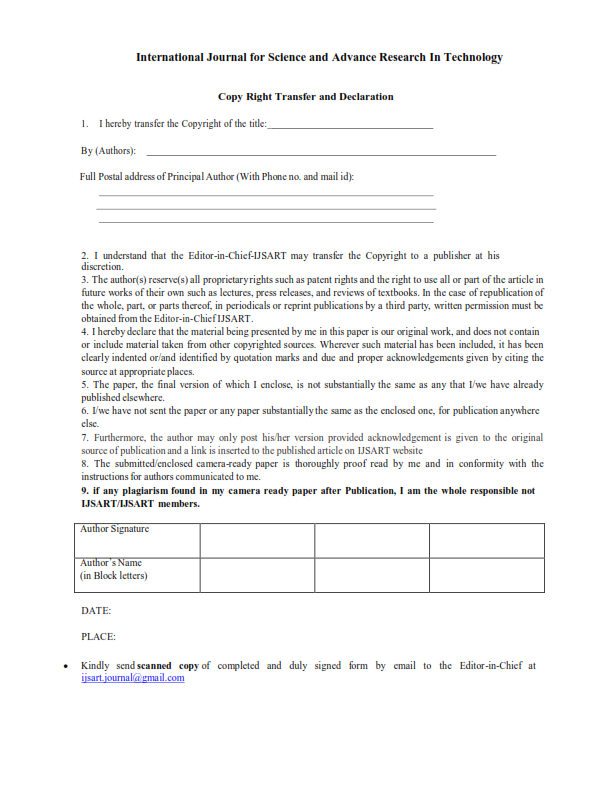
Copyright Form

Volume - 11 Issue - 9


Volume: 11 Issue: 9 September 2025

SECTORAL INDICES DYNAMICS :A TREND ANALYSIS AND REGRESSION APPROACH

Area of research: FINANCE

The Bombay Stock Exchange (BSE), Which Was Started In 1875, Is The Oldest Stock Exchange In Asia. It Is Still Very Important For The Growth Of India’s Economy And Finances. Sector-specific Indices Inside This Dialogue Provide Insightful Information On The Performance Of Several Sectors, Including Banking, Information Technology, Finance, Oil, Healthcare, And Consumer Products, And They Also Affect The Benchmark’s Movement. SENSEX. Ten Major Industry Indices Are Examined In This Research Across The 2015–2025 Period In Order To Find Trend Patterns And Assess Their Impact On The Sensex And Researching How Macroeconomic Events Affect Industry Trends. For Its Interpretation, The Study Makes Use Of Trend Analysis And Regression Analysis With Secondary Data. The Trend Analysis Reveals Cyclical Market Activity, With 2016–2017 And 2020–2021 Showing Strong Growth Phases, 2018–2019 Experiencing Drops, And A More Stable Yet Inconsistent Performance Between 2022 And 2025. During Unsure Times, Some Industries, Like IT And Healthcare, Showed Resilience And Quick Recovery, Whereas Others, Such As Automobile And Construction, Showed More Volatility And A Weaker Impact. The Regression Analysis Results Show That, With Finance, Excluding The Vehicle Industry, All The Chosen Sectorial Indices Strongly Influence The Sensex. While The Most Influential Are Banking And Consumer Products, The Construction And Healthcare Industries Show Somewhat Smaller Effects. Ultimately, The Results Confirm That, In View Of Their Relevance For Reflecting The Larger Economic Scene And For Driving Stock Market Volatility, Sectoral Indices Are Crucial Drivers. Investors Looking For Portfolio Diversification, Government Officials Monitoring Industry Growth, And Portfolio Managers Creating Risk-sensitive Investment Plans In India, A Developing Country.

Author: Mr. Bharaneetharan. K | Dr.G.Sowmya
Read More
Volume: 11 Issue: 9 September 2025

A STUDY ON CONSUMER PERFERENCES ABOUT FOREIGN BRAND VS LOCAL BRAND

Area of research: B. Com Professional Accounting

This Study Explores The Evolving Preferences Of Indian Consumers—particularly Youth Aged 18 To 40—toward Foreign Versus Local Soft Drink Brands, With A Focus On Coca-Cola And Thums Up. The Research Aims To Understand The Factors Influencing Brand Choice And How Cultural Identity, Marketing Strategies, And Ethical Considerations Shape Consumer Behavior. A Descriptive Research Design Was Employed, Using A Structured Questionnaire To Collect Primary Data From 100 Respondents Across Urban And Semi-urban Regions. The Sample Included A Mix Of Students, Professionals, And Homemakers, With A Majority Falling In The 18–25 Age Group.Findings Reveal That Taste Is The Most Dominant Factor, With Coca-Cola Leading In Preference Due To Superior Taste, Advertising Appeal, And Affordability Perception. However, Thums Up Enjoys Strong Cultural Resonance, Sustainability Perception, And Loyalty Linked To National Identity. The Research Highlights That While Coca-Cola Dominates Short-term Choices, Local Brands Can Gain Long-term Loyalty By Aligning With Sustainability, Employment Generation, And Social Responsibility.At The Same Time, Local Brands Are Increasingly Associated With Sustainability, Eco-conscious Packaging, And Employment Generation, Making Them Attractive To Ethically Aware Consumers. Occasion-based Consumption Patterns—such As Soft Drinks Being Preferred During Outings, Parties, And Celebrations—further Indicate That Consumer Choices Are Situational Rather Than Fixed. Peer Influence And Cultural Symbolism Emerge As Hidden Drivers Of Preference, Reflecting How Social Identity And National Pride Contribute To Long-term Brand Loyalty. Thus, Consumer Behaviour In The Soft Drink Industry Is Not Only Guided By Functional Attributes Like Taste And Price But Also By Psychological, Cultural, And Ethical Considerations That Redefine Brand Competitiveness.

Author: M. Thiruselvam | Dr.Vadivel M
Read More
Volume: 11 Issue: 9 September 2025

ESG INTEGRATION IN MUTUAL FUNDS: IMPLICATION FOR FUND RETURNS AND SHARE PRICE OF TOP 3 ESG FUNDS

Area of research: Finance

This Study Compares Three Top ESG Mutual Funds In India: Quantum ESG, Axis ESG Integration Strategy Fund, And SBI ESG Exclusionary Fund. The Top-rated Strategy Fund For The Years 2021 Through 2025. The Study Assesses Growth Potential And Risk-adjusted Performance By Concentrating On Net Asset Value (NAV) Trends, Fund Stability, And Volatility. A Secondary Data Strategy Is Used, With Regression Analysis, Descriptive Statistics, And Year-wise NAV Analysis Utilized To Assess Fund Performance And Its Relationship To The Sensex. Find And Choose The Prices Of Shares For The Business. The Results Show That, Despite An Initial Dip In 2022, All Three Funds Rebounded Well From 2023 Onward, Demonstrating Resilience In ESG-driven Methods. Quantum Had The Most Consistent Growth Among Them, SBI Maintained Stability With Consistent Long-term Returns, And Axis Exhibited Greater Volatility With Varied Results. Regression Analysis Reveals A Robust Positive Association Between The Sensex And ESG Funds, Notably For Axis And Quantum, Proving That ESG-focused Investing Is Highly Relevant To The Market. In General, The Research Finds That ESG Funds Not Only Encourage Sustainable And Ethical Investing Practices But Also Show A Lot Of Promise For Long-term Wealth Accumulation, Which Makes Them A Good Choice For Investors Looking To Grow Their Wealth Over Time. In The Indian Environment, This Makes Them A Viable Rival To Conventional Mutual Funds.

Author: Mr.R.Prem | Assist.Prof. Dr.G.Sowmya
Read More
Volume: 11 Issue: 9 September 2025

AI Based Plant Disease Diagnosis

Area of research: Agriculture

In The Agricultural Sector, Early And Accurate Detection Of Plant Diseases Plays A Vital Rolein Preventing Crop Loss And Ensuring Sustainable Food Production. However, Conventional Manual Diagnosis Methods Are Time-consuming, Error-prone, And Often Depend On Expert Availability, Which Is Limited In Rural Areas. The Plant Disease Diagnosis System Bridges This Gap Through An AI-driven, Image-based Diagnostic Platform That Utilizes Machine Learning (ML) And Deep Learning (DL) Techniques To Identify And Classify Plant Leaf Diseases With High Precision. The System Leverages Convolutional Neural Networks (CNNs) For Image Recognitionand Integrates Them Into A User-friendly Web Application Built Using The MERN (MongoDB, Express.js, React.js, Node.js) Stack. Users Can Upload Plant Leaf Images Directly From The Interface, And The Model Instantly Predicts The Disease Type Along With Possible Remedies. In Addition, Real-time Data Visualization And An Intuitive Dashboard Enable Agricultural Experts To Monitor Disease Trends Across Regions. From A Technological Standpoint, The Platform Ensures Secure Data Handling And Scalable Architecture, Allowing Seamless Deployment For Farmers, Agricultural Institutions, And Research Centers. By Merging AI Capabilities With A Human-centered Design, This Project Empowers Users To Take Proactive Decisions, Minimizing Crop Damage And Maximizing Yield. In Essence, The Plant Disease Diagnosis System Redefines Modern Agriculture By Combining Artificial Intelligence, Predictive Analytics, And Cloud Integration To Provide An Efficient, Accessible, And Sustainable Solution To Crop Disease Management. In The Modern Agricultural Landscape, Plant Health Monitoring And Early Disease Detection Have Become Critical To Ensuring Food Security, Minimizing Economic Losses, And Promoting Sustainable Farming Practices. Traditional Disease Identification Methods Rely Heavily On Expert Knowledge And Manual Inspection, Which Are Often Time-consuming, Expensive, And Inaccessible To Farmers In Remote Or Resource-limited Areas. To Address These Challenges, The Plant Disease Diagnosis System (PDDS) Presents An AI-powered, Image-based Diagnostic Solution That Leverages Machine Learning (ML) And Deep Learning (DL) Techniques To Automatically Detect And Classify Plant Leaf Diseases From Digital Images. Beyond Disease Detection, PDDS Supports Data-driven Agricultural Intelligence By Analyzing Disease Trends And Generating Regional Health Statistics, Which Can Aid Researchers And Government Bodies In Monitoring Outbreaks. By Integrating Ethical AI Principles, Data Privacy Protocols, And Responsive Design, The System Ensures Both Accuracy And Inclusivity For Farmers, Researchers, And Agricultural Stakeholders.

Author: Suguna M | Prakash N | Prasanna Hari V | Rajesh R | Rathish S
Read More
Volume: 11 Issue: 9 September 2025

Scholar Sync: AI-Based Personalized Learning And Academic Management System

Area of research: Education

In Today’s Era Of Rapid Digital Transformation, The Education Sector Is Witnessing A Paradigm Shift From Traditional Classroom Learning To Personalized, Technology-driven Environments. Despite The Emergence Of Numerous E-learning Platforms, Many Fail To Address The Core Challenge Of Adaptability—delivering Content That Aligns With Each Learner’s Unique Pace, Ability, And Cognitive Style. Scholar Sync Bridges This Gap Through An Advanced AI-powered Personalized Learning And Academic Management System Designed To Optimize Student Engagement, Performance, And Retention. The System Leverages Hybrid Recommendation Algorithms Combining Content-based And Collaborative Filtering Techniques To Dynamically Generate Custom Learning Paths. These Paths Are Tailored According To Each Learner’s Strengths, Weaknesses, And Career Goals. A Built-in AI Tutor, Powered By Retrieval-augmented Generation (RAG) Models, Provides Intelligent Guidance And Instant Query Resolution By Sourcing Contextual Information From Course Materials. Furthermore, Adaptive Quizzes And Progress Tracking Modules Continuously Assess Student Growth, Adjusting Content Complexity In Real Time. From A Technological Standpoint, Scholar Sync Integrates A Secure Authentication Framework To Ensure Privacy And Integrity Of Academic Data. Tutors And Administrators Are Equipped With Intuitive Dashboards For Course Management, Performance Analysis, And Automated Feedback Generation. The Inclusion Of Gamification Elements—such As Streaks, Badges, And Leaderboards—transforms Learning Into An Engaging, Reward-based Experience That Encourages Consistent Participation. Beyond Functionality, Scholar Sync Embodies A Human-centered Approach To Educational Design, Emphasizing Motivation, Inclusivity, And Data Ethics. It Caters To Diverse Learners By Supporting Multi-language Interfaces, Accessibility Standards, And Equitable AI Models. By Merging Pedagogical Principles With Machine Intelligence, The Platform Not Only Personalizes Knowledge Delivery But Also Promotes Analytical Thinking And Continuous Learning. In Essence, Scholar Sync Redefines Modern Education By Acting As Both A Digital Mentor And An Academic Ecosystem. It Empowers Students To Take Ownership Of Their Learning Journey While Enabling Teachers To Provide Data-driven, Individualized Support. Through Its Fusion Of Artificial Intelligence, Adaptive Analytics, And Ethical Design, Scholar Sync Paves The Way For A Future Where Learning Is Personalized, Predictive, And Profoundly Human-centric.

Author: Mr.K.Karthikeyan | Mohanraj R | Mounika B | Paneer Selvam V | Pavithira S
Read More
Volume: 11 Issue: 9 September 2025

Crystal Chart – A Cryptocurrency Analysis And Prediction Portal

Area of research: Investment Analytics

Cryptocurrency Has Emerged As One Of The Most Transformative Financial Technologies Of The 21st Century. Its Appeal Lies In Decentralization, Global Adoption, And Potential For Exponential Profits. However, These Same Factors Also Contribute To Extreme Volatility, Misinformation, And Uninformed Investment Practices. Many New Investors Enter The Market Without Adequate Knowledge, Leading To Financial Losses. Crystal Chart Is Designed As A Web-based Platform That Addresses These Challenges By Combining Cryptocurrency Price Analysis, Prediction, Portfolio Tracking, Live News Updates, And Investment Simulation. The System Integrates Real-time Data From The CoinGecko API, Providing Users With Interactive Charts, Trending Coin Insights, Currency Conversion Tools, Related Coin Recommendations, And A News Aggregator For The Latest Crypto Headlines. The Platform Is Built Using React.js (frontend), Django REST Framework (backend APIs), And SQLite Database, Deployed On Render For Global Accessibility. Features Such As A Chatbot Assistant, Currency Converter, And Interactive Simulator Make Crystal Chart An Educational And Analytical Tool Rather Than Just A Market Tracker. By Merging Data Visualization, Live Market News, And Investment Simulation, Crystal Chart Enables Users—especially Beginners—to Make Informed Decisions, Understand Risks, And Reduce The Likelihood Of Blind Investments In The Volatile Cryptocurrency Market.

Author: Ms. Nirmala D | Sanjay M R | Sivaguru M | Sowraj S | Thangamani S
Read More
Volume: 11 Issue: 9 September 2025

TREMORSENSE - Parkinson's Detection

Area of research: CSE

I Parkinson's Disease (PD) Is A Progressive Neurodegenerative Disorder That Primarily Affects Motor Function. Early Diagnosis Is Crucial For Effective Management, Yet Current Methods Can Be Invasive, Costly, And Time-consuming. This Project, Tremorsense, Presents A Non-invasive, Accessible, And Efficient Solution For The Preliminary Detection Of Parkinson's Disease Using Vocal Biomarkers. The System Is Developed As A Web Application Where Users Can Record And Upload A Short Voice Sample. This Sample Is Then Processed To Extract A Range Of Acoustic Features Known To Be Affected By PD, Such As Jitter, Shimmer, And Fundamental Frequency Variations. A Pre-trained Random Forest Machine Learning Model Analyzes These Features To Classify The Sample And Provide A Risk Assessment Score. The Methodology Follows A Standard Data Science Workflow, Including Data Preprocessing, Feature Extraction, And Model Training On A Publicly Available Dataset Of Voice Samples From Healthy Individuals And PD Patients. The Resulting Web Application Provides An Intuitive User Interface, Ensuring Ease Of Use For Individuals Without Technical Expertise. The Core Technologies Used Are Python For The Backend, The Scikit-learn Library For The Machine Learning Model, And HTML/CSS/JavaScript For The Frontend. Black Box Testing Was Conducted To Ensure Functionality And Usability. The Research Results In A Functional Prototype That Can Help Individuals Receive An Early Indication Of Risk, Encouraging Them To Seek Professional Medical Advice Sooner And Demonstrating The Potential Of Machine Learning In Modern Diagnostics.

Author: Ms. Nirmala D | Mr. Naveen Rajan K S | Mr. Pranav Nair | Mr. Shakthi K N | Mr. Saravanan P
Read More
Volume: 11 Issue: 9 September 2025

HERWELLNESS-AI-Based Menstrual And Wellness Tracking System

Area of research: HEALTHCARE

In The Modern Era Of Digital Transformation, Women’s Health Management Has Become A Critical Focus Area In Healthcare Technology. Among Various Aspects Of Women’s Wellness, Menstrual Health Plays A Vital Role In Determining Physical, Emotional, And Reproductive Well- Being. Despite The Availability Of Numerous Mobile Applications, Most Existing Platforms Are Limited To Basic Cycle Tracking And Lack Personalization, Accuracy, And Privacy. To Address These Gaps, HerWellness Has Been Developed As An Advanced AI-powered Menstrual And Wellness Tracking Platform Designed To Empower Women With Intelligent, Data-driven Health Insights. The System Utilizes Artificial Intelligence (AI) And Machine Learning (ML) Algorithms To Predict Menstrual Cycles, Analyze Fertility Windows, And Monitor Overall Wellness Parameters Such As Mood Fluctuations, Sleep Quality, Nutrition Intake, Hydration Levels, And Physical Activity Patterns. HerWellness Ensures A Holistic Approach To Women’s Wellness By Integrating Emotional, Physical, And Nutritional Health Into A Single Interactive System. The Platform Adapts To Individual Users By Learning From Their Daily Logs And Historical Data, Offering Phase-based Personalized Recommendations On Diet, Exercise, And Stress Management. In Addition, The Application Generates Detailed Analytical Reports That Can Be Securely Shared With Healthcare Professionals, Enhancing The Accuracy Of Medical Consultations. Data Privacy And Security Are Given The Highest Priority Through Encryption Mechanisms And User-controlled Data Access, Ensuring That Sensitive Health Information Remains Protected At All Times. By Bridging The Gap Between Technology And Healthcare, HerWellness Encourages Self-awareness, Preventive Care, And Informed Decision-making. This Innovation Serves As A Comprehensive Wellness Companion, Helping Women Understand And Manage Their Bodies More Effectively, Thereby Contributing To A Healthier And More Empowered Society.

Author: Nirmala D. | Thiru Selvam | Vedhiha sri | Vijay Karthik E | Vigashini
Read More
Volume: 11 Issue: 9 September 2025

COMPARATIVE STUDY OF REINFORCED CONCRETE OBLIQUE COLUMNS AND Y-SHAPED COLUMNS FOR HIGH-RISE STRUCTURES BY USING ETABS

Area of research: Civil Engineering

This Study Presents A Comparative Analysis Of High-rise Reinforced Concrete (RC) Structures Incorporating Regular Columns, Oblique Columns, And Y-shaped Columns Using ETABS. With The Growing Demand For Innovative Architectural Forms And Efficient Structural Systems, Unconventional Column Configurations Are Being Explored To Enhance Both Functionality And Aesthetics. The Research Focuses On A G+20 Storied RC Structure Analyzed Under Seismic Loading Conditions As Per IS Codes. Three Structural Models—regular, Y-shaped, And Oblique—were Developed And Evaluated For Critical Performance Parameters, Including Displacement, Storey Drift, Base Shear, Time Period, And Frequency. The Analysis Results Reveal That The Oblique Column System (diagrid) Exhibits Superior Stiffness And Lateral Stability, Demonstrated By Reduced Displacements And Shorter Time Periods. The Y-shaped Column System Provided Balanced Performance, Offering Effective Control Of Storey Drift With Moderate Stiffness, Making It A Practical Alternative For Seismic Resistance. In Contrast, The Regular Column System Exhibited Higher Displacements And Longer Time Periods, Indicating Lower Seismic Efficiency. Overall, The Findings Emphasize That Adopting Oblique And Y-shaped Column Systems Can Significantly Enhance The Seismic Performance, Stability, And Architectural Flexibility Of High-rise Structures, Thereby Offering Promising Alternatives To Conventional Vertical Column Systems In Modern Construction.

Author: Mr. Sandip Kolekar | Prof. R. S. Patil
Read More
Volume: 11 Issue: 9 September 2025

Study Of Student’s Opinion Regarding Implementation Of Artificial Intelligence

Volume: 11 Issue: 9 September 2025

Bio-Optical Characterization And Ecological Plasticity Of The Hooghly-Matla Estuarine Ecoregion - An ISRO-Sponsored Study On The Impact Of Cyclone Remal On The Optically Complex Shallow Waters Of Northwestern Bay Of Bengal

Area of research: Marine And Estuarine Ecology

The Present Study Was Aimed At Assessing The Impact Of Tropical Cyclonic Storms On Mangrove Dominated Vertically Well-mixed Estuaries. The Landfall Of Cyclone Remal Over An Area That Is Predominantly The Sundarban Straddling Hooghly-Matla Estuarine Complex Provided With Such An Opportunity Since It Was Already Under Environmental Monitoring At The Time. A Considerable Array Of Relevant Variables Was Chosen For The Study Encompassing Meteorological, Physicochemical, As Well As Biological Sections Of The Ecosystem. The Observed Values Of Mean Meteorological And Physical Variables Were Not Much Different In The Wake Of The Storm After A Few Weeks Than What Was Recorded Prior To The Storm. Dissolved Nitrates, Phosphates, And Silicates Were Relatively Higher Following The Storm, But Not To The Anticipated Extent. This Had Triggered An Influx Of Stenohaline Phytoplankton Owing To Lingering Shifts In Salinity And PH Following The Storm, Conducive Enough For The Species. This Change Was Not Exclusive Of The Euryhaline Species But Was Sufficient To Modify The Diversity Index Of The Population. It Was Also Reflected On Chl A And TSM Data, Corroborated By Both In Situ And OCM 3 Satellite Generated Readings, In Spite Of The Population Density Being Not Too Dissimilar To Pre Storm State. The Effect Of The Storm Was Observed In CDOM Contents As Well But Due To The Unique Nature Of The Estuary Itself, It Was Already Observed Bordering On Pre Storm Data Even Only A Few Weeks Later.

Author: Dr. Abhishek Mukherjee | Prof. Tarun Kumar De | Dr. Anurag Gupta
Read More
Volume: 11 Issue: 9 September 2025

EMOTION – AWARE GENERATIVE AI: ENHANCING HUMAN AI INTERACTION WITH MOOD ADOPTIVE LARGE LANGUAGE MODEL

Volume: 11 Issue: 9 September 2025

Performance And Emission Characteristics Of A DI Diesel Engine Using Hydrogen And Cotton Seed Methyl Ester Blends

Area of research: Mechanical Engineering

Engine Exhaust Emissions Are A Major Environmental Concern, Motivating The Search For Sustainable And Cleaner Alternatives To Conventional Diesel Fuel. While Vegetable Oil–based Fuels Are Renewable And Eco-friendly, Their Direct Use In Diesel Engines Often Results In Higher Smoke Emissions And Lower Thermal Efficiency. One Promising Strategy To Overcome These Drawbacks Is The Induction Of A Clean Gaseous Fuel, Such As Hydrogen, Into The Intake Manifold To Enhance The Combustion Process.In This Study, The Performance, Combustion, And Emission Characteristics Of A Single-cylinder, Four-stroke, Air-cooled, Variable Compression Ratio (VCR) Diesel Engine Were Evaluated Using A Dual-fuel Approach. Cotton Seed Methyl Ester (CSME B20) Was Used As The Primary Fuel, With Hydrogen Inducted At Flow Rates Of 4 LPM And 8 LPM Through The Intake Manifold. The Results Were Compared With Those From Conventional Diesel Operation.The Brake Thermal Efficiency (BTE) Improved From 33.35% For Diesel To 33.65% And 35.12% With 4 LPM And 8 LPM Hydrogen Enrichment, Respectively, Under Full-load Conditions. The High Flame Propagation Speed Of Hydrogen Enhanced Air–fuel Mixing And Combustion, Leading To Improved Thermal Efficiency And Reduced Brake Specific Fuel Consumption (BSFC), Which Reached 0.24 Kg/kW•hr At 8 LPM. However, A Marginal Rise In NOₓ Emissions (up To 2120 Ppm) Was Observed Due To Elevated Combustion Temperatures. Conversely, Hydrogen Enrichment Significantly Lowered Smoke Opacity (from 66.9% At 4 LPM To 61.7% At 8 LPM), Carbon Monoxide (0.019% At Full Load), And Unburnt Hydrocarbons. Overall, CSME B20 With 8 LPM Hydrogen Exhibited The Best Performance, Indicating Its Potential As A Cleaner And Efficient Alternative Fuel For Compression Ignition Engines.

Author: Sheshadri T | Yuthra Praveen Kumar P | Siva Surya P | Tamil Selvan V | Dr. Lavanya D
Read More
Volume: 11 Issue: 9 September 2025

Designing Hyperlocal Dark Store Locations: A Spatial Analysis Of Tier-1 And Tier-2 Indian Cities

Area of research: Management

The Indian Quick Commerce (Hyperlocal Delivery) Market Is Undergoing Explosive Growth, Reshaping The Nation's Urban Retail Landscape. This Transformation Is Architected Around The Hyperlocal Dark Store, A Micro-fulfillment Center Pivotal For Sub-30-minute Deliveries. As Competition Intensifies, The Strategic Placement Of These Assets Has Become A Critical Determinant Of Operational Efficiency And Profitability. This Paper Presents A Spatial Analysis Framework For Designing Dark Store Networks, Focusing On The Divergent Characteristics Of India's Tier-1 And Tier-2 Urban Centers. The Analysis Reveals A Stark Dichotomy: Tier-1 Cities (e.g., Chennai, Mumbai, Bengaluru) Are Dense, High-income Markets Where Success Demands A Strategy Of Surgical Precision, Using Granular Geospatial Data To Mitigate Logistical Bottlenecks Like Traffic Congestion. Conversely, Tier-2 Cities (e.g., Jaipur, Lucknow) Represent The Next Growth Frontier, Characterized By A Price-sensitive Consumer Base And Lower Operational Costs. Here, The Strategic Imperative Shifts To Demand Forecasting And Managing The Unit Economics Of Lower Order Density. We Conclude That A Sophisticated, Data-driven Spatial Strategy, Integrating Multiple Geospatial Data Layers With AI-powered Predictive Models, Is The Cornerstone Of A Successful Hyperlocal Delivery Network. This Framework Enables The Identification Of High-potential Demand Clusters And The Design Of Optimized, Adaptable Networks Essential For Achieving Sustainable Unit Economics In The Complex Indian Market.

Author: Ms. Meena Loshini S | Dr. KANNADASAN N
Read More
Volume: 11 Issue: 9 September 2025

Deep Learning – Based Intelligent System For Printed Circuit Board Defect Identification

Area of research: Electronics Engineering

In The Fast-paced Electronics Manufacturing Industry, Ensuring Printed Circuit Board (PCB) Quality Is Vital For Producing Reliable, High-performance Devices. Traditional Methods Like Manual Inspection And Rule-based Vision Struggle With Small Or Complex Defects, Leading To Inefficiencies. This Work Presents A Deep Learning-based Approach Using YOLOv8 For Automated PCB Defect Detection And Classification. The System Detects Defects Such As Missing Holes, Mouse Bites, Open Circuits, Shorts, Spurious Copper, And Spurs With Real-time Performance And Achieves A Mean Average Precision (mAP) Above 90%. Integrated With A Flask Web Application, It Allows Instant PCB Image Analysis, Offering A Scalable And Efficient Solution For Quality Control.The Use Of YOLOv8 Ensures Fast Inference Speed, Making The System Suitable For Real-time Deployment In Production Lines. The Model Is Trained On A Diverse Dataset Of PCB Images, Improving Its Robustness Against Variations In Defect Type, Size, And Position. By Automating The Defect Detection Process, The System Reduces Dependency On Manual Labor And Minimizes Inspection Errors. It Also Provides Manufacturers With A Cost-effective Solution That Scales With Industry Demands. Future Improvements Will Target Multi-layer PCB Inspection, Advanced Imaging (X-ray/IR), Predictive Maintenance, And Edge-based Inference, Making It Adaptable To Next-generation Electronics Manufacturing.

Author: Assist.Prof.K.Poonkodi | Assist.Prof. Dr.M.Vinoth
Read More
Volume: 11 Issue: 9 September 2025

Solar-Powered Adjustable Boom Sprayers For Precision And Consistent Crop Coverage

Area of research: Mechanical Engineering

The Main Purpose Of Manufacturing This Product Is To Enable Farmers And Gardeners To Form The Process Of Spraying Pesticides And Herbicides To Their Gardens To Become More Practical. It Helps The Gardeners Work Because They Must Not Carry The Tank On Their Back That May Cause Their Back Strain And Pain . This Product Only Must Be Pushed Forward Similar To How The Trolley Functions So It'll Be Mechanically Pumped By The Set Of Power Battery To The Motor, Forward The Pressure Through Pump And Pump To Nozzle . Energy To Pump The Tank Pump Is Often Reduced. Next, It Also Comes With A Pair Of Nozzles On The Back . This Product Can Help Gardeners In Terms Of Comfort During Spraying, Reducing Energy To Pump Tanks, And Effectively Utilizing Spraying Time. Through Mechanization, Automation, And Intensification, There Has Been A Substantial Increase In Agricultural Production Over Time. The Efficiency, Reliability, And Precision Of Agricultural Equipment Have Improved Significantly With Automation, Leading To A Reduced Dependency On Human Intervention. The Surge In The Adoption Of Agricultural Machine Research And Technologies Is A Response To The Growing Recognition That Machines Offer An Effective Solution To Address The Shortage Of Skilled Workers In Crop Production. The Increasing Global Demand For Food, Coupled With The Need For Sustainable Farming Practices, Has Led To Significant Innovations In Agricultural Technologies. Among These, Advanced Agricultural Spray Machines Play A Critical Role In Modern Crop Management By Enhancing The Precision, Efficiency, And Environmental Safety Of Agrochemical Application. Practical Benefits Of Advanced Spray Systems In Agriculture, Highlighting Their Role In Promoting Precision Farming And Sustainable Agricultural Development.

Author: Dnyaneshwari V. Gophane | Anand D. Kamble | Suraj S. Gele | Mahesh U. Gandhale | Vishwajit V. Kambale | Pradnya P. Navale
Read More
Volume: 11 Issue: 9 September 2025

Design And Development Of An Automated Bottle Crushing Machine

Area of research: Engineering

The Increasing Consumption Of Bottled Products Has Led To A Significant Rise In Plastic And Glass Waste, Creating Major Challenges For Waste Management And Environmental Sustainability. Conventional Disposal Methods Are Inefficient, Space-consuming, And Labour-intensive, Making Recycling Less Effective. This Project Presents The Design And Development Of An Automated Bottle Crushing Machine Aimed At Reducing Bottle Volume, Enabling Easy Handling, And Promoting Effective Recycling. The Proposed Machine Employs A Combination Of Mechanical Crushing Mechanisms And Electrical Motor Are Used By The Crushing The Bottles Into Small Piece Or Less Volume Bottles. Key Components Include A Yoke Mechanism,press And Connecting Rod, Motor-driven Crushing Unit, A Hopper Is Provided And A Collection System For Crushed Output. Automation Ensures Improved Safety, Reduced Manual Effort, And Consistent Operation. The Developed System Is Compact, Cost-effective, And Energy-efficient, Making It Suitable For Use In Public Places, Recycling Plants, And Industries Where Large Quantities Of Bottles Are Disposed Of Daily. By Significantly Reducing The Size Of Waste Bottles, The Machine Contributes To Efficient Storage, Transportation, And Recycling Processes, Thereby Supporting Environmental Conservation And Sustainable Waste Management Practices

Author: Dnyaneshwari V. Gophane | Anand D. Kamble | Suraj S. Gele | Mahesh U. Gandhale | Vishwajit V. Kambale | Pradnya P. Navale
Read More
Volume: 11 Issue: 9 September 2025

Financial Inclusion And Sustainable Entrepreneurship: Catalysing Women’s Empowered Livelihoods In India

Area of research: Commerce – Bank Management

This Study Investigates The Role Of Digital Literacy As A Mediator Between Enabling Factors—access To Finance, Training And Skill Development, Institutional Support, And Technology Adoption—and Women’s Empowered Livelihoods. A Sample Of 416 Respondents Was Analyzed Using Descriptive Statistics, Reliability Tests, Exploratory And Confirmatory Factor Analyses, And Structural Equation Modeling (SEM) With AMOS. Results Indicated That All Independent Variables Significantly Influenced Digital Literacy, Which In Turn Strongly Predicted Women’s Livelihood Empowerment. Cronbach’s Alpha Values Exceeded 0.80 Across Constructs, Confirming Internal Consistency, While EFA And CFA Validated The Measurement Model With Acceptable Fit Indices. SEM Results Further Established Digital Literacy As A Central Mechanism Translating External Enablers Into Empowerment Outcomes. Moreover, Policy And Social Capital Were Found To Moderate The Relationship Between Digital Literacy And Women’s Livelihoods, Suggesting That Supportive Environments Amplify The Benefits Of Digital Skills. The Findings Align With Capability And Social Capital Theories, Underscoring That Empowerment Is Shaped Not Only By Individual Competencies But Also By Institutional And Social Contexts. This Study Contributes To The Literature On Gender And Digital Inclusion By Providing Empirical Evidence From A Developing Economy Context. The Implications Emphasize The Need For Integrated Interventions That Combine Financial Inclusion, Digital Training, Institutional Support, And Favorable Policies To Promote Sustainable Women’s Empowerment In The Digital Era.

Author: Arvindh Rajasekar | Pavithra Sivagnanam
Read More
Volume: 11 Issue: 9 September 2025

Formulation, Optimization And Evaluation Of Methotrexate Loaded Nanoemulgel For Enhancing Transdermal Delivery In Rheumatoid Arthritis

Area of research: Pharmacy

The Preparation And Assessment Of A Topical Delivery System For Methotrexate-loaded Nanoemulgel For The Treatment Of Rheumatoid Arthritis Was The Goal Of This Investigation. METHODS: Using Peanut Oil, Tween 20 As The Surfactant, And PEG 400 As A Co-surfactant, The Pseudo Ternary Phase Diagram Was Produced Based On The Nanoemulsion Composition. The Methotrexate-loaded Nanoemulsion Was Made Using The Spontaneous Emulsification Technique. Badam Gum Was Used As A Gel Matrix In The Resulting Nanoemulsion To Create Nanoemulgel. The Methotrexate-loaded Nanoemulgel PH, Particle Size, Physical Appearance, Viscosity, Spreadability, TEM, Drug Content, Diffusion Studies, Release Kinetics, And Stability Investigations Were All Evaluated And Described. Nanoemulgel Was Clear And Had A Particle Size Of 19. RESULTS: A Nanoemulgel Comprising 8.6% Peanut Oil, 34.4% Tween 20 And PEG 400 As Smix (surfactant And Co-surfactant Mixture), 43% Water, And 12.5% W/w Badam Gum Was Shown To Be The Ideal Formulation. The Generated Nanoemulgel Had A 195.1 Nm Particle Size And A Zeta Potential Of -0.278 MV. Its Nature Was Transparent. The Drug Content And Release Of The Improved Formulation Were Determined To Be 98.11±0.34% And 95.11±0.02%, Respectively. The Optimal PH, Viscosity, And Spreadability Levels Were Found. The Results Of The Stability Analysis Showed That The Generated Nanoemulgel Remained Stable At Temperatures Between -25 And +45°C. In Conclusion, Methotrexate-loaded Nanoemulgel Has Been Successfully Created For Topical Drug Delivery In Rheumatoid Arthritis Treatment.

Author: N. Anandhan | V. Arunachalam | Dr. G. Mariyappan | Dr. J. Karthi
Read More