Impact Factor
Call For Paper
Volume 12 Issue 09
September 2026
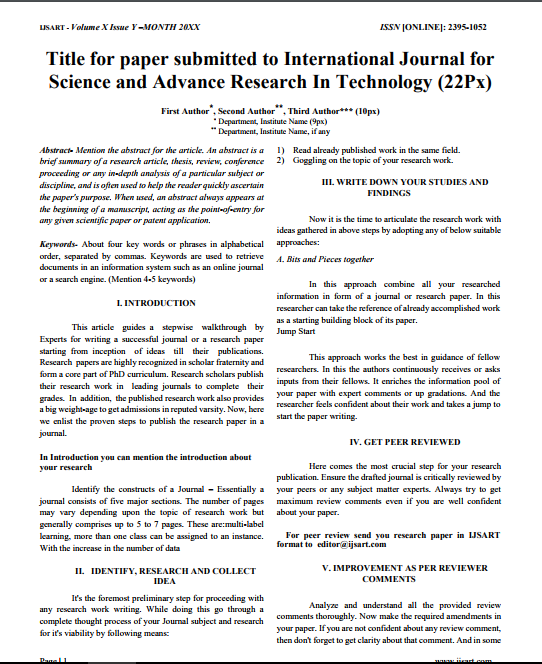
Download Paper Format
Copyright Form

Author(s)
Abstract
The Indian Quick Commerce (Hyperlocal Delivery) Market Is Undergoing Explosive Growth, Reshaping The Nation's Urban Retail Landscape. This Transformation Is Architected Around The Hyperlocal Dark Store, A Micro-fulfillment Center Pivotal For Sub-30-minute Deliveries. As Competition Intensifies, The Strategic Placement Of These Assets Has Become A Critical Determinant Of Operational Efficiency And Profitability. This Paper Presents A Spatial Analysis Framework For Designing Dark Store Networks, Focusing On The Divergent Characteristics Of India's Tier-1 And Tier-2 Urban Centers. The Analysis Reveals A Stark Dichotomy: Tier-1 Cities (e.g., Chennai, Mumbai, Bengaluru) Are Dense, High-income Markets Where Success Demands A Strategy Of Surgical Precision, Using Granular Geospatial Data To Mitigate Logistical Bottlenecks Like Traffic Congestion. Conversely, Tier-2 Cities (e.g., Jaipur, Lucknow) Represent The Next Growth Frontier, Characterized By A Price-sensitive Consumer Base And Lower Operational Costs. Here, The Strategic Imperative Shifts To Demand Forecasting And Managing The Unit Economics Of Lower Order Density. We Conclude That A Sophisticated, Data-driven Spatial Strategy, Integrating Multiple Geospatial Data Layers With AI-powered Predictive Models, Is The Cornerstone Of A Successful Hyperlocal Delivery Network. This Framework Enables The Identification Of High-potential Demand Clusters And The Design Of Optimized, Adaptable Networks Essential For Achieving Sustainable Unit Economics In The Complex Indian Market.
Keywords
Paper ID
IJSARTV11I9104013
Publication Date
September 13, 2025
Research Area
Management