Impact Factor
Call For Paper
Volume 12 Issue 07
July 2026
Download Paper Format
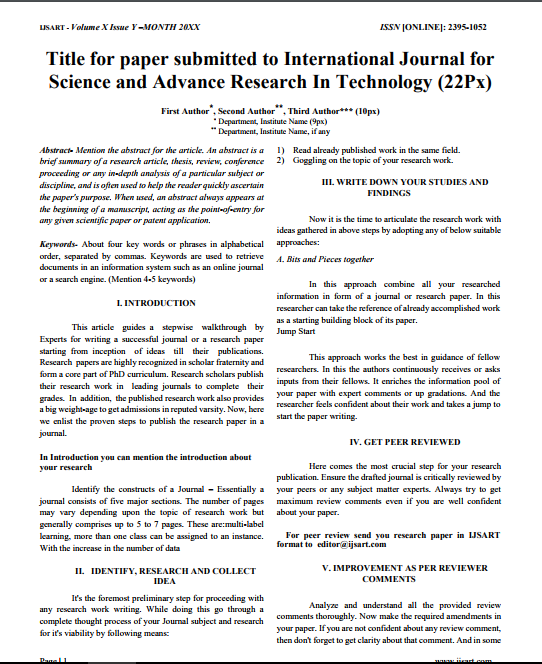
Copyright Form
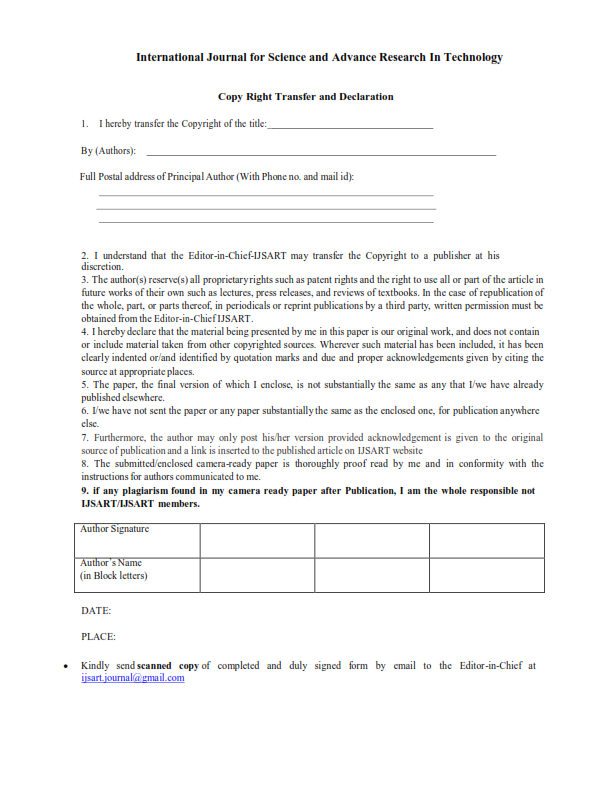

Author(s)
Abstract
Large Language Models (LLMs) Have Demonstrated Outstanding Performance In Natural Language Generation, Yet They Often Struggle To Adjust Their Behavior According To Users’ Emotional States. This Lack Of Emotional Awareness Can Result In Responses That Appear Flat, Inappropriate, Or Lacking Empathy, Ultimately Diminishing Trust And User Satisfaction In Human–AI Communication. To Overcome This Limitation, We Introduce An Emotion-aware Generative AI Framework That Seamlessly Integrates Emotion Recognition With Mood-adaptive Text Generation. The Framework Employs A Transformer-based Classifier To Detect Emotions Such As Joy, Sadness, Anger, And Anxiety, And Translates These States Into Stylistic Controls That Shape The LLM’s Responses. By Conditioning Generation On Detected Moods, The Model Is Able To Produce Empathetic, Contextually Appropriate, And User-focused Outputs. Experiments Using Standard Emotion Datasets And User Evaluations Demonstrate Notable Improvements In Perceived Empathy, Engagement, And Satisfaction When Compared To Conventional LLMs. This Study Underscores The Importance Of Embedding Emotional Intelligence In Generative AI And Highlights Its Potential To Enable More Natural, Trustworthy, And Affective Applications Across Healthcare, Education, Customer Service, And Personal Assistance.
Keywords
Paper ID
IJSARTV11I9104029
Publication Date
September 19, 2025
Research Area
Artificial Intelligence