High Impact Factor : 7.883
Submit your paper here

Impact Factor

7.883


Call For Paper

Volume: 12 Issue 03 March 2026


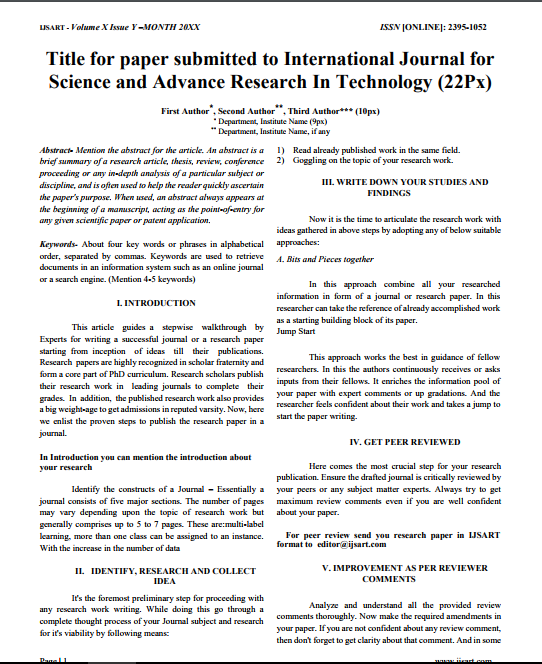
Download Paper Format


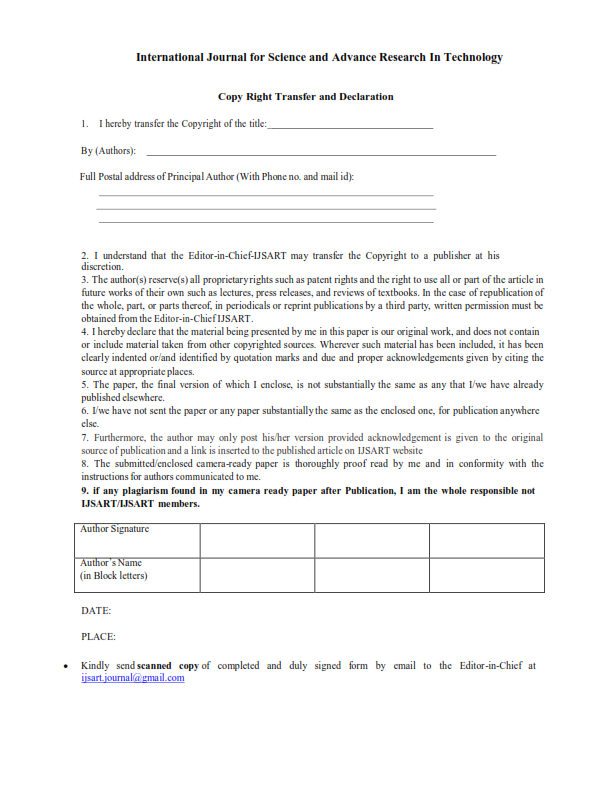
Copyright Form

Volume - 11 Issue - 6


Volume: 11 Issue: 6 June 2025

CONFINED SPACE TROLLEY WITH DIGITAL SAFETY NOTIFICATION SYSTEM

Area of research: Mechanical Engineering

Radio Frequency Identification (RFID) Technology Already Plays A Major Role In Many Areas. One Of The Applications Is For Object Detection. RFID Is Used For Effective Object’s Identification. A Good Example Is Object Detection At Storage Management System. It Is Applicable To The Environment Where People Easily Forget The Places Of The Stored Object. In The Other Hand, The Automatic Object Detection Will Be Useful For People Like Store Maintenance Person And Consumer Such That They Need Information Before Pick Up And Store Object While Doing Their Daily Life Activities. The Proposed Confined Space Trolley With A Digital Safety Notification System, Leveraging RFID Technology, Focuses On Its Innovative Features Related To Tool Monitoring, Tool Tracking, And Emergency Response Capabilities. The System Employs RFID Tags To Monitor Tools, Providing Real-time Data On Their Presence Or Absence On The Trolley. Additionally, RFID Facilitates Precise Tracking Of The Tools' Entry And Exit Times, Ensuring A Comprehensive Record Of Their Usage. The Integration Of An Emergency Button Further Enhances Safety By Allowing Immediate Alerts To Be Triggered In Critical Situations. This Abstract Highlights The System's Capacity To Streamline Tool Management, Minimize The Risk Of Missing Tools, And Precisely Record Tool-related Activities. Overall, The Proposed Solution Not Only Prioritizes Personnel Safety Within Confined Spaces But Also Introduces Efficiency In Tool Monitoring And Emergency Responsiveness, Making It A Holistic And Valuable Addition To Confined Space Operations.

Author: G.Narayanasamy | R.Boopathi
Read More
Volume: 11 Issue: 6 June 2025

Angoth Lakshmn

Area of research: CSE

Every Country Has Seen An Increase In Motorcycle Accidents Over The Years Due To Social And Economic Differences As Well As Regional Variations In Transportation Circumstances. One Common Mode Of Transportation For Those In The Middle Class Is A Motorbike. One Of The Leading Causes Of Road Accidents That Result In Fatalities Nowadays. Among Them, Motorcycling Accidents Are Common And Can Cause Severe Injuries. A Motorcycle Rider's Helmet Is One Of The Most Important Components Of Safety. But Many People Choose To Ignore The Recommendation To Wear A Helmet. In Current Situation, We Come Across Various Problems In Traffic Regulations In India Which Can Be Solved With Different Ideas. Riding Motorcycle/mopeds Without Wearing Helmet Is A Traffic Violation Which Has Resulted In Increase In Number Of Accidents And Deaths In India. Existing System Monitors The Traffic Violations Primarily Through CCTV Recordings, Where The Traffic Police Have To Look Into The Frame Where The Traffic Violation Is Happening, Zoom Into The License Plate In Case Rider Is Not Wearing Helmet. But This Requires Lot Of Manpower And Time As The Traffic Violations Frequently And The Number Of People Using Motorcycles Is Increasing Day-by-day. What If There Is A System, Which Would Automatically Look For Traffic Violation Of Not Wearing Helmet While Riding Motorcycle/moped And If So, Would Automatically Extract The Vehicle’s License Plate Number. Recent Research Have Successfully Done This Work Based On CNN, R-CNN, LBP, HoG, HaaR Features, Etc. But These Works Are Limited With Respect To Efficiency, Accuracy Or The Speed With Which Object Detection And Classification Is Done. In This Research Work, A Non-Helmet Rider Detection System Is Built Which Attempts To Satisfy The Automation Of Detecting The Traffic Violation Of Not Wearing Helmet And Extracting The Vehicles' License Plate Number. The Main Principle Involved Is Object Detection Using Deep Learning At Three Levels. The Objects Detected Are Person, Motorcycle/moped At First Level Using YOLOv2, Helmet At Second Level Using YOLOv3, License Plate At The Last Level UsingYOLOv2. Then The License Plate Registration Number Is Extracted Using OCR (Optical Character Recognition). All These Techniques Are Subjected To Predefined Conditions And Constraints, Especially The License Plate Number Extraction Part. Since, This Work Takes Video As Its Input, The Speed Of Execution Is Crucial. We Have Used Above Said Methodologies To Build A Holistic System For Both Helmet Detection And License Plate Number.

Author: ANGOTH LAKSHMAN | M. Madhu Vinay | P. Kalyani | V. Deepthi | M.Upendra
Read More
Volume: 11 Issue: 6 June 2025

DDOS ATTACKS RECOGNITION AND FORECASTING USING MACHINE LEARNING ALGORITHMS

Area of research: CSE

Distributed Network Disruptions, Often Termed Distributed Denial Of Service (DDoS) Attacks, Exploit Vulnerabilities In System Infrastructures, Such As Web Servers Of Legitimate Organizations. Traditional Research Has Predominantly Utilized Outdated Datasets Like The KDD Dataset, Which May No Longer Represent The Evolving Nature Of Modern Threats. To Address This Gap, The Present Study Employs A Contemporary Dataset And Machine Learning Techniques To Identify And Forecast Various Forms Of DDoS Attacks.This Research Implements A Comprehensive Detection Framework Using Two Advanced Classification Algorithms: Random Forest And XGBoost. The UNSW-NB15 Dataset, Obtained From A GitHub Repository, Served As The Foundation For Training And Testing, While Python Was Used For Simulation And Model Deployment.Performance Evaluation Was Conducted Using A Confusion Matrix. In The First Experiment, The Random Forest Model Achieved A Precision And Recall Of 89%, With An Overall Accuracy Of 89%, Indicating Robust Performance. In The Second Test, The XGBoost Classifier Slightly Outperformed, Attaining Approximately 90% In Both Precision And Recall, With An Accuracy Of 90%.Compared To Previous Studies, Which Reported Lower Accuracy Rates Of 85% And 79%, The Proposed Methodology Demonstrates A Significant Enhancement In Identifying And Classifying DDoS Attacks, Offering A More Effective And Modern Solution To A Growing Cybersecurity Concern.

Author: Vooradi Sandya | B. Kinshu | D.Vithin Sai | M. Nanda Varma
Read More
Volume: 11 Issue: 6 June 2025

AI In HealthCare: Focus On Medical Imaging

Volume: 11 Issue: 6 June 2025

Design Of Flexible Pavement By IRC METHOD

Area of research: Transportation Engineering

As Per IRC Recommendation, California Bearing Ratio (CBR) Value Of Subgrade Is Used Of Flexible Pavements. California Bearing Ratio(CBR)value Is An Important Soil Parameter For Design Of Flexible Pavements And Runway Of Air Fields. It Can Also Be Used For Determination Of Sub Grade Reaction Of Soil By Using Correlation. It Is One Of The Most Important Engineering Properties Of Soil For Design Of Sub Grade Of Roads. CBR Value Of Soil May Depends On Many Factors Like Maximum Dry Density (MDD), Optimum Moisture Content (OMC), Liquid Limit (LL), Plastic Limit (PL), Plasticity Index (PI), Type Of Soil, Permeability Of Soil Etc. Besides, Soaked Or Unsoaked Condition Of Soil Also Affects The Value. These Tests Can Easily Be Performed In The Laboratory. The Estimation Of The CBR Could Be Done On The Basis Of These Tests Which Are Quick To Perform, Less Time Consuming And Cheap, Then It Will Be Easy To Get The Information About The Strength Of Sub Grade Over The Length Of Roads, By Considering This Aspect, A Number Of Investigators In The Past Made Their Investigation In This Field And Designed Different Pavements By Determining The CBR Value Of The Basis Of Results Of Low Cost, Less Time Consuming And Easy To Perform Tests. In This Study, Attempts Have Been Made To Seek The Values Of CBR Of Different Soil Samples And Correlate Their CBR Values For The Design Purpose Of Flexible Pavement As Per Guidelines Of IRC: 37-2012.

Author: V. Venkatesh | Vadapalli Hemanth Kumar
Read More
Volume: 11 Issue: 6 June 2025

Enhancing CCTV For Crowd Management, Crime Prevention And Work Supervision With Artificial Intelligence And Machine Learning

Area of research: Computer Science And Engineering

The Study Aims To Harness The Capabilities Of Existing CCTV Networks To Improve The Crowd Management, Enhance The Crime Prevention, Andoptimize The Workplace Monitoring Using Artificial Intelligence (AI) And Machine Learning (ML) Techniques. By Integrating Intelligent Analytics With Current Surveillance Systems, We Seek To Create A Comprehensive Solution That Will Address An Urban Safety Challenges And Operational Inefficiencies Without The Need For Substantial New Infrastructure Investments. In The Realm Of Crowd Management, The Study Will Employ Real-time Video Analytics To Monitor Public Spaces During Events, Ensuring Effective Crowd Flow And Reducing The Risk Of Overcrowding. Machine Learning Algorithms Will Analyse Foot Traffic Patterns And Predict Potential Congestion Points, Enabling Authorities To Intervene Proactively And Manage Crowds More Effectively. This Not Only Enhances Public Safety But Also Improves The Overall Experience For Attendees At Large Gatherings. For Crime Prevention, The Study Will Focus On Developing AI-driven Surveillance Capabilities That Can Detect Suspicious Behaviours And Identify Potential Threats. Utilizing Advanced Techniques Such As Facial Recognition And Anomaly Detection, The System Will Learn From Historical Crime Data To Pinpoint High-risk Areas And Predict Criminal Activities. By Providing Law Enforcement With Actionable Insights, The Studyaims To Facilitate Timely Responses And Foster A Safer Community. In The Context Of Workplace Monitoring, The Integration Of AI With CCTV Footage Will Allow Organizations To Gain Valuable Insights Into Employee Productivity And Compliance With Safety Protocols. By Analysing Workplace Dynamics And Movement Patterns, Businesses Can Identify Operational Bottlenecks, Enhance Resource Allocation, And Ensure Adherence To Safety Measures. This Data-driven Approach Not Only Promotes A Culture Of Accountability But Also Drives Operational Efficiency. Overall, This Studyenvisions A Smarter, Safer Urban Environment And More Efficient Workplace Dynamics Through The Strategic Use Of Existing CCTV Networks Powered By AI And ML. The Anticipated Outcomes Include Improved Public Safety, Reduced Crime Rates, And Enhanced Organizational Productivity, Ultimately Benefiting Communities And Businesses Alike.

Author: Mr. B. Ramji | Makam Sahithi | Puchakayala Bharath | Lagishetti Shiva Krishna
Read More
Volume: 11 Issue: 6 June 2025

Investigate On Bituminous Mixers With Different Filler Materals

Volume: 11 Issue: 6 June 2025

PHYTOCHEMICAL SCREENING, PHYSICAL PARAMETERS AND NUTRITIONAL COMPOSITION OF Parpalum Scrobiculation ENRICHED CHOCOLATE

Area of research: LIFE SCIENCE

Millets Are A Group Of Small, Nutritious Grains That Have Been A Staple Food For Thousands Of Years, Particularly In Asia And Africa.Kodo Millet (Paspalum Scrobiculatum) Is An Incredibly Nutritious Grain That Offers A Wide Range Of Health Benefits. Rich In Essential Nutrients, It Is An Excellent Source Of Complex Carbohydrates, Dietary Fibre, And High-quality Protein .They Belong To The Grass Family And Are Grown In Various Forms, Including Pearl Millet, Finger Millet, And Foxtail Millet. The Growing Interest In Functional Foods Has Fueled The Demand For Chocolate That Incorporates Healthy Ingredients Like Millet. Chocolate And Millet, Two Foods With Rich Histories And Unique Benefits, Are Now Being Combined To Create Innovative And Healthy Snack Options. When Combined With Chocolate, A Universally Loved Treat, Millet Offers A Unique Opportunity To Make A More Health-conscious And Sustainable Chocolate Product . Combining These Two Ingredients Creates A Product That Not Only Satisfies Sweet Cravings But Also Offers Functional Health Benefits. In Recent Chocolate-millet Bars And Snacks Are Becoming Popular For Their Ability To Provide A Steady Energy Release And Also Offers Environmental Benefits.Hence, The Current Research Aimed In The Formulation And Standardization Of Kodo Millet Chocolate With The Numerous Health Benefits Of Millet, Creating A Snack That Not Only Satisfies The Taste Buds But Also Contributes To A Healthier, More Sustainable Lifestyle.

Author: Mrs.D.Thenmozhi | A.Swetha
Read More
Volume: 11 Issue: 6 June 2025

SYNTHESIS OF CISSUS QUANDRANGULARIS FOR PACKED BED COLUMN AND ITS APPLICTION IN RO CHAMBER

Area of research: Environmental Engineering

Recent RO Water Purification Is Common Method Used For Drinking Water. This Method Is Very Simple And Gives Us Clean And Pure Water By Blocking All Contaminants. Then The RO Systems Are Very Compact And It Require Very Little Space And The Maintenance Of The System Is Very Simple. Some Of The Advantages Of RO Systems Are It Does Not Any Harmful Or Costly Chemicals For The Treatment, Energy Requirement For This Process Is Very Low Compare With The Other Water Treatment Methods And This System Is Fully Automated No Need For Manual Operations. But It Removes All The Essential Minerals Content Form The Water. Major Source For Minerals Are Drinking Water If We Drink The RO Water For Continuous Period Of Time Leads To The Deficiency Of The Minerals That’s Essential For Our Bones. To Overcome This Problem Cissus Quadrangularis (veld Grape) Is Used In The RO Membrane To Get The Mineral Ions That Present In It. Which Is Used To Heal The Bones As Well As Strengthen Our Bones. In This Report, Test Reports Shows That The Increase In Mineral Content As Well As Medicinal Properties Like Flavonoids While The RO Water Is Treated With Our Cissus Quadrangularis Membrane. Amount Of Calcium Is Increased From 22mg/l To 151.3mg/l Sodium Content Is Increased To 2.12 Mg/l And The Total Flavonoids Content Is 10mg/ml. From This Study Cissus Quadrangularis Is Used As A Low Cost Membrane And Used As A Good Source For Minerals And Medicinal Properties. Based On The Study, Cissus Quadrangularis Can Be Considered As Low Cost, Locally And Freely Abundantly Available, Eco-friendly For Drinking Water Purposes.

Author: K .Boopathi | S. Sakthivel | V. Indhumathi
Read More
Volume: 11 Issue: 6 June 2025

FIRE IMPACT ASSESSMENT OF FLAMMABLE FUEL STORAGE IN HEAT TREATMENT PLANT USING FIRE DYNAMIC SIMULATOR

Area of research: SAFETY ENGINEERING

Today We Use Highly Durable Materials In Our Day To Day Life. Some Material Used For Manufacturing Of Mechanical Components And Infrastructure Projects Require High Strength And Durability. To Make A Component Highly Durable Heat Treatment Is Done To Fulfil The Requirement Of Particular Needs Of A Component. The Heat Treatment Process Increases The Strength Of The Material By Modifying Their Metallurgical Properties. In Heat Treatment Facility, The Fire Hazards Are Comparatively High And Even A Single Fire Accident May Be Catastrophic Due To The Congested And Complex Layout Of The Facility. This Study Proposes A Novel Methodology For Modelling The Impact Of A Fire Event In A Heat Treatment Facility. Hazard Identification And Accident Credibility Assessment Have Been Used To Discover The Most Credible Fire Accident Scenarios. These Scenarios Have Been Simulated Using Computational Fluid Dynamics (CFD) Code, Fire Dynamics Simulator (FDS). The Results Have Then Been Compared To Identify The Most Severe Impact Of The Fire On Personnel And Assets Using Thermal Radiation And Risk Levels. It Has Been Found That The Fire Event In Scenarios Has A High Potential To Cause Damage To Adjacent Assets. From This Comparison, It Is Evident That The Scenario In The Fuel Storage And Transmission Pipe Lines In The Combustion Process Have The Highest Risk Of Fire To Both Personnel And Assets. The Proposed Methodology May Be Adapted Further For Safety Measure Design To Mitigate Or Avoid The Impacts Of A Fire Event In Any Complex Processing Facility.

Author: S. Varunbhirabhu
Read More
Volume: 11 Issue: 6 June 2025

KNOWLEDGE OF GESTATIONAL DIABETES MELLITUS AMONG PREGNANT MOTHERS IN A URBAN HOSPITAL - A CROSS -SECTIONAL STUDY

Area of research: Nursing

Gestational Diabetes Mellitus (GDM), Defined As Glucose Intolerance First Identified During Pregnancy, Significantly Increases Risks Of Maternal And Neonatal Complications, Including Preeclampsia, Macrosomia, And Future Type 2 Diabetes. Despite Its Growing Prevalence—especially In India, Which Accounts For Nearly Five Million Cases Annually—awareness Among Pregnant Women Remains Alarmingly Low, Particularly In Socioeconomically Disadvantaged Populations.Objective:This Study Aimed To Assess The Awareness Levels Of GDM Among Pregnant Women In Urban And Semi-urban Regions Of Karaikal, India, And To Examine The Relationship Between Awareness And Key Sociodemographic Factors.Methods:A Cross-sectional Study Was Conducted Over Six Months At An Urban Hospital In Karaikal. A Pre-validated 25-item Questionnaire Covering GDM Risk Factors, Symptoms, Screening, Treatment, And Complications Was Administered To 400 Pregnant Women Attending Antenatal Clinics. Statistical Analyses, Including Chi-square Tests And Logistic Regression, Were Used To Evaluate Associations Between Awareness Levels And Demographic Variables.Results:Only 14% Of Participants Demonstrated Good Awareness Of GDM, While 33% Had Poor Awareness. Significant Associations Were Found Between Higher Awareness And Tertiary Education (OR 2.67, P=0.002) As Well As Urban Residence (OR 1.94, P=0.018). Knowledge Deficits Were Particularly Evident Regarding GDM Complications And Treatment.Conclusion:There Is A Critical Need For Targeted, Culturally Appropriate Antenatal Education Programs Focusing On GDM Awareness, Especially For Women With Limited Education And Those In Rural Or Semi-urban Settings. Improving Maternal Health Literacy Could Enhance Early Detection And Management Of GDM, Thereby Reducing Both Immediate Obstetric Risks And Long-term Diabetes Burden In Mothers And Offspring.

Author: Dr.J.Jayabharathi | A.Priyadharshini | M.Anitha | T.Hemalatha
Read More
Volume: 11 Issue: 6 June 2025

Effectiveness Of Lower Back Massage And Deep Breathing Exercise On Reduction Of Pain Perception During First Stage Of Labour Among Primi Gravida Mothers

Area of research: Nursing

Pain In Labor Is Nearly A Universal Experience. Pregnant Women Commonly Worry About The Pain They Will Experience During Labor And Child Birth. During The First Stage Of Labor Uterine Contractions Cause Cervical Dilatation, Effacement And Uterine Ischemia (decreased Blood Flow And Therefore The Local Oxygen Deficit) Resulting From Contraction Of The Arteries To The Myometrium. During The First Stage Of Labor, Women Usually Perceive The Visceral Pain Of Diffuse Abdominal Cramping And Uterine Contractions. OBJECTIVES: To Assess The Pre-test Level Of Pain Perception Among Primigravida Mothers In Both Experimental Group I And Experimental Group -II ,To Assess The Effectiveness Of Lower Back Massage On Pain Perception Among Primi Gravida Mothers In Experimental Group –I ,To Assess The Effectiveness Of Deep Breathing Exercise On Pain Perception Among Primi Gravida Mothers In Experimental Group –II ,To Compare The Effectiveness Between Lower Back Massage And Deep Breathing Exercise Among Primi Gravida Mothers ,To Find Out The Association Between Pretest Score Of Pain Perception Among Primi Gravida Mothers With Selected Demographic Variables.MATERIALS &METHODS : Quantitative Approach With Pre Experimental Design (two Group Pre- Test And Post- Test) Was Adopted In This Study. Sixty (60) Primi Gravida Mothers Who Were In First Stage Of Labor With 4-7cm Cervical Dilatation Admitted At Government Maternity Hospital,Karaikal Were Selected As A Sample For The Study By Using Non-probability Purposive Sampling Technique. Sample Size Was 60 (30 In Experimental Group –I And 30 In Experimental Group –II).pre Test Was Conducted By Using Mc Caffery Numerical Pain Scale To Assess The Pain Perception .The Intervention For The Study In Experimental Group-I Lower Back Massage Was Given For 20 Mints Every One Hour Interval For Three Times And In Experimental Group –II Deep Breathing Exercise Was Given About 20 Mints For Every One Hour Interval For Three Times .Post Test Was Conducted Using The Same Tool As Used In Pre Test. Descriptive Statistical Methods Like Percentage, Mean, Standard Deviation Inferential Statistics Like Paired’ Test And Un-paired ‘t’ Test Was Used To Analyze The Collected Data.Results And Conclusion : Study Results Shows That, In Experimental Group –I The Calculated ‘t’ Value On Pain Perception Was 29.427 Which Is Highly Significant At P<0.05 Level And Calculated ‘and In Experimental Group –II ‘t’ Value On Pain Perception Was 16.000 Which Is Highly Significant At P<0.05 Level .The Present Study Revealed That Regarding Effectiveness Of Lower Back Massage And Deep Breathing Exercise On Pain Perception Calculated ‘t’ Value Is 5.616.Hence, This Study Concluded That Both Lower Back Massage And Deep Breathing Exercise On Pain Perception Was Effective On Reducing Labor Pain Perception First Stage Of Labor .But, Deep Breathing Exercise Was More Effective Than Lower Back Massage Based On The Calculated “t’ Value.

Author: Anitha M | Dr.J.Jayabharathi | Priyadharshini .A
Read More
Volume: 11 Issue: 6 June 2025

INFLUENCE OF SUGARCANE BAGASSE AND LDPE WASTE PLASTIC BY PARTIAL REPLACEMENT TO THE BLACK COTTON SOIL AT SUBGRADE

Area of research: Civil Engineering

The Engineering Characteristics Of Broad Soils, Particularly Black Textiles Soil (BCS), Present Substantial Challenges In Construction For Civil Engineering As A Result Of Their High Plasticity, Low Shear Strength, And Substantial Volume Changes Due To Moisture Fluctuations. Researchers Have Increasingly Concentrated On Environmentally Conscious And Cost-effective Stabilisation Techniques That Utilise Agricultural And Industrial Refuse In Order To Address These Constraints And Advance Sustainable Development. This Review Investigates The Potential Of Ash From Sugarcane Bagasse (SBA) And Low-density Polyethylene, Or LDPE, Waste Plastic As Partial Substitutes And Additives To Enhance The Geotechnical Features Of BCS At The Subgrade Level. Sugarcane Bagasse, A Plentiful Byproduct Of The Sugar Sector, Possesses Pozzolanic Properties That Increase Soil Strength And Decrease Plasticity. Simultaneously, LDPE Waste Plastic, A Major Pollutant, When Shredded And Blended With Soil, Contributes To Increased Ductility And Load-bearing Capacity Due To Its Tensile Resistance. The Combined Application Of SBA And LDPE Provides A Dual Benefit—mitigating Waste Disposal Problems While Enhancing Soil Performance.This Paper Conducts A Systematic Review Of Previous Research, Experimental Methods, And Real-world Applications That Examine Changes In Features Such As California Burden Ratio (CBR), Unconstrained Compressive Strength (UCS), Boundaries Of Atterberg, And Swelling Behaviour. The Review Suggests That The Optimal Concentrations Of LDPE Plastic (0.5–2%) And The Ash From Bagasse (typically 5–10%) Lead To Substantial Enhancements In Subgrade Stability.The Findings Support The Integration Of Agro-industrial Waste In Pavement Subgrade Treatment, Aligning With Environmental Sustainability And Circular Economy Goals. Further Research Is Suggested For Long-term Performance Analysis Under Varying Climatic And Traffic Conditions.

Author: Aniket Darekar | Dr. D. S. Patil
Read More
Volume: 11 Issue: 6 June 2025

A Comprehensive Review On Machine Learning Based Techniques For Crop Blight Detection

Volume: 11 Issue: 6 June 2025

A Review On Natural Language Processing Techniques For Sentiment Analysis Of Potentially Radical And Hateful Content On Social Media

Volume: 11 Issue: 6 June 2025

IMPACT OF INFLUENCER MARKETING ON CONSUMER BUYING BEHAVIOR

Area of research: Marketing

This Literature Review Examines The Influence Of In- Fluencer Marketing On Consumer Behavior Through Various Empir- Ical And Meta-analyses On Influencer Marketing. Influencers Affect Consumer Attitudes And Purchase Intentions Positively Because Of Personal Perceptions Like Credibility, Levels Of Trust, Message Quality, Levels Of Engagement, Popularity Of The Influencer, And Parasocial Relationships. Two Main Mediators Are Trust And Authenticity, As High Credibility, Including Genuineness And Devotion Towards The Brand Can Build Bund Perceptions And Impulse Buying, Particularly In Millennials And Gen Z Responders. Content Qual- Ity And Influencer Popularity Can Escalate Personal Engagement Towards Influencers And Consequently Branding Effectiveness. Specific Common Characteristics Include Immediate Effects From Influencer Strategies On Consumer Attitudes, Brand Resonance And Purchase Behavior Across Product Categories (i.e., Fashion, Fitness, Technology). Parasocial Connections In Influences Take On The Form Of Consumer Attitudes And Connections And Switch It Into Purchase Action. The Literature Review Provides Limits Related To Influencer Marketing, Limitations Of Declining Effectiveness Of Influencer Content That Are Valued Above Influencer Marketing Or An Authentic Disclose Apart From Simply Promotional Offers). The Literature Review Outlines Ethical And Regulatory Concerns About Authenticity In Influencer Marketing, And Whether The Accent Is On The Message Or Brand, Instead Of Audience. Likewise Accurate To Influencer Marketing On The Growth Of Representing Cultural (and Often Platform-specific) Targets And Differences In Relation To Influencer Marketing Strategies, And The Platforms To Best Utilize Them (for Example, TikTok).

Author: Sneha K | Dr. M. Vijayakumar
Read More
Volume: 11 Issue: 6 June 2025

EXPERIMENTAL STUDY ON FIBRE REINFORCED CONCRETE CONTAINING COPPER SLAG AS PARTIAL REPLACEMENT WITH FINE AGGREGATE

Area of research: Engineering

Concrete Is A Widely Used Construction Material For Various Types Of Structures Due To Its Durability. For A Long Time It Was Considered To Be Very Durable Material Requiring A Little Or No Maintenance. The Use Of Concrete Is Unavoidable, At The Same Time The Scarcity Of Aggregates Are Also Increasing Nowadays. Utilization Of Industrial Soil Waste Or Secondary Materials Has Been Encouraged In Construction Field For The Production Of Cement And Concrete Because It Contributes To Reducing The Consumption Of Natural Resources. Copper Slag Is One Of The Materials Which Is Considered As Waste Materials In The Production Of Copper, Which Can Be Used As Partial Replacement Of Fine Aggregates In Concrete. To Determine The Strength And Durability Characteristics Of Glass Fibre Reinforced Concrete Containing Copper Slag As Partial Replacement Of Fine Aggregate. Mix Proportioning Has To Be Done For M30 Grade Of Concrete. Sand Is Replaced With Copper Slag In Proportions Of 0%, 10%, 20%, 30%, 40%, 50% & 60%. In All Mixes, The Proportion Of Glass Fibre Is Kept Constant I.e., 0.2% By Volume Of Concrete. Strength Properties Tests Such As Compressive Strength, Split Tensile Strength, And Flexural Strength Were Calculated For Every Mixes Of Concrete And Then Found That Fibre Reinforced Concrete Containing Copper Slag As 40 % Partial Replacement Of Fine Aggregate Gives Optimum Percentage. The Flexural Behavior Of RC Beam And Durability Are Studied For The Optimal Percentage Of Copper Slag. The Durability Tests Like Acid Resistivity, Water Absorption, Porosity And Were Evaluated For Optimal Percentage Of Copper Slag.

Author: U.Gokulnath | Dr.A. Kumar | B. Senthil Naathan
Read More
Volume: 11 Issue: 6 June 2025

An Analytical Study Of Karnataka State Budget 2025–26: Fiscal Priorities, Social Commitments, And Economic Implications

Area of research: Social Science

The Karnataka State Budget 2025–26, Presented By Chief Minister Siddaramaiah, Outlines A Strategic Roadmap Aimed At Balancing Welfare Commitments With Fiscal Discipline. With A Projected Gross State Domestic Product (GSDP) Of ₹30.70 Lakh Crore, The State Estimates A Fiscal Deficit Of ₹90,428 Crore (2.9% Of GSDP) And A Revenue Deficit Of ₹19,262 Crore (0.6% Of GSDP). This Study Aims To Analyze The Fiscal Structure, Sectoral Allocations, Tax Trends, And Welfare Expenditure Using Secondary Data From Government Budget Documents, PRS Legislative Research, And CAG Reports. The Methodology Involves Descriptive And Analytical Techniques Focusing On Budget Indicators, Sectoral Trends, And Policy Impacts. Key Findings Reveal That The Total Budgeted Expenditure Stands At ₹4,09,549 Crore, With ₹3,11,739 Crore Allocated To Revenue Expenditure And ₹68,172 Crore To Capital Outlay. The Five Guarantee Schemes Alone Consume ₹51,034 Crore, Representing 17% Of Revenue Receipts. While Education (₹40,954 Crores), Health (₹18,690 Crores), And Irrigation (22,186 Crores) Have Seen Notable Allocations, Spending Remains Below National Averages In The Education And Health Sectors. Committed Expenditure On Salaries, Pensions, And Interest Payments Accounts For 58% Of Revenue Receipts, Limiting Fiscal Flexibility. The Study Suggests Enhancing Tax Compliance, Monitoring Welfare Program Efficiency, Rationalizing Salaries And Pensions, And Increasing Capital Investments In Underfunded Sectors. In Conclusion, Karnataka's Budget Reflects A Welfare-centric Yet Fiscally Cautious Approach. However, Sustaining This Model Demands Improved Revenue Mobilization And Better Governance Of Public Spending. References Include PRS Legislative Research (2025), Government Of Karnataka Budget Documents (2025), And The CAG State Finance Report (2023).

Author: Dr. Chethan Kumar C
Read More
Volume: 11 Issue: 6 June 2025

A Conceptual Study On Structural Audit Practices For Bungalows Using NDT Methods

Area of research: Civil Engineering

This Study Presents A Conceptual Analysis Of Structural Audit Practices For Bungalows Using Non-Destructive Testing (NDT) Methods. Structural Health Monitoring (SHM) Plays A Crucial Role In Assessing The Integrity Of Buildings By Detecting Potential Damage Such As Material Degradation, Cracks, And Other Structural Anomalies. In Residential Structures, Especially Bungalows, The Application Of NDT Methods Like Ultrasonic Pulse Velocity (UPV), Rebound Hammer Testing, And Core Concrete Sampling Provides Valuable Insights Into The Condition Of Concrete Without Causing Damage. These Techniques Ensure Effective, Cost-efficient Maintenance Of Buildings While Extending Their Lifespan. The Research Highlights The Growing Adoption Of NDT Methods In Residential Building Maintenance, Particularly In Regions Like Pune, India, Where Many Bungalows Are Decades Old. By Combining Different NDT Techniques, Engineers Can Create A Detailed Evaluation Of A Structure's Condition, Guiding Repair And Reinforcement Decisions. As These Methods Evolve, There Is A Shift Toward Predictive Maintenance, With Machine Learning And AI Integration Offering The Potential For More Accurate Assessments And Earlier Detection Of Degradation. This Study Also Discusses The Potential For Sustainable Practices, Such As Reusing Concrete Materials, Supported By The Data Gathered From NDT Methods. The Findings Suggest That NDT Can Significantly Improve The Management And Longevity Of Bungalow Structures While Reducing Environmental Impacts Associated With Demolition And New Construction.

Author: Ms. Harsada Patil | Ms. Swapnali Patil | Ms. Trupti Nanaware, Ms. Pradnya Madane | Ms. PratikshaPatil, Mr. Sudarshan Kanade6
Read More
Volume: 11 Issue: 6 June 2025

COLLABORATIVE PROBLEM POSING AS A PATHWAY TO ENHANCE HIGHER-ORDER THINKING SKILLS AMONG GRADE 7 STUDENTS

Area of research: EEE

Developing Higher-order Thinking Skills (analysis, Evaluation, And Creation) Is Essential In Helping Students Go Beyond Procedural Understanding Toward Meaningful Engagement With Mathematical Concepts. Despite The Emphasis In Curricula On Critical And Creative Thinking, Traditional Mathematics Instruction Often Limits Students To Solving Routine Problems, Offering Few Opportunities For Deeper Reasoning And Exploration. This Research Addresses The Need For Innovative Strategies That Actively Engage Learners In Constructing Mathematical Knowledge, With A Focus On Collaborative Problem-posing. The Study Employed A Pre-experimental Design Using A One-group Pretest-posttest Method To Measure How Collaborative Problem-posing Enhances Students' Higher-order Thinking Skills. The Participants Were Grade 7 Students From A Public Secondary School Who Were Taught About Integers Over A Period Of Three Weeks. Before The Intervention, Students Were Given A Teacher-made Pretest That Assessed Various Levels Of Higher-Order Thinking Skills (HOTS), Aligned With Bloom's Taxonomy, Focusing On Their Ability To Analyze, Evaluate, And Create. The Results Revealed A Significant Increase In Post-test Scores Compared To The Pretest Scores. The P-value In The Three Higher-order Thinking Skills (analyzing, Evaluating, And Creating) Confirms That The Improvement Was Not Due To Chance But Rather The Effectiveness Of The Collaborative Problem-posing Activities.

Author: Christine Joy V. Zarzua | Anna Liza P. Del Rosario
Read More
Volume: 11 Issue: 6 June 2025

DEPLOYING NANO-MEMBRANES FOR CLEANER WASTEWATER TREATMENT IN INDUSTRIES

Area of research: Civil Engineering

Textile Industries Play A Major Role In Environmental Pollution, Primarily Due To Their Wastewater, Which Is Often Loaded With Dyes, Chemicals, And Other Harmful Pollutants. Tackling The Treatment Of Textile Wastewater Is No Easy Feat, Given The Variety And Stubbornness Of The Pollutants Involved. Traditional Methods Like Activated Sludge And Coagulation-flocculation Frequently Fall Short Of Meeting Strict Discharge Standards, Highlighting The Need For More Effective Solutions. Enter Nano-membranes—these Innovative Tools For Wastewater Treatment In Industrial Settings Are At The Forefront Of Water Purification Technology. This Study Dives Into How Well Polyethersulfone (PES) Membrane Filtration Works In Eliminating Contaminants From Industrial Wastewater. The Experimental Findings Showed Impressive Pollutant Reductions, Achieving Removal Rates Of 93.5% For BOD, 93.3% For COD, 83.4% For TDS, And 96.3% For Suspended Solids. Heavy Metals Saw An 88.8% Reduction, And Turbidity Removal Hit 93.5%. The Membrane Significantly Enhanced Water Quality, Producing Permeate That Complied With Environmental Discharge Standards. This Study Confirms That PES Membrane Filtration Is Not Just Viable But Also An Efficient Method For Treating Industrial Wastewater, Boasting High Removal Rates For Both Organic And Inorganic Contaminants. Further Research Is Suggested To Fine-tune Membrane Lifespan, Cleaning Methods, And Scalability For Larger Applications.

Author: KV Kesavan | Roopa D
Read More
Volume: 11 Issue: 6 June 2025

IDENTIFICATION OF LANDSLIDE ZONES AT METTUPALAYAM TO UDAGAMANDALAM USING GIS & REMOTE SENSING

Volume: 11 Issue: 6 June 2025

MARINE SPECIES RECOGNITION USING IMAGE ANALYSIS

Area of research: CSE

The Identification And Classification Of Marine Species Play A Vital Role In Ecological Studies, Biodiversity Protection, And Sustainable Fisheries Management. Traditional Approaches That Rely On Manual Observation Are Not Only Time-intensive But Also Susceptible To Errors Due To Human Limitations And Challenging Underwater Conditions. These Limitations Underscore The Need For Automated, Intelligent Solutions. The Core Of This Approach Combines CNNs With High-performance Object Detection Algorithms Such As YOLOv8. These Models Are Trained To Recognize Distinct Marine Species From Underwater Images. Since Such Images Often Suffer From Poor Lighting And Color Distortion, The System Integrates A Preprocessing Unit That Applies Image Sharpening, Contrast Boosting, And Noise Removal To Enhance Visual Quality.A Domain-specific Dataset Comprising Labeled Images Of Various Marine Species Was Curated To Train And Validate The System. Multiple Deep Learning Architectures Were Tested Namely ResNet, YOLOv8, EfficientNet, And Faster R-CNN. Evaluation Metrics Such As Accuracy, F1-score, Precision, And Mean Average Precision (mAP) Were Used To Assess Performance.Evaluation Metrics Such As Recall, Precision, Accuracy, And MAP Validate The Effectiveness Of The Method. This Project Proves That AI And Deep Learning Can Significantly Improve Marine Data Collection, Reduce Human Error, And Enable Scalable Biodiversity Monitoring SolutionsThis Work Demonstrates That Integrating AI With Marine Biology Not Only Automates Species Monitoring But Also Supports Large-scale Conservation Efforts And Ecological Analysis.

Author: P.Dinesh Kumar | G.Ananthi | N.Chaithanya | K.Keerthana | R.Nikitha
Read More
Volume: 11 Issue: 6 June 2025

STUDY OF BEHAVIOUR OF WIND EVALUATION OF MULTI-STOREY BUILDING WITH AND WITHOUT FLOATING COLUMNS STRUCTURES IN STAAD- PRO

Area of research: Civil Engineering

Over The Past Few Years, The Structure Has Experienced Effects From These Gusts In Both Directions. These Designs Aim To Enhance The Visual Perspective Of The Projects They Undertake. The Variability In Floor Height Causes A Discontinuity In The Stiffness Of The Structure At The Level Of The Soft Story. This Phenomenon Is Caused By Floor Height Fluctuations. In The Even If Winds Expose This Discontinuity, It Could Potentially Cause Buildings To This Study Aimed To Perform A Static Analysis Of Three-dimensional Building Frames, Which Included G+7 Storeys, Floating Columns, And Soft Storey Elements. Elements. The Other Sixty-four Examples Feature Floating Columns At A Single Level, With The Soft Storey Varying Directly From The Ground (G) Story To The G+7 Storey. Eight Of The Instances Include Centre Floating Columns On Any One Of The Storeys, While Sixty-four Of The Other Cases Have Floating Columns At A Certain Level. This Instance Considers A Total Of Seventy-three Instances. Furthermore, We Construct A Simple Example Where Neither The Storeys Nor Any Of The Column’s Float, Adhering To The Previously Stated Conditions. In Addition To The Previously Stated Conditions, We Construct A Simple Example Where Neither The Floors Nor Any Of The Columns Float. We Have Adjusted The Floor Heights To Achieve The Desired Appearance. We Conducted The Analysis Using The Maximum Node Displacements (resultant), Maximum Moments, Maximum Shear Force, Maximum Axial Force, And Maximum Storey Drift. It Is Necessary To Do An Analysis Of The Findings In Order To Arrive At Technical Conclusions.

Author: P Veera | Venkata Satyanarayana | Sri B.Ramesh
Read More
Volume: 11 Issue: 6 June 2025

INTEGRATED SHOOL PORTAL FOR ADMIN CONTROL AND PUBLIC WEBSITE

Area of research: Web Technologies

The School Website And Admin Portal Project Aims To Provide An Integrated Digital Platform For Educational Institutions To Manage And Present School-related Information Efficiently. The System Consists Of Two Key Components: A Publicfacing Website And A Secure Admin Portal, Both Connected To A Centralized Database. The School Website Serves As The Digital Identity Of The Institution, Offering Accessible Information To Students, Parents, And Visitors. It Includes Menus Such As Home, About, Academics, Gallery, Admission, And Contact, Displaying Real-time Updates Directly Fetched From The Database. The Admin Portal Is Designed For School Administrators To Manage Backend Operations Such As Maintaining Gallery Images, Publishing Achievements And Announcements, Managing Student And Staff Records, And Handling Admissions And Enquiries. Admins Can Update Content Across Modules Like Sports, Transport, Examination, Events, And More. These Updates Are Instantly Reflected On The Public Website Through The Shared Database.This Project Improves Administrative Efficiency, Enhances Communication Between The Institution And Its Stakeholders, And Ensures That The School's Digital Presence Remains Current And Informative. The Accompanying User Interface (UI) Diagram Visually Outlines The Layout And Navigation Structure Of Both The Website And Admin Portal, Highlighting The Relationship Between Various Menus And The Functionalities They Support.

Author: Mr.P. LOGAIYAN | G. BALACHANDRAN
Read More
Volume: 11 Issue: 6 June 2025

PREDICTION OF SMART CONCRETE PROPERTIES USING AI TECHNIQUES

Area of research: Civil Engineering

Smart Concrete Is Transforming Construction By Combining Self-sensing And Self-healing Characteristics, Allowing For Real-time Structural Health Monitoring. However, Because Of Different Material Compositions And Environmental Conditions, It Is Difficult To Estimate Its Attributes, Such As Strength, Durability, And Crack Resistance. The Use Of Sophisticated Computational Techniques Like Machine Learning (ML) And Deep Learning (DL), Which Are Subsets Of Artificial Intelligence (AI), Is Growing. These Techniques Offer Potent Answers By Evaluating Enormous Datasets To Precisely Predict Tangible Behavior. These Models Increase Prediction Accuracy And Lessen The Need For Expensive Laboratory Testing, Increasing The Viability Of Smart Concrete For Next-generation Infrastructure. Convolutional Neural Networks (CNNs) Improve Fracture Identification Through Image Analysis, While Artificial Neural Networks (ANNs) And Support Vector Machines (SVMs) Are AI Models That Are Excellent At Predicting Mechanical Features. By Evaluating Data From Embedded Sensors And Historical Records, AI Optimizes Mix Designs And Predicts Probable Faults. Case Studies Show That AI Is Beneficial, With ANN-based Self-healing Concrete Achieving 93% Accuracy In Repair Prediction And CNN-powered Bridge Monitoring Reducing Inspection Expenses By 25%. These Achievements Demonstrate AI's Significance In Making Building More Intelligent And Sustainable. Despite Its Potential, Problems Exist, Such As Data Scarcity, Model Interpretability, And Computing Demands. Future Research Focuses On Explainable AI (XAI) For Increased Transparency, Hybrid Models That Combine Physics And Machine Learning, And Edge AI For Real-time Decision-making. As AI Evolves, Its Combination With Smart Concrete Will Result In Safer, More Durable Infrastructure, Opening The Door For Intelligent Cities And Resilient Buildings. AI And Smart Concrete Have The Potential To Reinvent Current Construction By Combining Innovation And Pragmatism For A More Sustainable Future.

Author: Mr.Anuj Ramteke | Mrs. Aboli Ravikar
Read More
Volume: 11 Issue: 6 June 2025

ADVANCED SECURE FILE ACCESS IN CLOUD STORAGE USING PHYSICAL TOKEN AND DYNAMIC KEY

Area of research: Computer Applications

With The Growing Reliance On Cloud Storage For Handling Sensitive And Confidential Data, Traditional Authentication Mechanisms Such As Passwords And Static Keys Are Proving To Be Increasingly Vulnerable To Security Breaches. Cyberattacks Exploiting Stolen Credentials, Phishing, And Brute-force Techniques Have Made It Clear That A More Robust And Multi-layered Approach Is Essential. This Project Introduces An Advanced Authentication And Access Control Framework That Leverages Physical Tokens And Dynamic Key Generation To Provide Significantly Enhanced Security For Cloud File Access. The Proposed System Utilizes A Two-factor Authentication Mechanism Where Access To Encrypted Files Stored In The Cloud Is Granted Only When Both A Physical Token And A Dynamic Cryptographic Key Are Successfully Verified. The Physical Token—such As A USB Security Key, Smart Card, Or Hardware Token—contains A Unique Identifier That Is Registered And Verified During Access Attempts. Simultaneously, A Dynamic Key Is Generated Using Time-based Algorithms (e.g., TOTP - Time-based One-Time Password), Which Must Match A Server-side Generated Key, Ensuring Real-time Synchronization And Reducing The Risk Of Replay Attacks. To Ensure Data Confidentiality And Integrity, All Files Are Encrypted With The AES-256 Algorithm Before Being Uploaded To The Cloud. This Ensures That Even If The Cloud Storage Is Compromised, The Contents Of The Files Remain Unintelligible Without Proper Decryption Keys. The Encryption Keys Themselves Are Securely Managed And Can Only Be Accessed During A Valid Authentication Session Involving The Correct Token And Dynamic Key. The System Thus Creates A Secure Boundary Around The File Access Workflow, Offering A Strong Defense Against Unauthorized Access And Data Leaks. Moreover, The Use Of Dynamic Keys Introduces A Temporal Element To Security, Where Access Credentials Expire Quickly, Minimizing The Window Of Vulnerability. The Physical Token Ensures That Access Cannot Be Achieved Remotely Without Possession Of The Registered Device. This Combination Of "something You Have" (the Token) And "something That Changes" (the Dynamic Key) Aligns With Modern Zero-trust Security Models And Offers A Practical And Scalable Solution For Both Individuals And Organizations Storing Sensitive Information In The Cloud. In Conclusion, The Project Presents A Comprehensive And Future-proof Security Mechanism For Cloud File Access That Addresses Majorvulnerabilities Present In Conventional Systems. By Integrating Physical Hardware Authentication With Dynamic Time-sensitive Key Verification And Strong Encryptionprotocols, The Systemsignificantly Raises The Standard For Data Security In Cloud Environments. It Is Especially Suitable For Sectors That Demand High Confidentiality Such As Healthcare, Finance, Defense, And Enterprise IT Services. This Multi-layered Security Approach Ensures That Even If One Authentication Method Is Compromised, Unauthorized Users Cannot Access The Stored Files. The Dynamic Key Changes With Every Access Attempt, Adding An Extra Layer Of Protection Against Brute-force Attacks And Unauthorized Duplication. This System Can Be Widely Used In Various Industries, Including Healthcare, Finance, Government, And Corporate Sectors, Where Secure Storage And Controlled Access To Sensitive Data Are Critical. Financial Institutions Can Use It To Safeguard Confidential Transactions And Client Data. Government Agencies Can Implement It For Classified Document Storage, While Corporations Can Secure Intellectual Property And Business-critical Files. Its Implementation Ensures That Only Authorized Individuals With The Correct Physical Token And Dynamic Key Can Retrieve And Decrypt Files, Reducing The Risk Of Data Breaches And Cyber Threats. The Development Of This Project Leverages HTML And Bootstrap (CSS) For The Front-end, Ensuring A Visually Appealing And Responsive Design. On The Backend, Java And MySQL Have Been Employed To Establish A Robust Foundation For Data Management And System Functionality.

Author: Mr.P.Logaiyan | Janaki .V
Read More
Volume: 11 Issue: 6 June 2025

Geo-Temporal Encrypted File Vault With Secure Access Control And Self-Destruction

Area of research: Information Security

This Project Titled “Geo-Temporal Encrypted File Vault With Secure Access Control And Self-Destruction”, Ensures The Increasing Demand For Highly Secure And Controlled File Transactions, This System Introduces An Advanced Geo-Temporal Encrypted File Vault, Integrating Geofencing, Time Based Access Control, Elliptic Curve Cryptography (ECC), And Automated Self- Destruction Mechanisms. The System Ensures That Files Can Only Be Accessed Within A Specific Geographic Location And Time Window, Preventing Unauthorized Access. The Encryption Process Leverages ECC-based Public-key Cryptography To Ensure Lightweight Yet Robust Security. Multi-factor Authentication (MFA) Using Passcodes Or OTP Verification Enhances Access Control. Upon Successful Authentication, Access Details Such As Geolocation, Timestamps, And User Credentials Are Logged And Securely Sent To The File Owner For Auditing. To Maintain Data Confidentiality And Prevent Residual Exposure, Files Are Automatically Deleted After Access. This System Is Ideal For Secure Document Handling In Corporate, Legal, And Classified Environments, Ensuring Zero Unauthorized Access, Strong Data Encryption, And Automatic Risk Mitigation Through Self-destruction Mechanisms. The Development Of This Project Leverages HTML And Bootstrap (CSS) For The Front-end, Ensuring A Visually Appealing And Responsive Design. On The Backend, Java And MySQL Have Been Employed To Establish A Robust Foundation For Data Management And System Functionality. This Project Titled “Geo-Temporal Encrypted File Vault With Secure Access Control And Self- Destruction”, Ensures The Increasing Demand For Highly Secure And Controlled File Transactions, This System Introduces An Advanced Geo-Temporal Encrypted File Vault, Integrating Geofencing, Time Based Access Control, Elliptic Curve Cryptography (ECC), And Automated Self- Destruction Mechanisms. The System Ensures That Files Can Only Be Accessed Within A Specific Geographic Location And Time Window, Preventing Unauthorized Access. The Encryption Process Leverages ECC-based Public-key Cryptography To Ensure Lightweight Yet Robust Security. Multi-factor Authentication (MFA) Using Passcodes Or OTP Verification Enhances Access Control. Upon Successful Authentication, Access Details Such As Geolocation, Timestamps, And User Credentials Are Logged And Securely Sent To The File Owner For Auditing. To Maintain Data Confidentiality And Prevent Residual Exposure, Files Are Automatically Deleted After Access. This System Is Ideal For Secure Document Handling In Corporate, Legal, And Classified Environments, Ensuring Zero Unauthorized Access, Strong Data Encryption, And Automatic Risk Mitigation Through Self-destruction Mechanisms. The Development Of This Project Leverages HTML And Bootstrap (CSS) For The Front-end, Ensuring A Visually Appealing And Responsive Design. On The Backend, Java And MySQL Have Been Employed To Establish A Robust Foundation For Data Management And System Functionality. The System’s Architecture Emphasizes Both Security And Usability, Providing A Seamless User Experience Without Compromising On Protection. By Combining A Responsive Front-end Built With HTML And Bootstrap With A Robust Java-MySQL Backend, The Platform Ensures Efficient File Processing, Secure Data Handling, And Real-time User Interaction. The Audit Trail Generated During Each Access Attempt Not Only Supports Accountability But Also Enables Proactive Threat Detection And Response. This Holistic Approach Makes The Solution Adaptable For Integration Into Existing Enterprise Systems, Offering A Reliable Method For Organizations To Enforce Strict Data Governance Policies.

Author: Mr.P.Rajapandian | Geetha Priya.V
Read More
Volume: 11 Issue: 6 June 2025

CLOUD SECURITY FRAMEWORK FOR ENCRYPTED FILE SHARING WITH QR AUTHENTICATION

Area of research: QR Code-Based Authentication And Multi-Factor Authentication

With The Growing Adoption Of Cloud Storage For Secure File Management, Ensuring Data Confidentiality, Integrity, And Controlled Access Has Become Increasingly Important. This Project, "Cloud Security Framework For Encrypted File Sharing With QR Authentication," Introduces A Secure And Scalable System That Integrates AES (Advanced Encryption Standard) Encryption And QR Code-based Authentication To Protect Sensitive Information. Files Are Encrypted Before Being Uploaded To The Cloud, And A Unique Encryption Key Is Generated For Each File, Ensuring Data Remains Secure During Storage And Transmission. QR Code-based Verification Ensures That Only Authenticated Users Can Access And Decrypt The Files. To Further Enhance Data Integrity, The System Leverages Homomorphic Hashing Over An FTP-based Cloud Infrastructure, Enabling Secure And Verifiable File Integrity Checks Without Decrypting The Data. The System Also Maintains Detailed Logs Of File Access Attempts And Approvals, Ensuring Transparency And Accountability. By Combining Encryption, QR-based Authentication, And Cloud Storage With Secure Integrity Validation, This Framework Provides A Robust, Efficient, And Secure Solution For Managing And Sharing Sensitive Files In Cloud Environments. The Development Of This Project Leverages HTML And Bootstrap (CSS) For The Front-end, Ensuring A Visually Appealing And Responsive Design. On The Backend, Java And MySQL Have Been Employed To Establish A Robust Foundation For Data Management And System Functionality.

Author: Dr.A.Karunamurthy | R.Anandhi
Read More
Volume: 11 Issue: 6 June 2025

Comparative Study Of Normal M20 Concrete And Human Hair Reinforced M20 Concrete

Area of research: CONSTRUCTION MATERIAL

Human Hair Is A Waste Material That Is Determined In Bountiful Sum In Day By Day Existence. It Is A Regular Constituent In City Squander Streams And Reasons Ecological Troubles As It's Far A Non-degradable Waste. Fiber Strengthened Cement Give Great Flexure Strength Less Break Improvement. Considering That Concrete Is Frail In Stress For That Reason Some Estimates Ought To Be Embraced To Defeat This Insufficiency. Human Hair Is By Way Of And Massive Solid In Pressure; Henceforth It Thoroughly May Be Applied As A Fiber Fortification Cloth. Human Hair Fiber Is A Preference Non-degradable Problem To Be Had In Riches And At Unassuming Cost. Hair Moreover Diminishes Ecological Issues. Likewise, Growth Of Human Hair Strands Improvements The Coupling Residences, Miniature Breaking Manipulate, Imparts Ductility, Power And Moreover Builds Expanding Competition. The Exploratory Discoveries In Our Investigations Might Guide Destiny Exam Towards The Path For Lengthy Haul Execution To Expanding This Price Of Powerful Form Of Strands For Use In Number One Packages. Exam Had Been Led On Stable Three-D Shapes, Chambers And Mild Emissions Sizes With Growth Of Various Quotes Of Human Hair Fiber I.e., 0% And 3.5% Weight Of Concrete, Best And Coarse Combination And Results Were Contrasted And People Of Plain Concrete Cement Of Mid- Variety Grade. For Each Stage Of Human Hair Included Stable, We Make A Exceptional Cubes Sample That Were Tried For Their Character Mechanical Homes At Relieving Instances Of 7days, 14days And 28days. That Investigation Encourages The More Energizing To Realise The Human Hair Fiber Fortified Execution In Concrete Cement. In This Paper Flexure, Tensile, Water Absorption, Acid Attack Tests Are Performed.

Author: Kamata Singh
Read More
Volume: 11 Issue: 6 June 2025

WIND FORCE ANALYSIS OF INTZE TYPE WATER TANK IN VARIOUS WIND ZONES USING STAAD- PRO

Area of research: Civil Engineering

Elevated Water Tanks Play A Vital Role In Municipal Water Supply Systems, And Their Structural Integrity Is Crucial To Ensure Public Safety And Health. However, These Structures Are Susceptible To Various Environmental Loads, Including Wind, Which Can Cause Significant Stress And Damage. This Study Presents A Comprehensive Wind Force Analysis Of Intze-type Elevated Water Tanks In India, Considering The Country's Diverse Wind Zones And Terrain Categories. The Primary Objective Of This Research Is To Investigate The Structural Behavior Of Two Commonly Used Tank Configurations: Straight-leg And Inclined-leg Designs. Using Advanced Structural Analysis Software, STAAD-Pro, This Study Evaluates The Lateral Displacements, Wind Forces, And Overall Performance Of Both Tank Configurations Under Various Wind Loads. The Analysis Takes Into Account The Complex Interactions Between Wind, Terrain, And Structural Components, Providing A Detailed Understanding Of The Tank's Behavior. The Results Of This Study Reveal That Lateral Displacements Increase With Height And Wind Zone Intensity, With Inclined-leg Tanks Exhibiting Larger Displacements Than Straight-leg Tanks. This Finding Highlights The Importance Of Minimizing Lateral Displacement To Prevent Sloshing And Structural Failure, Which Can Have Catastrophic Consequences. Furthermore, The Study Shows That Design Wind Forces Increase With Height Due To Increased Exposure And Terrain Factors, Emphasizing The Need For Careful Consideration Of These Factors In Tank Design. The Findings Of This Research Have Significant Implications For The Design And Construction Of Elevated Water Tanks In High-wind Areas. The Study Suggests That Straight-leg Configurations Are A Better Option For Stability, Providing Greater Resistance To Wind-induced Displacements. Additionally, The Research Highlights The Need For Further Studies On Seismic Analysis, Dynamic Load Considerations, And Alternative Structural Materials To Ensure The Safety And Durability Of Water Tanks. By Providing Valuable Insights Into The Structural Behavior Of Elevated Water Tanks Under Wind Loads, This Research Contributes To The Development Of Safer And More Effective Water Tank Designs. The Study's Outcomes Can Be Used By Engineers, Designers, And Policymakers To Improve The Design And Construction Of Water Tanks, Ensuring The Reliability And Sustainability Of Municipal Water Supply Systems.

Author: Swati Patel | Ajay Verma
Read More
Volume: 11 Issue: 6 June 2025

STRUCTURAL ANALYSIS AND DESIGN OF CULVERTS USING STANDARD SPECIFICATION DRAWINGS

Area of research: Civil Engineering

This Research Paper Presents A Systematic Methodology For The Hydraulic Design And Optimization Of Culverts, With A Focus On Evaluating Erosion Potential And Control At Inlet And Outlet Structures. The Methodology Is Based On A Comprehensive Review Of Existing Literature And Design Guidelines, As Well As The Results Of Numerical Simulations And Case Studies. The Paper Presents A Detailed Analysis Of The Hydraulic Design Of Culverts, Including The Evaluation Of Flow Characteristics, Hydraulic Loading, And Erosion Potential. The Results Of The Analysis Are Used To Develop A Set Of Design Guidelines And Recommendations For The Hydraulic Design And Optimization Of Culverts. A Case Study Is Presented To Demonstrate The Application Of The Proposed Methodology, Highlighting The Importance Of Iterative Design And Computer-aided Simulation In Achieving Optimal Culvert Design. The Case Study Involves The Design Of A Culvert For A Major Highway Project, And Demonstrates The Effectiveness Of The Proposed Methodology In Reducing Erosion Risks And Improving Water Management. The Findings Of This Research Contribute To The Development Of Best Practices In Culvert Design, With Implications For Improving Water Management, Reducing Erosion Risks, And Enhancing The Overall Sustainability Of Transportation Infrastructure. The Results Of This Research Are Expected To Be Of Interest To Transportation Engineers, Hydraulic Engineers, And Environmental Scientists, And Are Expected To Contribute To The Development Of More Sustainable And Resilient Transportation Infrastructure.

Author: Ankur Chouksey | Prof. Ajay Verma
Read More
Volume: 11 Issue: 6 June 2025

STABILIZATION OF BLACK COTTON SOIL USING LIME AND BAMBOO FIBER MIXTURE AS A SUBGRADE MATERIAL

Area of research: Civil Engineering

The Design Of Pavements On Black Cotton Soil Has Always Been A Difficult Task For The Engineers As The Structure And Pavement Resting On Black Cotton Soil Cracks Without Any Warning. Black Cotton Soil Is Most Commonly Found In Indian Region. Soil Proportion Changes Depending Upon Their Constituents, I.e., Water Content, Density, Bulk Density, Compressive Strength Etc. The Properties Of Black Cotton Soil Can Be Modified By Stabilizing The Soil With The Use Of Additives Or By Mechanical Means. The Aim Of This Project Is To Find The Optimum Percentage Of Lime Separately And Lime + Bamboo Fibre Separately To Be Added In Black Cotton Soil And Study The Properties Of Soil. In This Project An Attempt Has Been Made To Stabilize The Soil Using Lime And Bamboo Fibre. Initially Lime Is Blended With Black Cotton Soil In Different Proportions (2%, 4%, 6%, 8%). The Experimental Work Included The Tests Carried Out On Virgin Black Cotton Soil And Lime Added Black Cotton Soil Which Are Liquid Limit, Plastic Limit, Modified Proctor, Specific Gravity, Free Swell Index, C.B.R. Test, Unconfined Compressive Strength Test. On The Basis Of The Soaked CBR And Modified Proctor Values, It Is Determined That 6% Of Lime Is An Optimum Percent Which Can Be Added To Stabilize Black Cotton Soil For Road Construction. So, 6% Lime Is Added With Black Cotton Soil And Different Percentages Of Bamboo Fibres (2%, 4%, 6%, 8%). California Bearing Ration, Modified Proctor Test, Unconfined Compressive Strength Test Are Performed On The Soil Mixture Of 6% Lime + Black Cotton Soil + Different Percent Of Bamboo Fibre. On The Basis Of The Soaked CBR, It Is Concluded That If 6% Lime With 8% Of Bamboo Fibre Is Blended In Black Cotton Soil, Engineering Properties Of BCS Can Be Improved To Such An Extent That The Pavements Built On This Soil Can Efficiently Withstand The Loads Applied On It While Vehicular Movement. Hence, According To The Results Obtained From Experimental Study, Pavement Design Is Performed For CBR 5%, 6%, 8%. The Evaluation Of Cost For Each Pavement Design Is Carried Out Which Shows The Decrease In Cost Of Construction Of Pavement As The CBR Values Increases.

Author: Kankate Rohan Popat | Vithal Vilas Kale | Netake Swapnil Sitaram | Prof. S. S. Patil
Read More
Volume: 11 Issue: 6 June 2025

FASTER AMBULANCE DEPLOYMENT WITH ANALYTICS

Area of research: Computer Applications

Every Day, The Number Of Traffic Accidents Rises As The Automobile Population Increases. According To A Survey By The World Health Organization (WHO), 1.3 Million People Die And 50 Million Are Wounded Annually Around The Globe. Most People Die Because They Don’t Get Medical Help At The Scene Of An Accident Or Because It Takes Too Long For Rescuers To Get There. The Time After An Accident Can Be Optimally Used To Make A Difference Between A Life Saved And Life Lost, If Recovery Actions Are Able To Take Place In Time. However, Routing Problems And Traffic Congestion Are Major Factors Hampering Speedy Assistance. By Identifying Sites Where The Possibility Of Accidents Is Higher And The Closest Spot For Ambulance Placement, The Response Time Can Be Greatly Reduced. This Project Aims To Revolutionize Emergency Response Strategies By Shortening The Time It Takes For An Ambulance To Arrive At The Scene Of A Road Accident. It Proposes A Novel Unsupervised Generative Clustering Approach Using Variational Deep Embedding (VaDE), Along With Linear Regression To Predict The Optimal Position For Ambulances Based On Accident Location Addresses. Linear Regression Helps In Forecasting The Closest Possible Ambulance Location By Analyzing Historical Accident Data, Such As Location, Frequency, And Distance. Additionally, This System Includes Real-time Alerts To Both Hospitals And Traffic Departments, Facilitating Route Clearance For Expedited Ambulance Travel. Unlike Traditional Clustering Methods, Variational Deep Embedding (VaDE) Is A 4-step Data Generation Process That Uses Deep Neural Networks And A Gaussian Mixture Model To Optimize Ambulance Positioning Strategies. By Placing Ambulances Near Accident-prone Areas, The Response Time Can Be Significantly Reduced, Saving Valuable Lives. This Combination Of Predictive Models Not Only Enhances Ambulance Placement Strategies But Also Aims To Improve The Overall Emergency Response System.

Author: Dr. A. Karunamuthy | K. Karthikeyan
Read More
Volume: 11 Issue: 6 June 2025

GENETHORN NEXUS: GENETIC MODIFICATION TECHNIQUES FOR DEVELOPING THORNLESS PLANTS USING CRISPR-BASED PLATFORMS

Volume: 11 Issue: 6 June 2025

DATA-DRIVEN SOLUTIONS FOR BACK AND KNEE PAIN ASSESSMENT, THERAPY OPTIMIZATION, AND EFFECTIVENESS ANALYSIS USING MACHINE LEARNING

Volume: 11 Issue: 6 June 2025

Smart School Bus Monitoring System Using IOT

Area of research: IOT

This Paper Presents An IoT-based Approach Of School Bus Tracking, With A Focus On Increasing Child Safety And Providing Real-time Communication With Parents. The System Uses RFID Tags As The Primary Means Of Verification, Followed By A Secondary Verification Process Using Cameras. The Camera Captures Images Of Students And Checks Them Against Previously Stored Images, Also Checking Compliance With Mask-wearing Protocols. In Addition, The System Monitors The Students' Temperature Using An IR Sensor. The Proposed System Uses ESP8266 Controllers And SIM800L Modules With Integrated GSM Modem And GPS Receiver. GPS Tracking Enables Precise Determination Of A Vehicle's Location, With Data Transmitted To A Remote Server Over TCP Via A GPRS Service. The System Also Includes A Web-based Application For Data Visualization. Significantly, The Proposed System Shows Superior Accuracy Compared To Previous Methods. It Provides Real-time Data On Various Vehicle Features Including Location, Route, Speed, Passenger List, Driver Compliance And Schedule. The System Uses ESP8266 To Connect GPS, RFID, And Firebase Servers To The Cloud Via WiFi, Enabling Seamless Integration And Efficient Data Transmission. Introducing A Smart School Bus Security System Using IoT Offers Many Benefits, Including Increased Student Safety, Increased Accountability, And Reduced Practices Costs And Better Communication Between Parents, Schools And Transport Agencies.

Author: P.S.Mhetre | Harshad Shivale | Abhishek Tikone | Pratik Waste
Read More
Volume: 11 Issue: 6 June 2025

IoT Based Smart Biofloc Monitoring System For Fish Farming Using Machine Learning

Area of research: Electronics And Communication Engineering

Biofloc Technology Has Emerged As A Sustainable And Space-efficient Method For Fish Farming, Particularly Valuable In Regions With Limited Water Resources. However, Its Operation Is Highly Sensitive To Variations In Water Quality Parameters Such As PH, Total Dissolved Solids (TDS), Ammonia Levels, Turbidity, And Temperature. This Paper Presents A Cost-effective, Solar-powered Internet Of Things (IoT)-based Biofloc Monitoring System Integrated With Machine Learning (ML) Techniques To Detect Early Signs Of Fish Mortality In Aquaculture Tanks. Designed For Low-income Fish Farmers In Southern Punjab, Pakistan, The System Continuously Measures Critical Water Quality Parameters Using Affordable Sensors Connected To Arduino UNO And NodeMCU ESP8266 Microcontrollers. Over A Period Of 1.5 Months, Data Was Collected At Two-minute Intervals And Uploaded To The ThingSpeak Cloud Platform. After Preprocessing And Balancing The Dataset Using ADASYN, Several ML Algorithms—including Random Forest, XGBoost, Decision Trees, Support Vector Machines, And Naïve Bayes—were Trained And Evaluated. The Random Forest And XGBoost Classifiers Outperformed Others, Achieving Up To 98% Accuracy In Predicting Fish Mortality. This System Not Only Enhances Operational Efficiency In Biofloc Fish Farming But Also Reduces Fish Mortality And Economic Losses By Issuing Timely Warnings. The Results Demonstrate The Potential Of IoT-ML Integration In Transforming Small-scale Aquaculture Into A More Data- Driven And Sustainable Practice.

Author: Mr. R. Guruprasath | Amrit Raj | Avinash Kumar | Nagaraj K | Sanjay T
Read More