High Impact Factor : 7.883
Submit your paper here

Impact Factor

7.883


Call For Paper

Volume: 12 Issue 03 March 2026


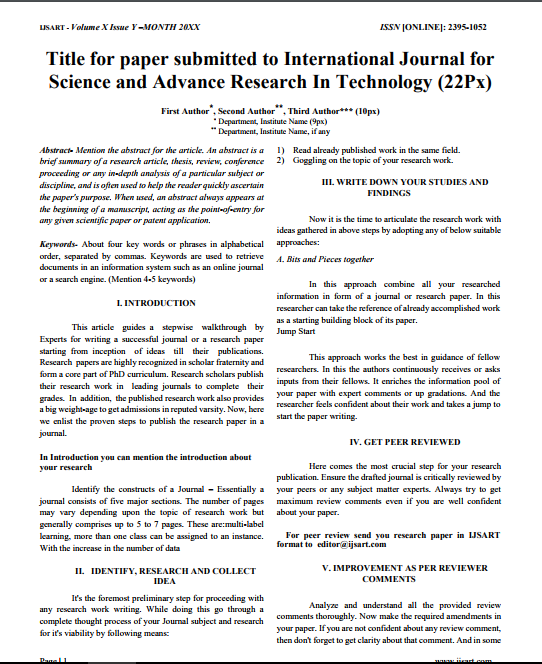
Download Paper Format


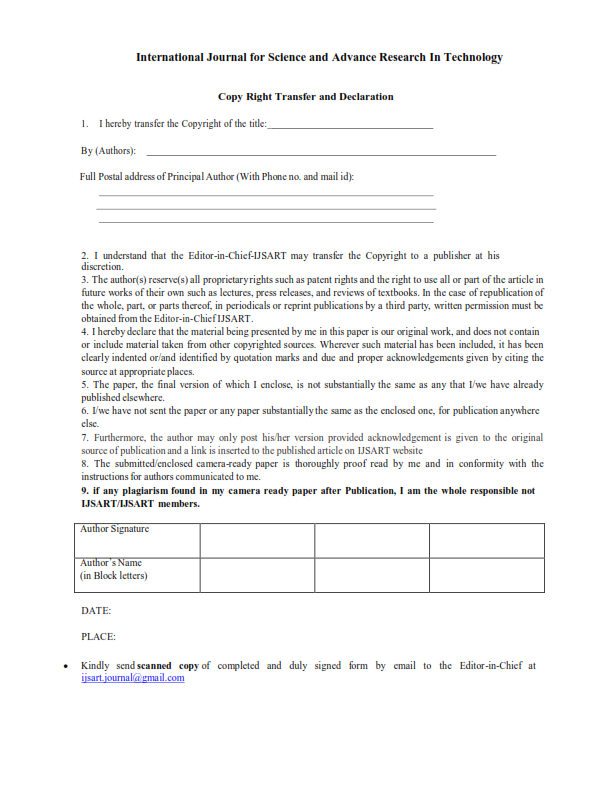
Copyright Form

Volume - 11 Issue - 8


Volume: 11 Issue: 8 August 2025

UNDERSTANDING ANTI-INFLAMMATORY & NSAID AGENTS: A PUBLIC AWARENESS STUDY

Area of research: Chemistry

Non-Steroidal Anti-Inflammatory Drugs (NSAIDs) Represent One Of The Most Widely Prescribed As Well As Over-the-counter Medications Globally. They Are Routinely Used For The Management Of Pain, Fever, And Inflammation, And Have Become An Integral Part Of Both Clinical Practice And Self-care. Despite Their Widespread Availability And Therapeutic Value, Public Awareness Regarding The Safe Use Of NSAIDs Remains Inadequate. Many Individuals Consume These Medications Without Appropriate Medical Guidance, Leading To Unmonitored And Prolonged Use. The Misuse Of NSAIDs Is Associated With Several Well-documented Adverse Effects, Including Gastrointestinal Irritation, Peptic Ulceration, Bleeding Tendencies, Renal Impairment, And An Increased Risk Of Cardiovascular Events. Lack Of Knowledge About Proper Dosage, Contraindications, And Drug Interactions Further Increases The Likelihood Of Preventable Complications. This Underscores The Urgent Need To Strengthen Patient Education, Encourage Responsible Prescribing, And Regulate Self-medication Practices. Awareness Campaigns, Patient Counselling, And The Inclusion Of Clear, Accessible Information On Drug Labels Can Play A Pivotal Role In Bridging The Knowledge Gap. Improving Public Understanding Of NSAID Use Will Not Only Enhance Therapeutic Outcomes But Also Significantly Reduce The Healthcare Burden Caused By Adverse Drug Reactions.

Author: Neha Agarwal | Aniska Chaurasiya | Vikas Singh | Poornima Devi
Read More
Volume: 11 Issue: 8 August 2025

Geopolymer Concrete By Using Flyash And Ggbs As A Replacement Cement

Area of research: Civil Engineering

Concrete Has Occupied An Important Place In Construction Industry In The Past Few Decades And It Is Used Widely In All Types Of Constructions Ranging From Small Buildings To Large Infrastructural Dams Or Reservoirs. Cement Is Major Ingredient Of Concrete. The Cost Of Cement Is Increasing Day By Day Due To Its Limited Availability And Large Demand. At The Same Time The Global Warming Is Increasing Day By Day. Manufacturing Of Cement Also Releases Carbon Dioxide. In The Present Study An Attempt Been Made On Concrete And Also An Experimental Investigation On The Concrete Using By Replacing Cement With FLYASH And GGBS To Decrease The Usage Of Cement As Well As Emission Of Concrete. Experimental Studies Were Performed On Plain Cement Concrete And Replacement Of Cement With Fly Ash Is Done. In This Study The Concrete Mix Were Prepared By Using Fly Ash, Sodium Silicate, Sodium Hydroxide. A Comparative Analysis Has Been Carried Out For Concrete To The Geopolymer Concrete In Relation To Their Compressive Strength, Split Tension Strength, Acid Resistance And Water Absorption. The Concrete Made With Fly Ash Performed Well In Terms Of Compressive Strength, Split Tension Strength Acid Resistance And Water Absorption Showed Higher Performance At The Age Of 7,14,28 Days Than Conventional Concrete. And Also Two Different Types Of Acid Attack Is Done To Determine The And Compressive Strength Both On Conventional Concrete And Geo Polymeric Concrete.

Author: Y.Arpan | V.Hemanth Kumar
Read More
Volume: 11 Issue: 8 August 2025

A REVIEW : FORMULATION AND EVALUATION OF CISSUS QUANDRANGULARIS OINTMENT FOR THE TREATING FRACTURE BONE HEALING

Area of research: Pharmacy

Cissus Quadrangularis Is A Medicinal Plant Traditionally Used In Ayurvedic Medicine For Its Bone-healing Properties. The Plant Contains Bioactive Compounds Such As Ketosterones, Flavonoids, And Triterpenoids, Which Are Believed To Stimulate Bone Formation And Accelerate Fracture Healing. When Formulated Into An Ointment, Cissus Quadrangularis Can Be Applied Topically Over The Fracture Site To Enhance Local Bone Regeneration, Reduce Inflammation, And Promote Quicker Recovery. Studies Suggest That Such Ointments May Support Callus Formation And Improve The Biomechanical Strength Of Healing Bones, Offering A Complementary Therapy To Conventional Fracture Treatment. Cissus Quadrangularis Ointment For Treating Fracture Bone Healing. Cissus Quadrangularis (CQ), A Traditional Medicinal Plant Widely Used In Ayurveda, Has Been Reputed For Its Bone-healing Properties. Rich In Vitamins, Steroids, And Anabolic Steroidal Substances, CQ Is Known To Enhance Fracture Healing Through Stimulation Of Osteoblast Activity And Reduction Of Inflammation. While Oral Formulations Have Been Well-documented, Topical Applications Such As Ointments Are Gaining Attention For Localized And Targeted Therapeutic Benefits.Cissus Quadrangularis Has Gained Attention As A Natural Therapeutic Agent For Enhancing Bone Fracture Healing, Often Compared With Conventional Treatments Such As Calcium Supplements, Vitamin D, And Other Pharmacological Agents. Studies Have Demonstrated That Cissus Quadrangularis Not Only Accelerates The Healing Process But Also Improves Bone Strength And Mineralization More Effectively Than Standard Therapies Alone. Its Phytochemical Components—such As Ketosteroids, Flavonoids, And Calcium—contribute To Osteoblastic Activity And Collagen Synthesis, Which Are Essential For Bone Regeneration. Compared To Placebo Or Standard Calcium Therapy, Patients And Animal Models Treated With Cissus Quadrangularis Often Show Reduced Healing Time, Better Callus Formation, And Improved Clinical Outcomes. While Preliminary Results Are Promising, Further Comparative Clinical Trials Are Needed To Fully Validate Its Effectiveness And Integrate It Into Mainstream Orthopedic Care.

Author: U.Thendralarasi | K.Malarvizhi
Read More
Volume: 11 Issue: 8 August 2025

A Novel Solvent-Free Polyherbal Triple-Layer Capsule Of Euphorbia Hirta, Gymnema Sylvestre And Trigonella Foenum-graecum For Controlled Diabetes Therapy And Wound Healing

Area of research: Pharmaceutics

The Current Study Addresses The Innovative Design And Development Of A New, Eco-friendly Triple-layer Herbal Capsule Aimed At Managing Diabetes Mellitus And Its Chronic Complications, With A Specific Emphasis On Impaired Wound Healing. This Novel Capsule Incorporates The Three Herbal Substances Gymnema Sylvestre, Euphorbia Hirta, And Trigonella Foenum-graecum, And Each Of Them Has Been Embedded In A Particular Layer Of The Capsule To Allow Sequential Release Of The Ingredients, Thus Addressing Several Stages And Sites Of Diabetes-related Pathology. The Herbal Capsule Is Formulated Using Direct Compression, Dry Granulation, And Dry Powder Coating, Which Ensures No Residual Solvents Are Present, Thus Contributing To Pharmaceutical Sustainability. Each Layer Of The Capsule Is Designed To Release The Actives At A Specific Target Site For A Function-specific Action. Layer 1 (Outer Layer): The Outermost Layer Is Euphorbia Hirta, Which Is Rich In Flavonoids That Have Antioxidant Properties And Can Heal Wounds. It Is Designed For Immediate Gastric Disintegration To Dampen Oxidative Stress And Microbial Load As Early As Possible. Layer 2 (Middle Layer): The Middle Layer Is Gymnema Sylvestre, Which Has Gymnema Acids That Aim For Controlled Gastric Release In The Upper Intestine To Achieve Inhibition Of Glucose Absorption And Stimulation Of Insulin Secretion. Layer 3 (Core Layer): The Core Layer Is Trigonella Foenum-graecum (fenugreek), Which Is Rich In Saponins And Galactomannans. It Is Designed For Sustained Release In The Distal Gut To Achieve Long-term Control Of Anti-inflammatory And Anti-glycemic Action. Phytoconstituents Were Obtained Using Green Techniques And Characterized Through Preliminary Phytochemical Screening And UV Vis Spectroscopy. The Evaluation Plan Includes Testing Excipient Blending And Micro Particle Sizing, Physicochemical Attributes, And Disintegration And Dissolution Testing In Simulated Gastrointestinal Fluids, Bioactive Marker Spectrophotometry, And Quantitation By Marker Ratio Method. Assessing The Antioxidant Capacity By DPPH Method And Bioactive Relevance Through Glucose Uptake Analysis. This System For Delivery Tackles The Various Aspects Of Diabetes By Improving Formulation, Phytochemical Stability, Adherence, And Phytochemical Stability Of The Medication. The Solvent-free, Site-specific Method Used In This Case Can Be Applied To Various Other Cases, Which Makes It Ideal For Patenting And Progression Through Regulatory Requirements. In This Case, The Next Steps Will Be The In Vitro Release Assays, Diastolic And Systolic Function Preclinical Studies, And Thorough Stability Studies To Facilitate A Faster Time To Market

Author: R.Abishek | Mrs.K.Malarvizhi
Read More
Volume: 11 Issue: 8 August 2025

Stabilization Of Sub Garde Of Soil By Using Geo Grids

Area of research: Civil Engineering

Stabilization Is The Process Which Involves Enhancing The Physical Properties Of The Soil In Order To Improve Its Strength, Durability Etc., By Blending Or Mixing With Additives. The Different Types Of Methods Used For Soil Stabilization Are; Soil Stabilization Using Cement, Soil Stabilization Using Lime, Soil Stabilization Using Bitumen, Chemical Stabilization And A New Emerging Technology Of Stabilization That Is Stabilization Of Soil By Using Geo-synthetics. Geo-synthetics Are Synthetic Products Made From Various Types Of Polymers Which Either Woven Or Non-woven .These Are Used To Enhance The Characteristics Of Soil And Have Provided A Practical Way Of Constructing Civil Engineering Structures Economically. In This Study, The Results Of Studies On The Performance Of Geogrids Within Sub Grade Soils Are Carried Out Experimentally Utilizing The California Bearing Ratio (CBR) Testing Arrangement. The Sub Grade Soil Is Subjected To The Following Laboratory Tests; Particle Size Analysis, Atterberg’s Limits, Specific Gravity Test, Compaction Test And CBR Tests Are Conducted On Soil Samples With And Without The Inclusion Of Geogrid Layer And Also By Varying The Position Of It In The Mould. Use Of Geogrid Increases The CBR Value Of The Sub Grade And Thereby Reduces The Pavement Thickness. It Reduces The Intensity Of Stress On Sub Grade. It Was Found That For The Two Samples The CBR Values Increased At 3H/4 Height When Compared To H/2,H/4 Heights From The Bottom. The Optimum Height Of Placement Was Found At A Height Of 3H/4 From The Bottom.

Author: B.Delhi Raja | M.Madhuri
Read More
Volume: 11 Issue: 8 August 2025

Synergistic Effect Of Hyaluronic Acid With Vitamins And Antioxidants In Anti-aging Products

Area of research: Kanchipuram

Skin Aging Is A Complex Biological Process Influenced By Both Intrinsic (chronological) And Extrinsic (environmental) Factors, Resulting In The Structural And Functional Decline Of The Skin. Recent Developments In Cosmetic Dermatology Have Highlighted The Combined Use Of Hyaluronic Acid (HA) With Vitamins And Antioxidants, Which Has Proven To Be A Promising Strategy In Creating Advanced Anti-aging Formulations. Hyaluronic Acid, A Naturally Occurring Glycosaminoglycan, Is Crucial For Maintaining Skin Hydration, Elasticity, And Barrier Integrity. When Paired With Vitamins Such As Vitamin C (ascorbic Acid), Vitamin E (tocopherol), And Vitamin B5 (panthenol), HA Boosts Antioxidant Defense Mechanisms And Aids In Collagen Synthesis(3). Moreover, Natural Antioxidants Like Coenzyme Q10, Resveratrol, And Green Tea Polyphenols Enhance The Skin’s Capacity To Neutralize Reactive Oxygen Species (ROS), Thereby Mitigating Oxidative Stress-related Skin Damage(1). Synergistic Formulations Exhibit Greater Efficacy Than Individual Agents, As Demonstrated By Improved Skin Hydration, Decreased Wrinkle Depth, Enhanced Elasticity, And Overall Rejuvenation(2). This Review Examines The Molecular Mechanisms, Therapeutic Benefits, And Formulation Strategies Of Integrating HA With Vitamins And Antioxidants In Anti-aging Skincare, Supported By Contemporary Scientific Literature, And Emphasizes Their Roles In Collagen Synthesis.

Author: M.Keerthana | Dr.G.Mariyappan
Read More
Volume: 11 Issue: 8 August 2025

Development Of An Adaptive Machine Learning Framework For Real-Time Anomaly Detection In Cybersecurity

Area of research: Computer Science

The Exponential Growth Of Digital Infrastructures And The Increasing Sophistication Of Cyber-attacks Necessitate The Development Of Intelligent, Adaptive, And Real-time Defense Mechanisms. Traditional Signature-based Intrusion Detection Systems Often Fail To Detect Zero-day Exploits And Evolving Attack Patterns, Making Anomaly Detection A Critical Component Of Modern Cybersecurity. This Research Proposes An Adaptive Machine Learning Framework Capable Of Detecting Anomalies In Real Time By Integrating Streaming Data Analysis, Dynamic Feature Selection, And Continuous Model Optimization. The Framework Leverages A Hybrid Learning Paradigm That Combines Supervised And Unsupervised Techniques—specifically, Ensemble-based Classification For Known Threats And Clustering-based Outlier Detection For Unknown Patterns. A Key Innovation Lies In The Adaptive Retraining Module, Which Incrementally Updates The Model Parameters In Response To Evolving Network Behaviors And Attack Signatures Without Requiring Full Retraining, Thereby Reducing Computational Overhead. The System Architecture Incorporates Data Preprocessing, Feature Engineering, Adaptive Model Selection, And Decision Fusion Layers To Ensure High Detection Accuracy And Minimal False Positives. Real-world Network Traffic Datasets, Such As UNSW-NB15 And CIC-IDS2017, Were Used To Validate The Framework’s Effectiveness. Experimental Results Demonstrate An Average Detection Accuracy Exceeding 98% With A Significant Improvement In Detection Latency Compared To Baseline Methods. This Approach Shows Strong Potential For Deployment In Live Cybersecurity Environments, Offering Robust Defences Against Both Known And Unknown Threats. The Proposed Framework Can Be Extended To Support Multi-modal Data Sources, Enabling Its Integration Into Large-scale Security Information And Event Management (SIEM) Systems For Proactive Threat Mitigation.

Author: Thangatharani T | Dr.M,Subalakshmi
Read More
Volume: 11 Issue: 8 August 2025

AI IN DRUG DISCOVERY AND FUTURE PROSPECTS

Volume: 11 Issue: 8 August 2025

COVID-19 In Nagpur: A Peri-Urban Case Study On Policy Response, Testing Patterns, And Administrative Challenges

Volume: 11 Issue: 8 August 2025

Industrial Machine Predictive Maintenance System Optimize Maintenance Schedules And Reduce Downtime With AI-powered Predictions

Volume: 11 Issue: 8 August 2025

A Systematic Review Of Student Data Privacy In Web-Based Lecture Delivery Module In Tertiary Institutions In Kogi State Central

Area of research: Data Privacy

With The Growing Reliance On Web-based Delivery Platforms In Tertiary Education, Concerns Around Student Data Privacy Have Become Increasingly Prominent. This Study Presents A Systematic Review Of Literature Related To Data Privacy In Educational Technology, With A Focus On Tertiary Institutions In Kogi Central, Nigeria. The Review Investigates Institutional Practices, Technological Safeguards, Legal Frameworks, And Student Perceptions Concerning Data Privacy. Using The Preferred Reporting Items For Systematic Reviews And Meta-Analyses (PRISMA) Methodology, A Total Of 47 Peer-reviewed Studies Published Between 2021 And 2024 Were Analyzed. The Study Critically Examine The Existing Literature On The Security Of Online Lecture Delivery Systems, Encryption And Blockchain Techniques.The Review Helps To Unveil The Strengths, Weaknesses, And Its Applications Through An Indepth Review That Focused On Integrating Strong Encryption Techniques And Blockchain Schemes. The Impact Of Providing A Robust Privacy And Security Framework For A Web-based Lectures Delivery System As Well As The Challenges And Limitations Of Implementing These Technologies In Tertiary Institutions In Kogi Central, Including Infrastructure, Expertise, And Regulatory Compliance.The Findings Reveal Significant Gaps In Policy Enforcement, Technical Implementation, And Awareness Among Stakeholders. This Study Recommends The Adoption Of Context-specific Privacy Policies, Enhanced Cybersecurity Protocols, And Compulsory Privacy Education For Institutional Users.

Author: Yunisa Sunday | Emmanuel Eturpa Salami | Ekundayo Onimisi Kayode | Yahaya Yusuf Nurudeen | Joshua Attah
Read More
Volume: 11 Issue: 8 August 2025

Reimagining Mathematics Education: NEP 2020 And The Future Of Cognitive And Analytical Learning

Area of research: Education

The National Education Policy (NEP) 2020 Introduces A Transformative Vision For Mathematics Education In India, Emphasizing Conceptual Understanding, Experiential Learning, And The Integration Of Technology. It Moves Away From Rote Memorization And Prioritizes Student-centered Pedagogies That Foster Logical Reasoning, Problem-solving, And Critical Thinking. This Paper Explores Various Teaching Strategies Proposed Under NEP-2020, Including Play-based Learning, The Use Of Mother Tongue, Flipped Classrooms, And Multiple Representations. It Also Highlights The Integration Of Tools Like GeoGebra, MATLAB, And Maxima To Enhance Mathematical Learning. Moreover, The Mathematics Holds A Central Role In Developing Cognitive And Analytical Abilities Among Learners. In Recognition Of This, The National Education Policy (NEP) 2020 Introduces A Framework Designed To Make Mathematics Education More Inclusive, Engaging, And Applicable To Real-life Contexts. The Policy Acknowledges The Cognitive Processes Of Learners, Especially Young Children, And Recommends Pedagogies That Support Learning Through Experience, Conceptual Understanding, And Metacognition. Rather Than Emphasizing Rote Memorization, NEP-2020 Encourages An Educational Shift Toward Critical Thinking, Logical Reasoning, And Independent Learning. Teachers Are Viewed As Key Document Reviews Major Reforms Such As The Shift To A 5+3+3+4 Curricular Structure, The Establishment Of PARAKH, And Efforts Like RAA And NBHM Aimed At Supporting Mathematics Education Nationwide. The Goal Is To Create An Inclusive, Flexible, And Engaging Learning Environment For All Students Across Different Socio-economic Backgrounds.

Author: Manish Singh
Read More
Volume: 11 Issue: 8 August 2025

ANALYSIS OF A 3 DIMENSIONAL BUILDING FRAME USING CROSS BRACING THROUGH ETABS

Area of research: Civil Engineering

This Paper Incorporates X-bracings To Greatly Increase The Seismic Resistance Of The Construction Of Both Buildings. The Structural Design Incorporates X-bracings To Assess Its Impact On Performance Under Seismic Loads. This Study Focuses On How X-bracingcan Increase Lateral Stiffness While Reducing The Building's Overall Deflection And Wobbling. This Study Compares Two G+ 15 Reinforced Concrete Buildings To Evaluate Their Seismic Performance In Different Seismic Zones. Both Buildings Are Analyzed And Designed Using Sophisticated Structural Analysis Tools. The First Building Is Located In Seismic Zone IV, Which Contributes An Area With Considerable Seismic Activity, While The Second Structure Is Located In Seismic Zone III, Which Accounts For Moderate Seismic Pressure. Using IS Codes, Seismic Analysis Is Performed For Both Structures Based On Bending Moment, Torsion, Axial Force, Base Shear, And Shear Force. Two Different Kinds Of Comparisons Are Made In This Study. First, The Same Models With Different Seismic Zones Are Compared, And Then The Same Models Are Compared Using Different Software. The Results Of The Analysis Are Compared In Order To Determine The Difference In Structural Reaction Between The Two Seismic Zones. The Comparison Demonstrates How Zone IV's High Seismic Force Produces Stronger Building Moments, Shear Forces, Axial Forces, And Torsion Than Zone III. Additionally, The Sturdy Evaluates The Performance Of X-bracing In Both Seismic Zones, Highlighting Its Significance In Reducing Structural Deformation And Improving The Overall Safety Of High-rise Structures In Seismic Zones.

Author: Nandani Goswami | Hitesh Kodwani
Read More
Volume: 11 Issue: 8 August 2025

ANALYSIS OF A TALL STRUCTURE CONSIDERING SHEAR WALL WITH DIFFERENT SECTIONS OF OPENINGS USING ETABS

Volume: 11 Issue: 8 August 2025

COMPARATIVE ANALYSIS OF DIFFERENT OUTRIGGER SYSTEM AT DIFFERENT HEIGHT AND BELT-TRUSS SYSTEMS

Area of research: Civil Engineering

Tall Buildings Are Necessary In Cities Due To The Rapid Expansion Of Infrastructure To Support Contemporary Civilisation. The Issue Of The Buildings' Lateral Stability And Sway Must Be Addressed By Engineering Judgment As They Go Taller. The Outrigger And Belt Truss Structural Systems Are Two Examples Of Structural Systems That Have Developed Continually To Address Issues With Lateral Stability And Sway. To Reduce The Danger Of Both Structural And Non-structural Damage During Small Or Medium Lateral Loads Caused By Wind Or Earthquakes, The Outrigger System Is One Of The Most Effective Ways To Efficiently Control Excessive Drift Caused By Lateral Load. Strong-rise Structures Can Use This System As A Suitable Structure, Especially In Areas With Strong Seismic Activity Or Wind Load. This Study Examines The Effective Usage Of Belt Truss And Outrigger Systems For High-rise Concrete Buildings That Are Subjected To Seismic Or Wind Loads. To Determine The Lateral Displacement Reduction Associated With The Various Types Of Outrigger And Belt Systems In Different Forms At Varying Heights, 26-story Two-dimensional Models Of Outrigger And Belt Truss Systems Are Subjected To Seismic Load, Analysed, And Compared. The Purpose Of The Analysis Was To Examine The Impact And Functionality Of The Outrigger System In A 26-story Building. As The Building Rises In Height, The Outrigger System Is Installed At Various Levels. The Outrigger And Belt Truss Depths Are Maintained Constant Throughout All Models And Are Equivalent To The Normal Story's Height.

Author: Hasan Raza Siddique | Hitesh Kodwani
Read More