Impact Factor
Call For Paper
Volume 12 Issue 09
September 2026
Download Paper Format
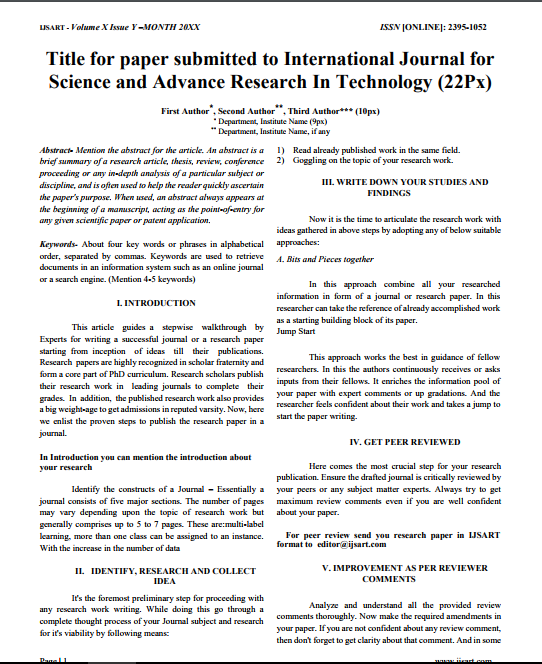
Copyright Form
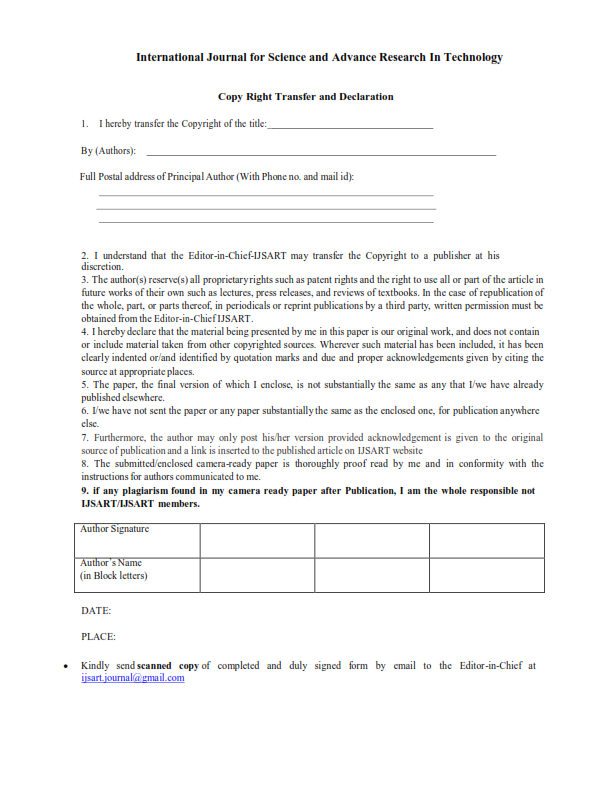

Author(s)
Abstract
Rapid Urbanization Has Placed Tremendous Pressure On Available Agricultural Land, Making It Increasingly Difficult To Meet The Food Demands Of Growing City Populations. Traditional Farming Methods Require Large Tracts Of Land, Which Are Simply Unavailable In Densely Built Urban Environments. This Paper Examines Vertical Farming As A Practical And Sustainable Solution To Address Land Scarcity In Cities. The Study Explores Three Core Technologies—hydroponics, Aeroponics, And Aquaponics—and Evaluates Their Technical Working Principles, Components, Benefits, And Limitations. A Comparative Analysis Of Global Case Studies From Singapore, Japan, The United States, The Netherlands, And The UAE Has Been Conducted. The Methodology Relies On Secondary Data Gathered From Published Research Papers, FAO Reports, And Government Agriculture Studies. Results Indicate That Vertical Farming Can Reduce Water Usage By Up To 95% Compared To Conventional Agriculture, Increase Crop Yield Per Unit Area By 5 To 10 Times, And Enable Year-round Production Independent Of Weather Conditions. While Challenges Such As High Energy Costs And Initial Capital Investment Remain, The Technology Shows Significant Feasibility As Part Of Smart City Planning. This Paper Concludes That With Appropriate Policy Support And Technological Improvements, Vertical Farming Can Play A Meaningful Role In Achieving Urban Food Security.
Keywords
Paper ID
IJSARTV12I6105576
Publication Date
June 1, 2026
Research Area
Computer Engineering