Impact Factor
Call For Paper
Volume 12 Issue 09
September 2026
Download Paper Format
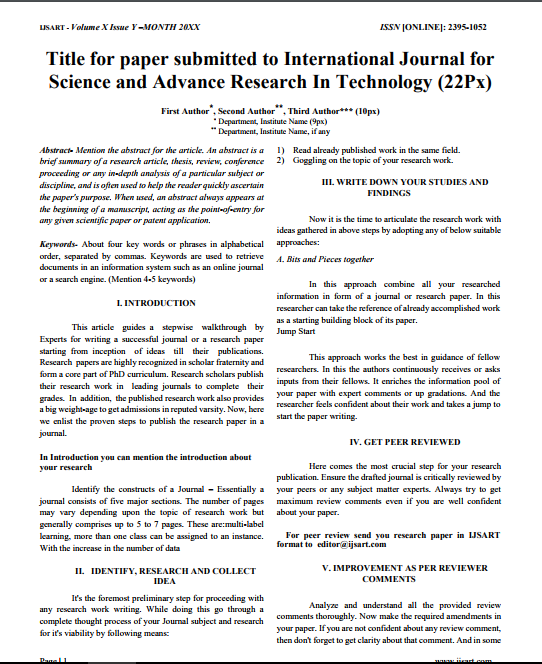
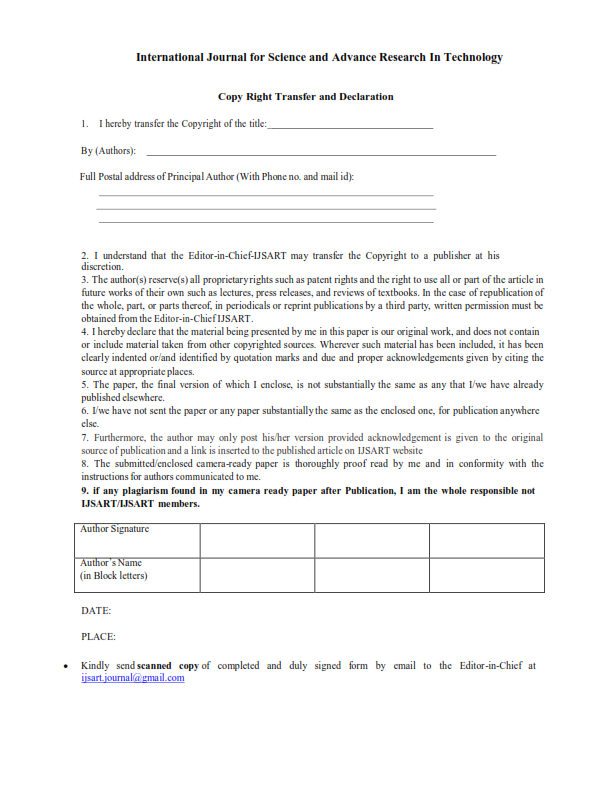
Copyright Form

Author(s)
Abstract
Urban Land-use Plan For Harda City In Madhya Pradesh Using An Integrated GIS-AHP Approach. Keeping In View The Future Planned Development Of Harda Town, The Revised Development Plan For 2025 Has Been Prepared For An Estimated Population Of 1 Million (10 Lakh). This Plan Includes Proposals For Various Land Uses And Development Along With Provisions For Service Facilities. The Economic Structure Of The Town Is Primarily Based On Agricultural Products, Commercial, And Administrative Activities. Most Of The People Here Are Engaged In Agriculture, Commerce, And Small-scale Industries. The Economic Structure Of The Town Is Of A Medium Level. Harda, One Of The Main Advantages Of AHP Is Its Flexibility, Logic, And Ease Of Application, Which Has Been Reflected In The Significant Growth Of Publications That Use This Method. Decision-making Is Virtually Every Research Area. For This Reason, The Application Of AHP Has Been Applied In Areas Such As Engineering, Computer Science, Business And Management, Mathematics, Or Social Sciences. The Possibilities Of AHP Adjustments Are Also Relatively Wide One Of The Fastest-growing Cities In The Region Is Facing Immense Pressure From Rapid Population Growth And Unplanned Urbanization. Despite Several Planning Interventions, Such As The Recent Detailed Area Planning (DAP), The Outcomes Have Been Limited. The DAP Employed GIS For City-scale Land-use Planning But Suffered From Several Shortcomings, Including Inadequate Specification Of Data Requirements, Poor Database Quality And Underutilization Of The GIS Database For Spatial Analysis To Support Effective Decision-making. To Address These Issues, This Research Proposes A Conceptual Model For Building A High-quality Geographic Database To Resolve The First Two Problems And Applies The GIS-based AHP Method For Advanced Spatial Analysis To Tackle The Third. Following A Literature Review And Selection Of The Study Area, Planning Criteria Were Identified Through Expert Consultation. The Collected GIS Data Was Structured Into A Geo Database, Conceptualized Using The Unified Modelling Language (UML). Expert Inputs And Further Literature Were Used To Compute Eigen Values Through AHP Operations, Representing The Relative Priority Of Each Criterion. Using These Eigen Values, Raster-based Criterion Maps Were Generated From The Geo Database. These Maps Were Then Overlaid To Create A Composite Suitability Map, Which Was Subsequently Classified Into Zones Based On Suitability.
Keywords
Paper ID
IJSARTV11I7103919
Publication Date
July 24, 2025
Research Area
Urban Planning