Impact Factor
Call For Paper
Volume 12 Issue 09
September 2026
Download Paper Format
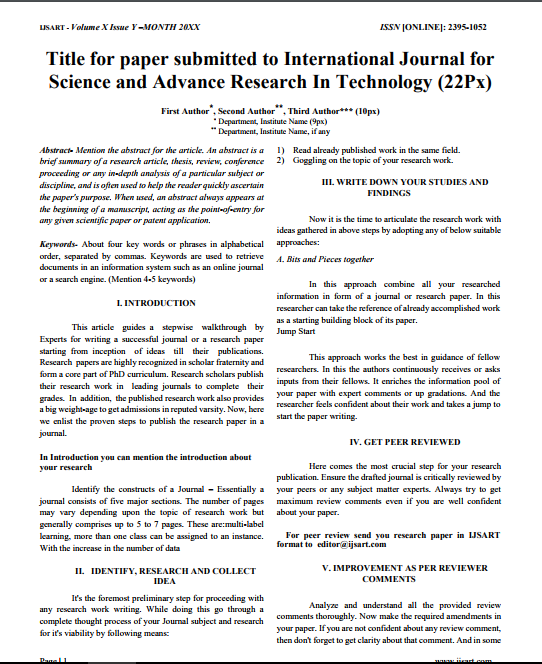
Copyright Form
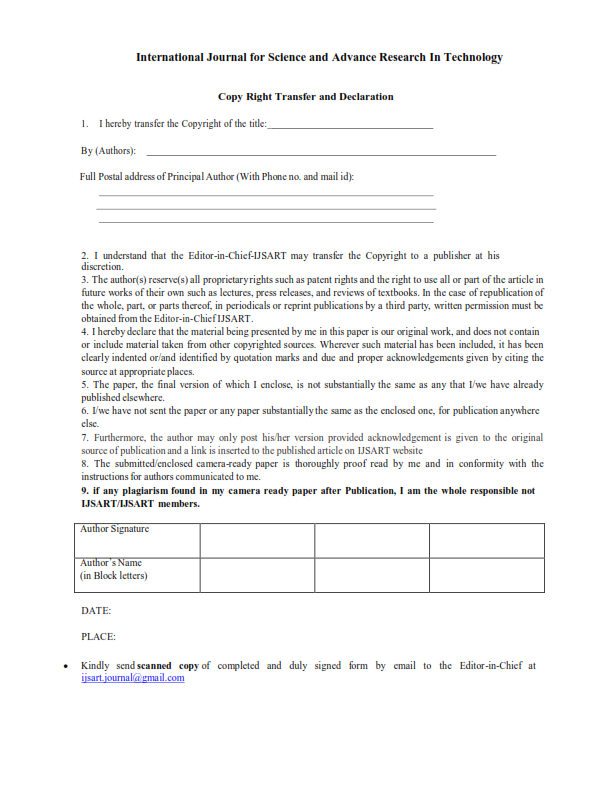

Author(s)
Abstract
The Transformation From Traditional Agriculture To Digital Agriculture Is A Revolutionary Shift Towards Enhanced Productivity, Sustainability, And Economic Returns For Farmers, Particularly In Developing Nations Like India. This Paper Examines The Impediments To The Uptake Of Digital Agriculture, Compares The Role Of Government Policies In Supporting The Transition, And Assesses The Economic Returns For Smallholder Farmers. Drawing On A Comprehensive Review Of The Literature And Empirical Data, This Paper Reports The Key Impediments As High Capital Outlay, Low Digital Literacy, Poor Internet Connectivity, And Weak Regulatory Frameworks As Key Barriers. Employing Interpretive Structural Modelling (ISM), The Paper Offers A Hierarchical Framework Of The Impediments, Identifying "lack Of Supportive Regulations" As A Primary Constraint That Impacts Other Issues, Such As Knowledge Gaps And Small Land Size. Government Schemes, Such As The Digital Agriculture Mission (2021-2025) And Schemes Like The Pradhan Mantri Kisan Samman Nidhi (PM-KISAN), Are Examined For Their Ability To Overcome These Impediments Through Subsidies, Digital Infrastructure, And Extension Services. Economic Returns For The Uptake Of Digital Technologies—precision Agriculture, Internet Of Things (IoT), And Digital Financial Services—lie In The Potential For Enhanced Crop Yields (up To 30% Based On A Number Of Studies), Reduced Input Costs (15-20%), And Enhanced Farmer Revenues (25-29%), As Illustrated Through Case Studies Such As The Banana Value Chain In India. This Paper Concludes That With Challenges Notwithstanding, Policy Interventions And Public-private Sector Partnerships Can Realize Large Economic Returns, As Envisioned By India's Vision To Double Farmer Incomes And Sustainable Agriculture Growth.
Keywords
Paper ID
IJSARTV11I4103363
Publication Date
April 28, 2025
Research Area
Computer Engineering