Impact Factor
Call For Paper
Volume 12 Issue 09
September 2026
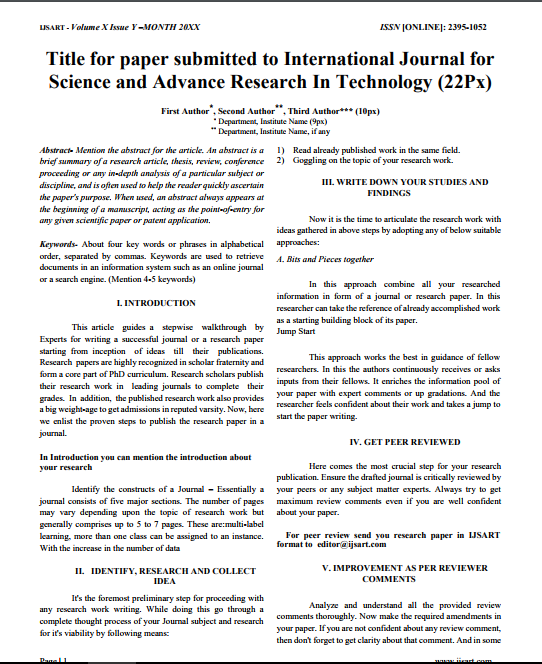
Download Paper Format
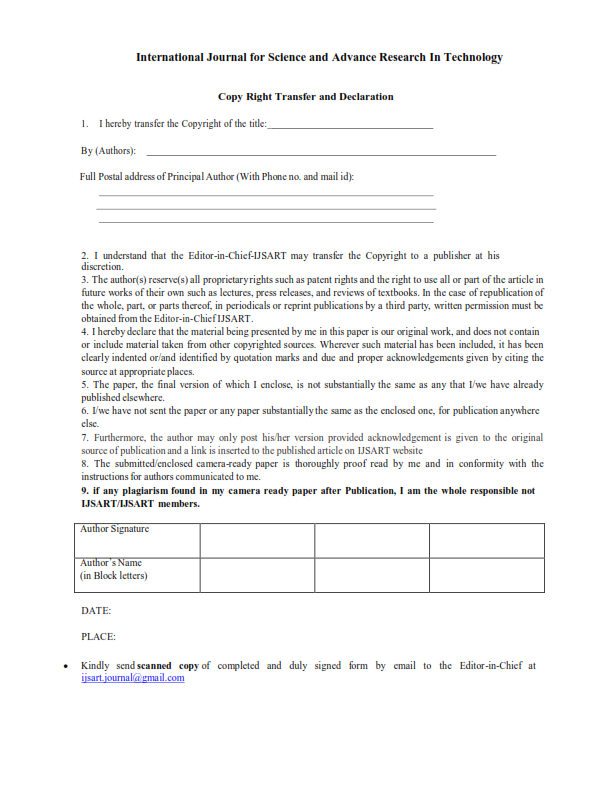
Copyright Form

Author(s)
Abstract
This Paper Explores The Ethical Implications Of Upper-caste Authors Attempting To Represent Dalit Experiences In Literature. It Critically Examines Whether Upper-caste Writers Can Authentically Speak For Dalits, Or If Their Depictions Are Limited By Their Own Caste-based Positionality. Drawing From A Review Of Key Literary Works, Including Those By Mulk Raj Anand And Arundhati Roy, This Study Analyzes The Potential For Misrepresentation In These Narratives, Particularly In Their Portrayal Of Dalit Characters As Passive Victims. The Paper Engages With Key Concepts From Postcolonial And Cultural Theory, Including Edward Said’s Orientalism And Gayatri Spivak’s Can The Subaltern Speak?, To Highlight The Challenges Of Representing Marginalized Voices Through The Lens Of Privilege. Further, It Discusses The Role Of Upper-caste Authors As Allies, Suggesting That While They May Support Dalit Voices, Their Role Should Be One Of Amplification Rather Than Appropriation. The Paper Concludes By Asserting That Upper-caste Authors Cannot Ethically Speak For Dalits Due To Inherent Limitations Of Their Perspective, And Calls For Greater Self-representation By Dalit Authors. The Need For More Inclusive And Ethical Literary Practices Is Emphasized To Ensure That Marginalized Communities’ Voices Are Not Overshadowed.
Keywords
Paper ID
IJSARTV11I7103885
Publication Date
July 14, 2025
Research Area
English Literature