Impact Factor
Call For Paper
Volume 12 Issue 07
July 2026
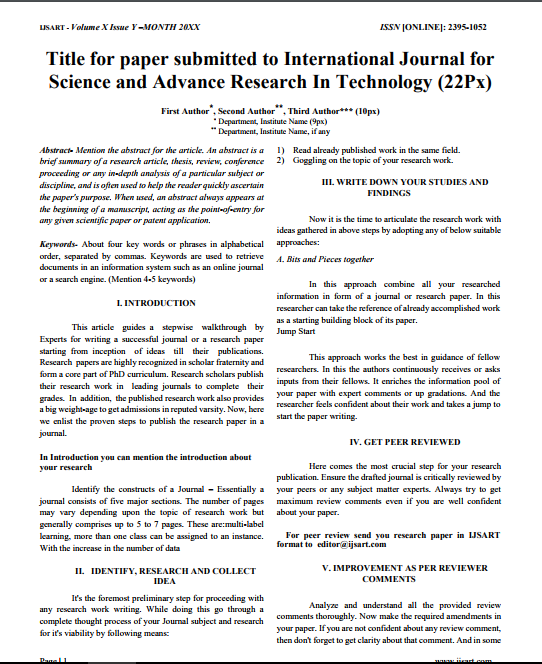
Download Paper Format
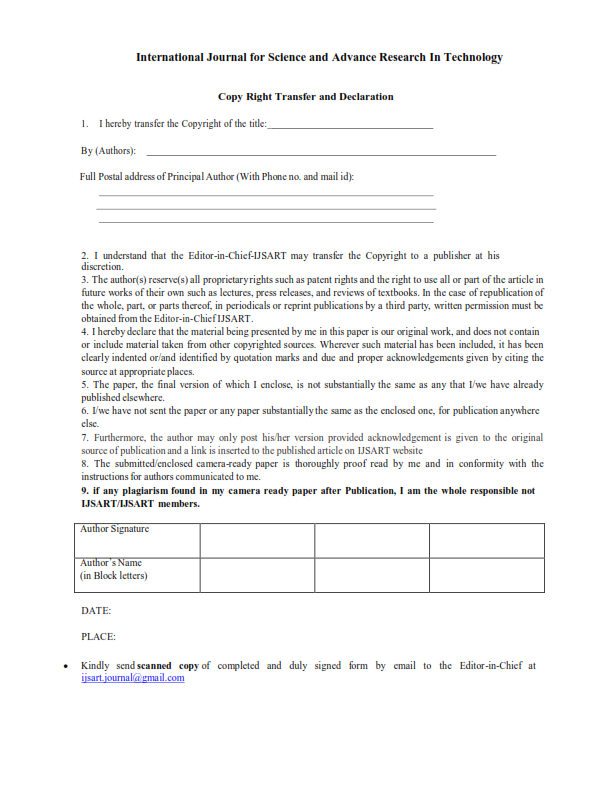
Copyright Form

Author(s)
Abstract
As The Demands For Higher Clock Frequencies In Modern VLSI Systems Continue To Rise, Achieving Timing Closure Has Become A Significant Hurdle In Digital Design. Many RTL Designs Struggle To Meet Setup And Hold Time Requirements After Synthesis, Often Because Timing Constraints Weren't Adequately Considered In The Early Stages Of Design. This Paper Introduces The Design And Implementation Of A Straightforward RISC Processor Using Verilog HDL, Employing A Timing-aware RTL Methodology. The Architecture Of The Processor Features A Program Counter, Instruction Memory, Register File, Arithmetic Logic Unit (ALU), Control Unit, And Data Memory. We Conduct Static Timing Analysis (STA) Using Xilinx Vivado To Assess Critical Path Delay, Worst Negative Slack (WNS), And Maximum Operating Frequency. Initially, We Analyze A Baseline Design To Pinpoint Timing Violations, Followed By Restructuring The RTL And Applying Optimization Techniques Like Logic Balancing And Inserting Pipeline Registers. The Experimental Results Show A Notable Reduction In Critical Path Delay And An Increase In The Maximum Achievable Clock Frequency, Confirming The Benefits Of Integrating Timing Awareness Into The RTL Design Process. This Proposed Method Enhances Timing Reliability While Minimizing The Number Of Design Iterations Needed After Synthesis.
Keywords
Paper ID
IJSARTV12I6105591
Publication Date
June 2, 2026
Research Area
Electronics And Telecommunication Engineering