Impact Factor
Call For Paper
Volume 12 Issue 09
September 2026
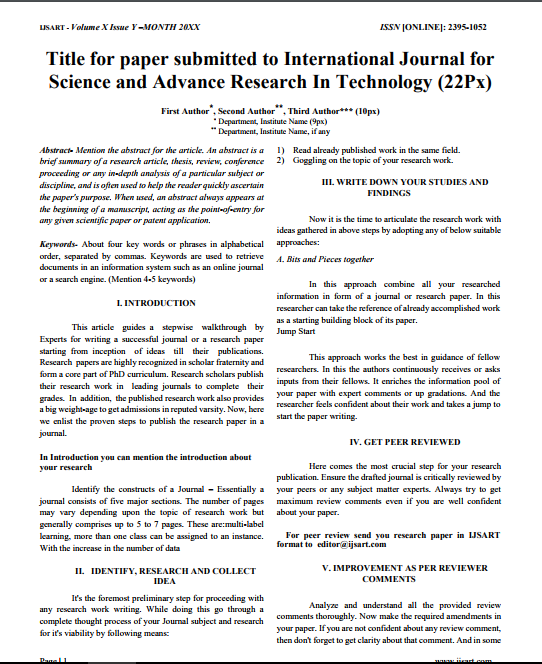
Download Paper Format
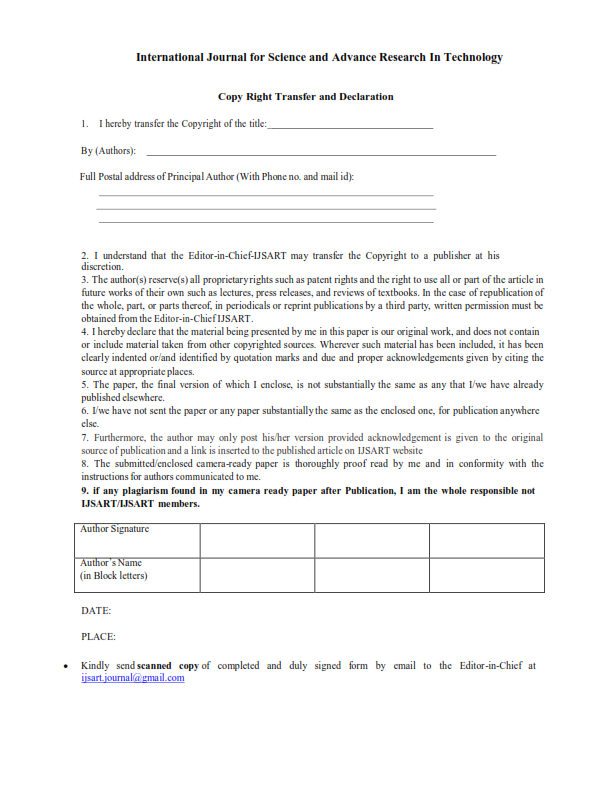
Copyright Form

Author(s)
Abstract
High-gain DC–DC Converters Play A Significant Role In Renewable Energy Systems, Electric Vehicles, Battery Charging Systems, Fuel Cells, And Other Modern Power Electronic Applications Where Efficient Voltage Conversion Is Essential. Conventional Boost Converters Often Experience Limitations Such As High Duty Cycle Operation, Increased Switching Losses, Poor Voltage Gain, And Reduced Efficiency Under High Conversion Ratios. To Overcome These Challenges, The Luo Converter Family, Based On The Voltage Lift (VL) Technique, Has Emerged As An Effective Solution For Achieving Higher Voltage Gain With Improved Performance. Over The Years, Several Positive Output Luo Converter Topologies, Including The Elementary, Self-Lift, Re-Lift, Super-Lift, And Multiple-Lift Converters, Have Been Developed To Enhance Voltage Conversion Capability While Maintaining Continuous Input Current And Reduced Output Ripple. This Paper Presents A Comprehensive Comparative Analysis Of Positive Output Luo Converter Topologies By Reviewing Their Operating Principles, Voltage Gain Characteristics, Structural Complexity, Component Requirements, Reported Performance, And Application Suitability. Furthermore, Recent Developments In Converter Modifications, Advanced Control Strategies, And Renewable Energy Applications Are Discussed. A Comparative Assessment Is Provided To Highlight The Advantages, Limitations, And Appropriate Application Domains Of Each Topology. Finally, Current Research Challenges And Future Research Opportunities Are Identified To Support The Development Of Next-generation High-gain DC–DC Converters For Renewable Energy And Electric Vehicle Applications.
Keywords
Paper ID
IJSARTV12I9105863
Publication Date
September 5, 2026
Research Area
Electrical And Electronics Engineering