Impact Factor
Call For Paper
Volume 12 Issue 09
September 2026
Download Paper Format
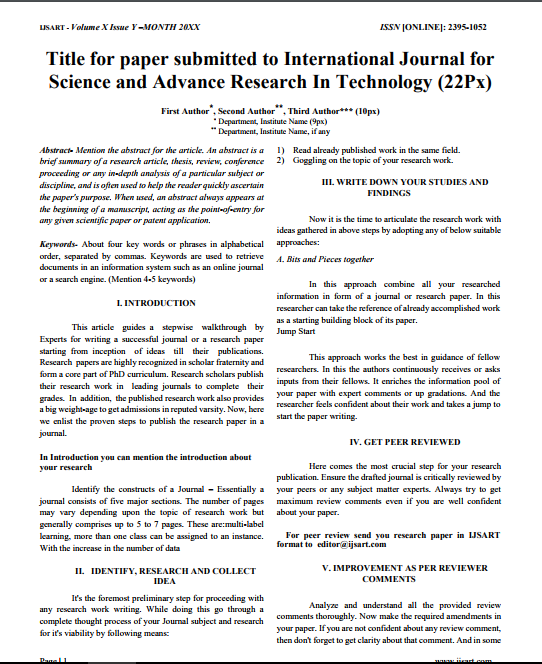
Copyright Form
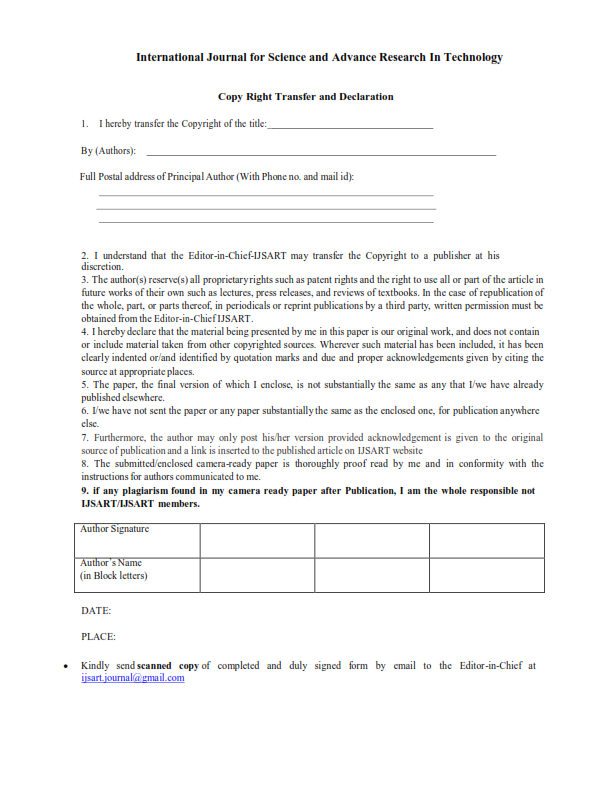

Author(s)
Abstract
The Study Concludes That Incorporating Bracing Systems And Dampers Significantly Enhances The Seismic Performance Of Industrial Steel Structures By Effectively Reducing Lateral Displacement, Vibration, And Storey Drift. Among The Configurations Analyzed, Models With X-bracing Combined With Dampers Having A Mass Ratio Of 1.5% Demonstrated Superior Performance Under Both Earthquake And Wind Loading Conditions. A Comparative Assessment Between Conventional Steel Frames, Braced Systems, And Damper-integrated Structures Highlights The Effectiveness Of These Lateral Load-resisting Strategies. This Research Involves A Detailed Parametric Study Based On Nonlinear Dynamic Analysis Of Three-dimensional Industrial Steel Structures Using SAP2000 Software. Various Bracing Configurations, Particularly X-bracing Systems, Along With Different Damper Mass Ratios, Are Considered To Evaluate Their Influence On Structural Response Under Seismic Excitation. Industrial Steel Structures Often Possess Large Member Sizes, Resulting In Higher Dead Loads, Which In Turn Increase Their Susceptibility To Seismic Effects. Despite The Growing Adoption Of Braced Systems, Comprehensive Analytical Studies Addressing Their Effectiveness In Controlling Seismic Response Remain Limited In India. The Primary Objective Of This Work Is To Identify And Propose Efficient And Practical Lateral Load-resisting Systems (LLRSS) Suitable For Industrial Buildings. These Systems Aim To Improve Structural Safety And Can Be Applied To Both New Constructions And Existing Structures. Since Buildings Are Subjected To Lateral Loads From Earthquakes And Wind In Addition To Gravity Loads, Inadequate Design Against Such Forces May Lead To Excessive Stresses, Structural Sway, And Potential Collapse, Posing Risks To Life And Property. Therefore, It Is Essential To Adopt Appropriate Structural Technologies That Ensure Stability And Resilience Under Lateral Loading Conditions.
Keywords
Paper ID
IJSARTV12I4104987
Publication Date
April 13, 2026
Research Area
Civil Engineering