Impact Factor
Call For Paper
Volume 12 Issue 07
July 2026
Download Paper Format
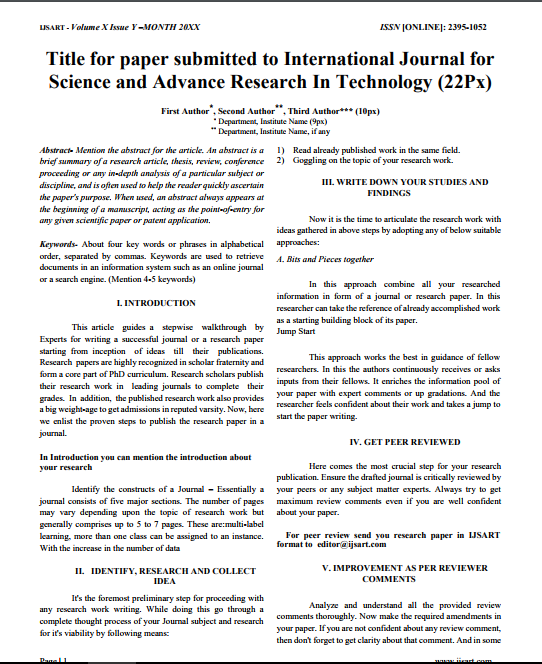
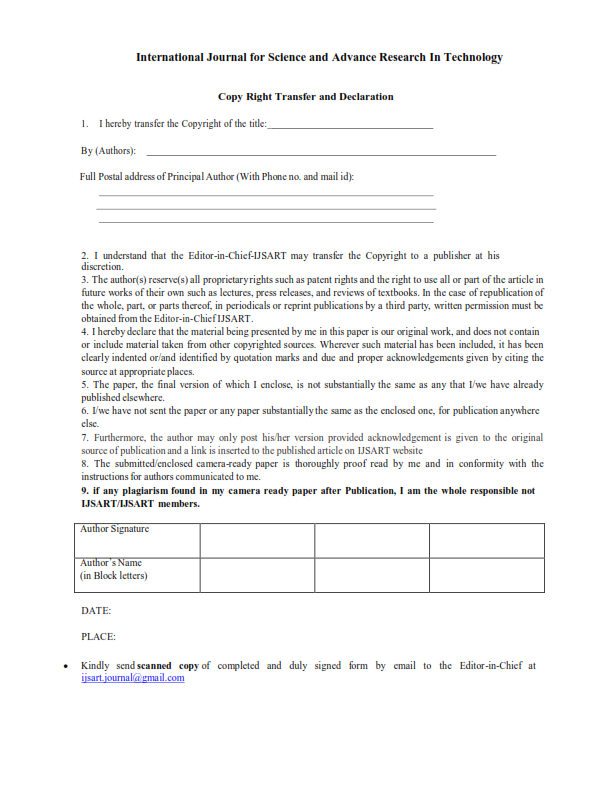
Copyright Form

Author(s)
Abstract
The Increasing Frequency And Intensity Of Earthquakes Worldwide Have Highlighted The Need For More Resilient Structural Systems. Traditional Framed Shear Walls, While Offering Good Lateral Resistance, Often Face Limitations Such As Brittleness, Concentration Of Damage, And Reduced Energy Absorption Under Strong Seismic Loads. This Research Explores The Concept Of Earthquake Vibration Control Through Modified Framed Shear Walls, Aiming To Enhance Structural Performance During Seismic Events. The Modifications Involve Integrating Energy Dissipation Devices Such As Dampers, Optimizing Wall Openings To Control Stiffness, And Using Hybrid Materials Like Reinforced Concrete Combined With Steel Plates Or Fiber-reinforced Composites. These Innovations Significantly Improve The Ductility, Energy Absorption, And Self-centering Capabilities Of The System. Analytical Models And Experimental Validations Demonstrate That Modified Framed Shear Walls Reduce Base Shear Forces, Limit Inter-story Drifts, And Effectively Control Crack Propagation, Resulting In Improved Post-earthquake Serviceability. Additionally, The Study Examines The Influence Of Wall Geometry, Coupling Beam Design, And Material Characteristics On Overall Dynamic Behaviour. The Findings Suggest That Modified Framed Shear Walls Represent A Sustainable, Cost-effective, And Highly Efficient Solution For Earthquake-resistant Building Design, Promoting Greater Safety And Resilience In Both Residential And Commercial Constructions.
Keywords
Paper ID
IJSARTV11I5103532
Publication Date
May 11, 2025
Research Area
Structural Engineering