Impact Factor
Call For Paper
Volume 12 Issue 07
July 2026
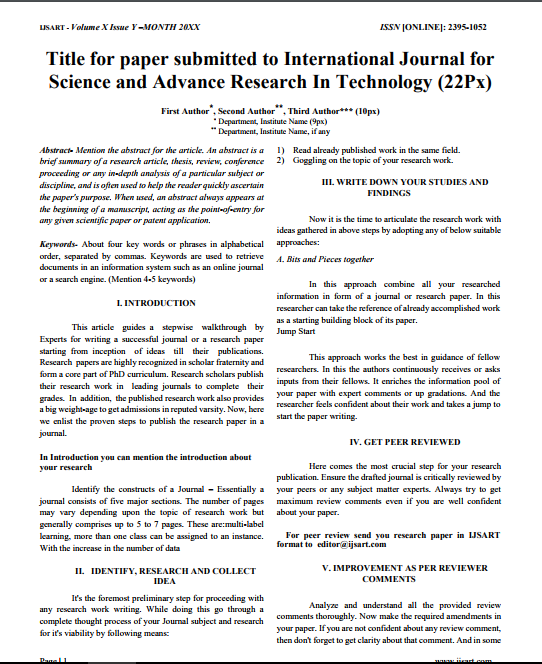
Download Paper Format
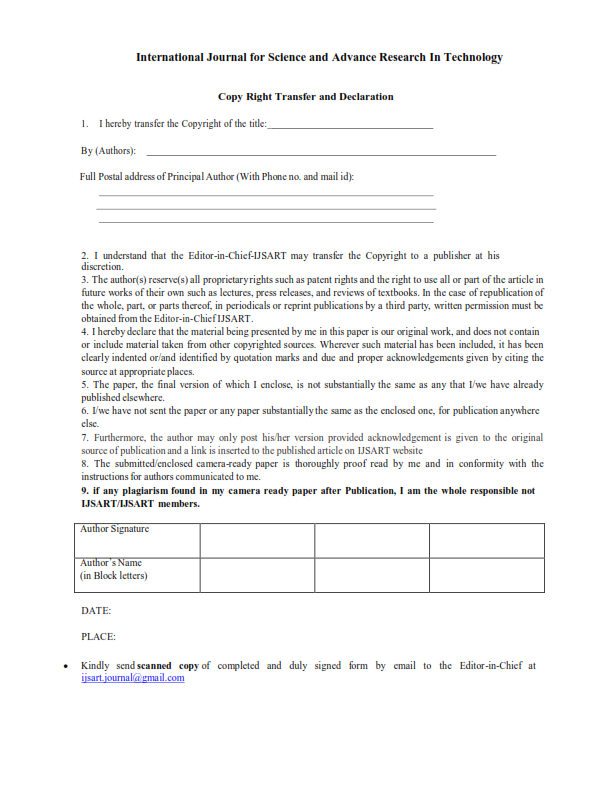
Copyright Form

Author(s)
Abstract
Congenital Heart Diseases (CHDs) Are Among The Leading Causes Of Mortality Worldwide, Necessitating Early And Accurate Detection Methods.Improving Patient Outcomes And Facilitating Prompt Medical Intervention Depend Heavily On Early Diagnosis. Conventional Heart Sound Analysis Depends On Skilled Medical Professionals Performing Manual Auscultation, Which Is Subject To Human Error And Subject To Subjectivity. Automated Heart Sound Classification Has Been Made Possible By Recent Developments In Deep Learning And Artificial Intelligence (AI), Which Improve Accuracy And Lessen Reliance On Manual Diagnostics. Recurrent Neural Networks (RNN) And Long Short-term Memory (LSTM) Networks Are Used In This Study's AI-powered Heartbeat Sound Analysis System To Accurately Classify Heart Sounds. In Order To Differentiate Between Normal And Abnormal Patterns, The System Is Trained On Phonocardiogram (PCG) Recordings, Which Capture Temporal Dependencies In Heartbeats. The System Is Integrated With Django, A Web-based Framework That Makes It Easier To Process, Store, And Visualize Heart Sound Recordings In Real Time, In Order To Improve Accessibility And Usability. Patients And Medical Professionals Can Effectively Monitor Heart Health Thanks To This Smooth Integration. In Addition To Increasing Diagnostic Precision, The Suggested System Complies With Legal Requirements Like HIPAA And GDPR, Guaranteeing The Security And Privacy Of Patient Data. Even In Places With Limited Resources, Early Detection Of Congenital Heart Diseases Is Now Easier Thanks To The Model's Support For Remote Monitoring Through Cloud-based Deployment.
Keywords
Paper ID
IJSARTV11I5103543
Publication Date
May 12, 2025
Research Area
Electronics And Communication Engineering