Impact Factor
Call For Paper
Volume 12 Issue 09
September 2026
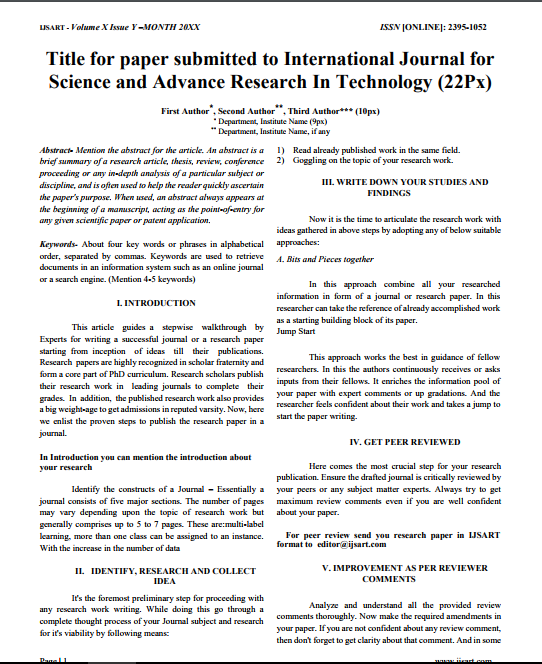
Download Paper Format
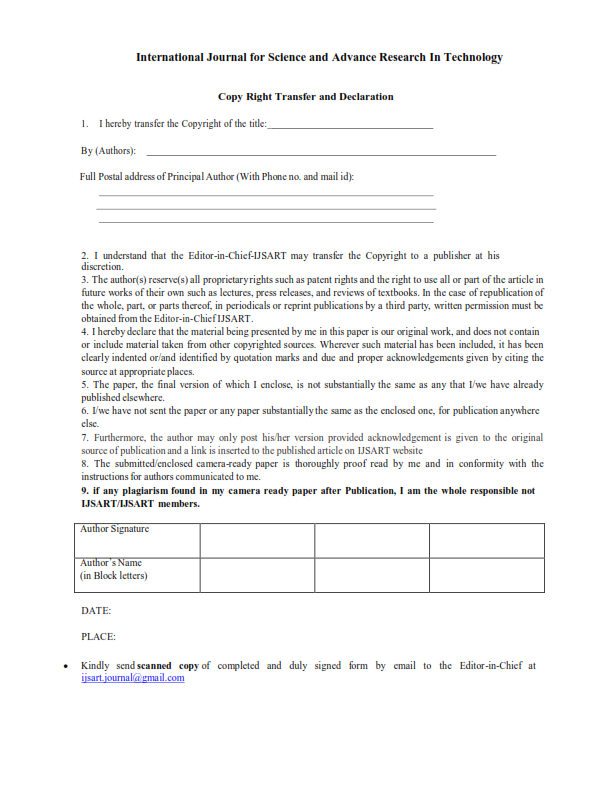
Copyright Form

Author(s)
Abstract
Generative Artificial Intelligence Has Rapidly Entered Higher Education, Creating New Opportunities For Idea Generation And Problem-solving While Also Raising Concerns About Cognitive Offloading And Dependence On Automated Support. The Present Study Examined The Relationships Among Reasoning Ability, Creative Thinking, And Self-efficacy In Generation Z College Students And Tested Whether Self-efficacy Mediated The Association Between Reasoning Ability And Creative Thinking. A Quantitative Cross-sectional Model Was Specified For 180 Undergraduate Students Aged 19–24 Years From Colleges In Chhatrapati Sambhajinagar, Maharashtra. Reasoning Ability Was Assessed With The Shailaja Bhagwat Reasoning Ability Test (RAT-BS), Creative Thinking With Baqer Mehdi’s Verbal Test Of Creative Thinking (VTCT-M), And Self-efficacy With The Self-Efficacy Scale (SES-SANS) Of Arun Kumar Singh And Shruti Narain. Reasoning Ability Correlated Positively With Self-efficacy (r = .51) And Creative Thinking (r = .51), While Self-efficacy Showed A Stronger Positive Relationship With Creative Thinking (r = .63), All P < .01. Mediation Analysis Indicated That Reasoning Ability Significantly Predicted Self-efficacy (b = 0.971, P < .01), Which In Turn Predicted Creative Thinking (b = 0.935, P < .01). The Bootstrapped Indirect Effect Was Significant (b = 0.908, 95% CI [0.594, 1.260]), With The Direct Pathway Remaining Significant, Indicating Partial Mediation. The Model Highlights Self-efficacy As A Psychological Resource That Links Analytical Competence To Creative Performance In An AI-saturated Academic Environment.
Keywords
Paper ID
IJSARTV12I9105896
Publication Date
September 18, 2026
Research Area
Social Science (Psychology)