Impact Factor
Call For Paper
Volume 12 Issue 07
July 2026
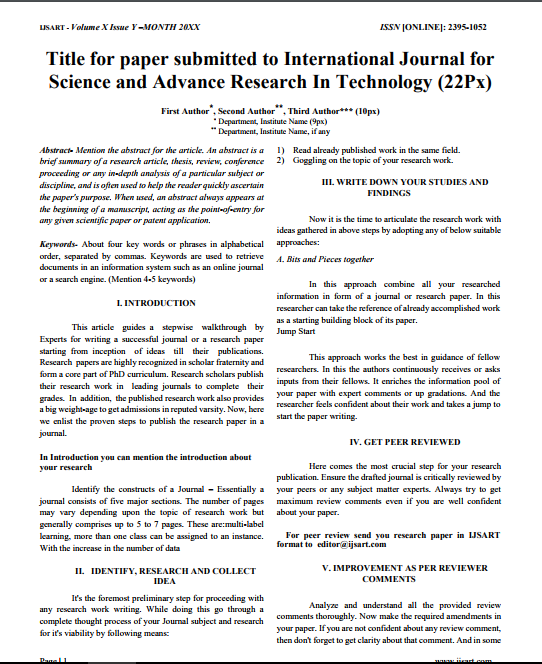
Download Paper Format
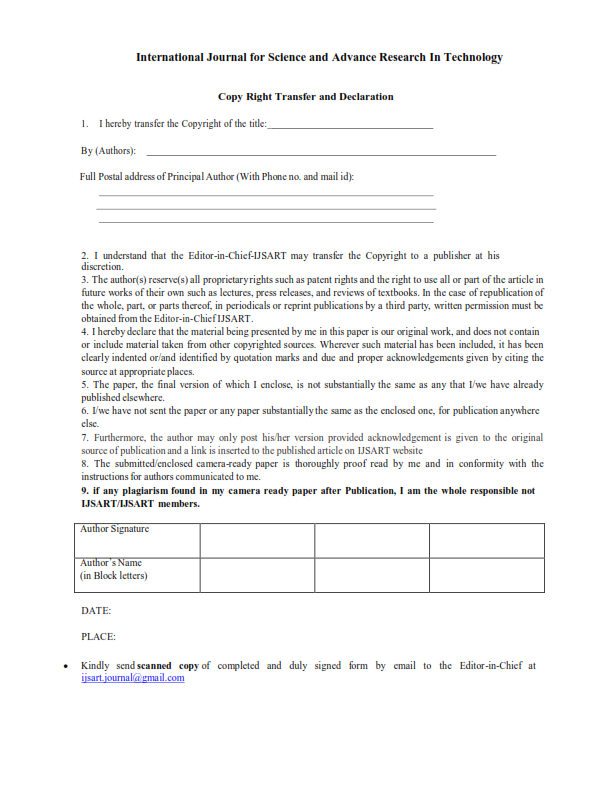
Copyright Form

Author(s)
Abstract
The Relentless Escalation Of Cyber Threats In Contemporary Network Environments Has Necessitated A Fundamental Rethinking Of Intrusion Detection Methodologies. Traditional Signature-based Systems, While Once Sufficient, Have Proven Structurally Incapable Of Addressing Polymorphic Attacks, Zero-day Exploits, And The Sheer Volume Of Anomalous Traffic Generated By Modern Enterprise Networks. This Paper Presents A Real-Time AI Intrusion Detection System (RT-AI-IDS) Developed Using A Hybrid Machine Learning Framework That Combines Unsupervised Anomaly Detection With Supervised Attack Classification. The Proposed System Employs The Isolation Forest Algorithm For Identifying Statistical Outlier Indicative Of Previously Unseen Attack Behaviour And A Random Forest Classifier For Precise Categorisation Of Known Attack Classes Using The Benchmark NSL-KDD Dataset. The System Is Architected As A Full-stack Web Application, With A FastAPI -powered Backend Exposing RESTful Endpoints For Real-time Prediction, Alert Generation, And Intrusion Logging, Coupled With A React And Vite-based Monitoring Dashboard Providing Live Visualisation Of Traffic Patterns And Detection Events. Persistent Storage Of Prediction Histories, Alert Records, And Intrusion Logs Is Managed Through A Lightweight SQLite Database, Enabling Retrospective Analysis And Operational Transparency. Experimental Evaluation Demonstrates High Classification Accuracy, Low False-positive Rates, And Real-time Latency Suitable For Production Deployment. The Architecture Is Explicitly Designed For Modularity And Horizontal Scalability, Allowing The System To Be Extended With Additional Detection Models, Data Sources, And Alerting Channels Without Architectural Disruption. The Proposed System Represents A Meaningful Contribution To The Practical Deployment Of AI -based Intrusion Detection In Resource-constrained And Enterprise-grade Environments Alike.
Keywords
Paper ID
IJSARTV12I5105478
Publication Date
May 24, 2026
Research Area
Computer Cyber Security