Impact Factor
Call For Paper
Volume 12 Issue 09
September 2026
Download Paper Format
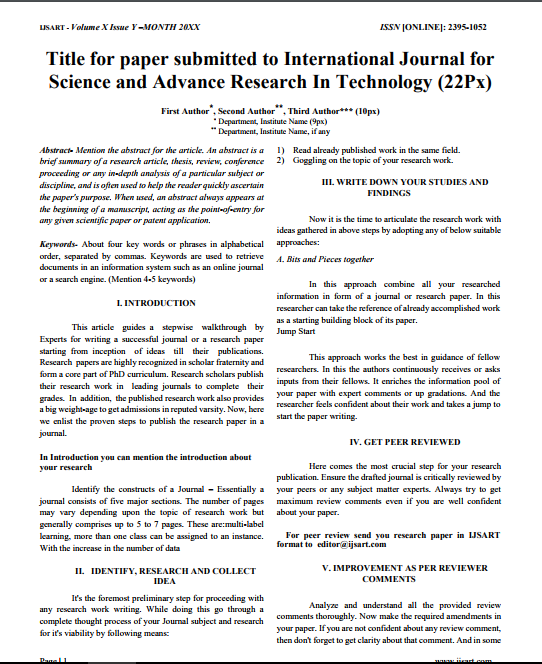
Copyright Form
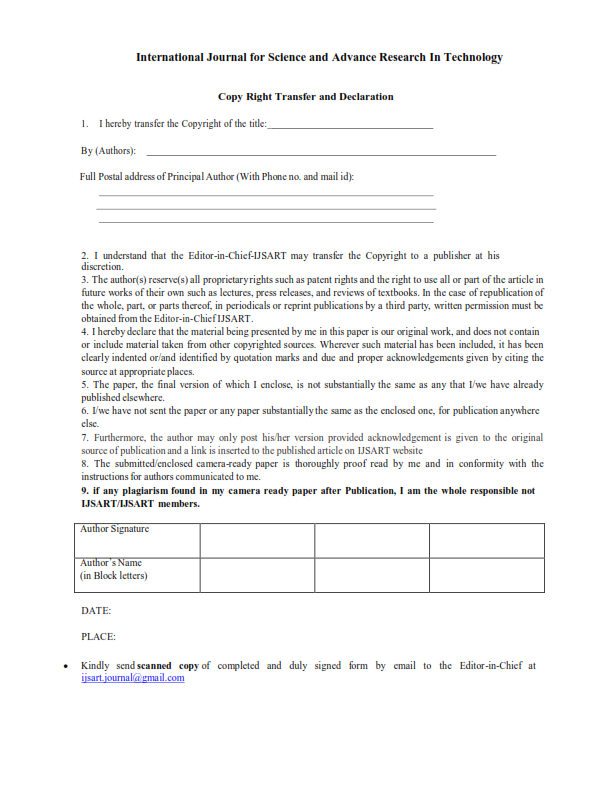

Author(s)
Abstract
Artificial Intelligence (AI) Has Emerged As A Crucial Element In Contemporary Cyber Security Frameworks, Facilitating Automated Threat Detection, Predictive Analytics, And Adaptive Defense Strategies. Nonetheless, The Deployment Of AI-driven Systems Introduces Novel Categories Of Vulnerabilities That Surpass Conventional Technical Attack Surfaces. A Significant Emerging Concept Is The Psychological Attack Surface, Which Encompasses Cognitive, Emotional, And Behavioral Vulnerabilities That Can Be Exploited By Attackers Via Digital Communication Platforms And AI-enabled Systems. Traditional Cyber Security Paradigms Primarily Emphasize Software Vulnerabilities, Network Breaches, And System Misconfigurations, Frequently Overlooking The Psychological Dimensions That Affect Human Decision-making In Cyber Contexts. Recent Research Indicates That A Considerable Fraction Of Cyber Attacks Depend On Social Engineering Methods That Manipulate Trust And Emotional Responses, Rather Than Relying On Technical Deficiencies [1], [10]. The Widespread Implementation Of AI Technologies, Such As Conversational Agents, Recommendation Systems, And Emotion Recognition Frameworks, Enables Adversaries To Take Advantage Of Both Human Users And AI Systems By Utilizing Psychological Triggers Such As Urgency, Fear, Authority, And Social Trust [2], [3]. Moreover, Adversarial Attacks Aimed At Machine Learning Models Have Broadened The Attack Surface Related To Intelligent Systems [4], [5]. These Advancements Underscore The Necessity For Cyber Security Frameworks That Incorporate Behavioral Intelligence And Psychological Assessment. This Paper Introduces An Innovative Framework Referred To As The Psychological Attack Surface Model (PASM), Which Merges Artificial Intelligence Methodologies With Principles Of Cyber Psychology To Identify And Mitigate Psychologically Driven Cyber Threats. The Proposed Model Encompasses Layered Components, Including Psychological Data Collection, Behavioral Signal Analysis, Attack Surface Mapping, And AI-driven Defense Strategies. Machine Learning Algorithms And Natural Language Processing Methods Are Employed To Recognize Manipulation Patterns Within Communication Settings. This Framework Facilitates Dynamic Modeling Of Psychological Vulnerabilities In Human–AI Interaction Ecosystems And Supports Proactive Identification Of Adversarial Behaviors. By Amalgamating Insights From Artificial Intelligence Security And Cyber Psychology Studies [6], [9], This Research Contributes To The Establishment Of Human-centered Cyber Security Architectures Capable Of Addressing Emerging Socio-technical Risks.
Keywords
Paper ID
IJSARTV12I3104679
Publication Date
March 9, 2026
Research Area
Artificial Intelligence