Impact Factor
Call For Paper
Volume 12 Issue 09
September 2026
Download Paper Format
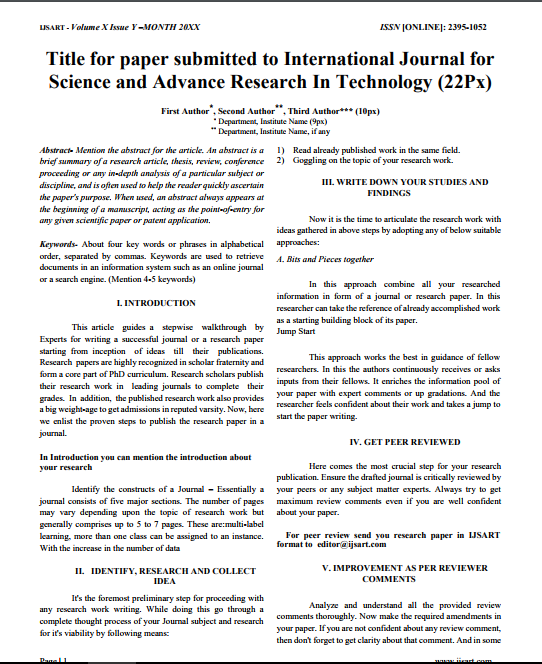
Copyright Form
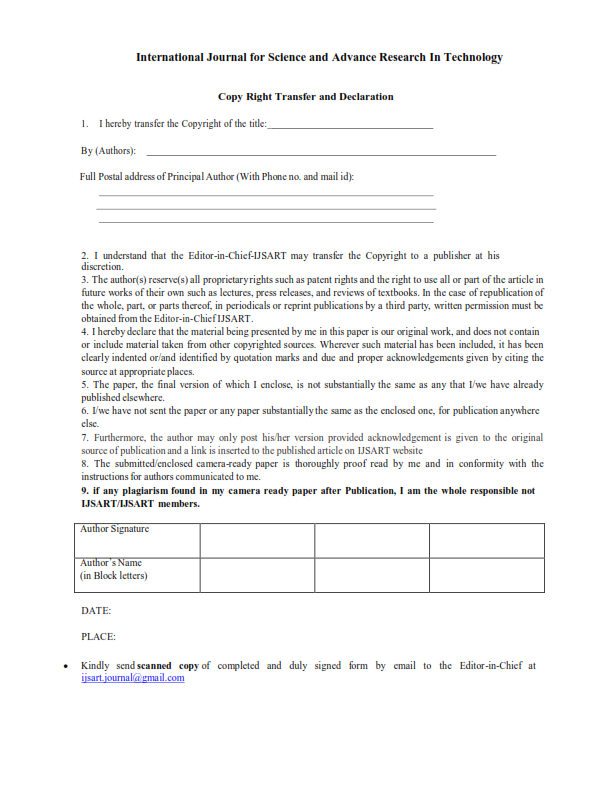

Author(s)
Abstract
Objective: Thyroid Cancer Is A Growing Global Health Concern, With Early Detection And Accurate Diagnosis Playing A Pivotal Role In Improving Patient Outcomes. This Study Aims To Develop And Evaluate Machine Learning Models For Predicting Thyroid Cancer Malignancy Using Structured Clinical And Demographic Patient Data. Methods: We Utilized A Dataset Comprising 212,691 Anonymized Patient Records, Featuring Demographic Information (age, Gender), Clinical Indicators (family History Of Thyroid Disease), And Biochemical Markers (TSH, T3, T4 Levels). The Dataset Was Preprocessed To Address Missing Values, Encode Categorical Variables, And Standardize Numerical Features. Eight Machine Learning Algorithms—Logistic Regression, Random Forest, Gradient Boosting, AdaBoost, Decision Tree, Naive Bayes, XGBoost, And LightGBM—were Trained And Evaluated Using Accuracy, Precision, Recall, And F1-score. Results: The Top-performing Models—Logistic Regression, Gradient Boosting, And AdaBoost—achieved An Accuracy Of 82.5%, Demonstrating Strong Predictive Capability For Classifying Benign And Malignant Thyroid Cancer Cases. The Decision Tree Model Underperformed With An Accuracy Of 70.2%, Likely Due To Overfitting. Our Findings Were Contextualized With A 2024 Journal Of Medical And Health Sciences (JMHS) Study, Which Reported A 92.3% Accuracy For Predicting Thyroid Cancer Recurrence Using Logistic Regression, Underscoring The Potential Of Machine Learning In Clinical Settings. Clinical Implications: The Results Highlight The Utility Of Ensemble Machine Learning Models As Decision-support Tools For Clinicians, Facilitating Early Risk Assessment And Personalized Treatment Planning. Integration With Electronic Health Records (EHR) Could Further Streamline Diagnostic Workflows And Enhance Patient Care. Conclusion: This Study Validates The Effectiveness Of Machine Learning In Predicting Thyroid Cancer Malignancy, With Ensemble Models Showing Particular Promise. Future Research Will Focus On Hyperparameter Optimization, Deep Learning Techniques, And Real-world Clinical Deployment To Refine Accuracy And Practical Applicability.
Keywords
Paper ID
IJSARTV12I5105442
Publication Date
May 22, 2026
Research Area
Data Science