Impact Factor
Call For Paper
Volume 12 Issue 09
September 2026
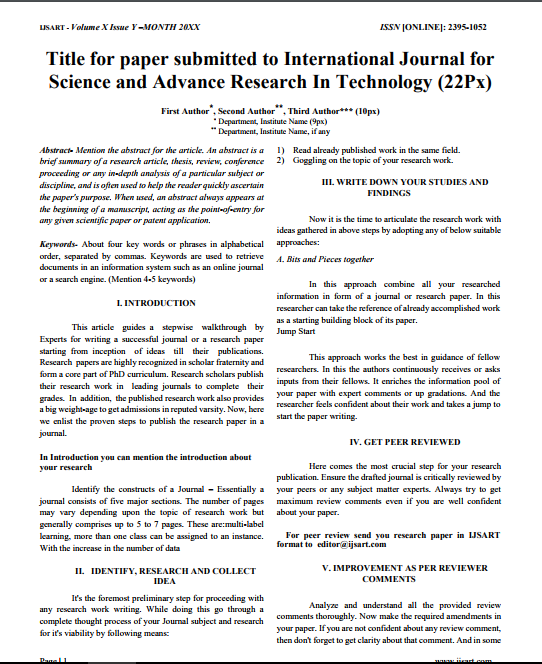
Download Paper Format
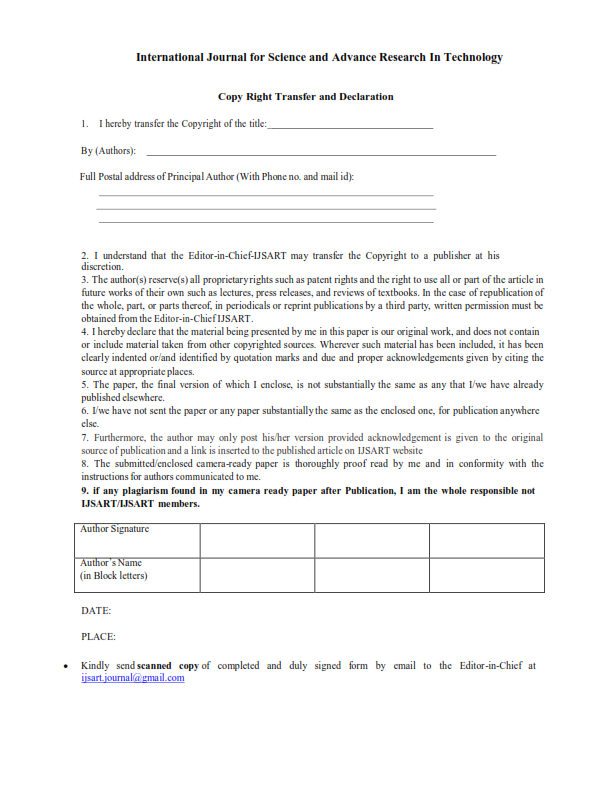
Copyright Form

Author(s)
Abstract
Concrete Is The Most Widely Used Construction Material; However, Its Low Tensile Strength, Brittleness, And Susceptibility To Cracking Limit Its Performance In Structural Applications. The Incorporation Of Natural And Cellulose-based Fibers Offers A Sustainable And Eco-friendly Solution To Improve The Mechanical And Durability Properties Of Concrete. This Study Investigates The Influence Of Various Natural Fibers (cotton, Jute, And Sisal) And Cellulose-derived Fibers (viscose, Tencel, And Cellulose Acetate) On The Performance Of M25 Grade Concrete. Concrete Mixes Were Prepared With Fiber Contents Ranging From 0.1% To 2.0% By Weight Of Cement. The Specimens Were Tested For Compressive Strength, Flexural Strength, Water Absorption, And Ultrasonic Pulse Velocity (UPV) At Different Curing Ages. The Experimental Results Indicated That The Incorporation Of Fibers Significantly Enhanced The Mechanical Performance Of Concrete Up To An Optimum Dosage Of Approximately 1.25%. Beyond This Level, Strength Gradually Decreased Due To Reduced Workability, Fiber Agglomeration, And Increased Porosity. Among All The Fibers Investigated, Tencel Fiber Exhibited The Best Overall Performance, Achieving A Maximum 28-day Compressive Strength Of 37.2 MPa And Flexural Strength Of 7.2 MPa At 1.25% Fiber Content. Sisal And Cellulose Acetate Fibers Also Demonstrated Excellent Performance, With Compressive Strengths Of 36.3 MPa And 36.0 MPa, Respectively. The Addition Of Fibers Improved Crack Resistance, Toughness, And Post-cracking Behavior Of Concrete By Bridging Microcracks And Delaying Crack Propagation. Water Absorption Increased With Increasing Fiber Content Due To The Hydrophilic Nature Of The Fibers; However, The Increase Remained Within Acceptable Limits At Optimum Dosages. UPV Results Confirmed Good Internal Quality And Homogeneity Of The Fiber-reinforced Concrete, With Maximum Values Of Approximately 4.7 Km/s Observed For Tencel, Sisal, And Cellulose Acetate Fiber Mixes. The Study Concludes That Natural And Cellulose-based Fibers Can Be Effectively Utilized As Sustainable Reinforcing Materials In Concrete. Their Incorporation Enhances Mechanical Strength, Crack Resistance, And Durability While Promoting Environmentally Friendly Construction Practices Through The Use Of Renewable And Biodegradable Resources. Among The Fibers Studied, Tencel Fiber Was Found To Be The Most Effective In Improving The Overall Performance Of Concrete.
Keywords
Paper ID
IJSARTV12I6105628
Publication Date
June 8, 2026
Research Area
Civil Engineering