Impact Factor
Call For Paper
Volume 12 Issue 09
September 2026
Download Paper Format
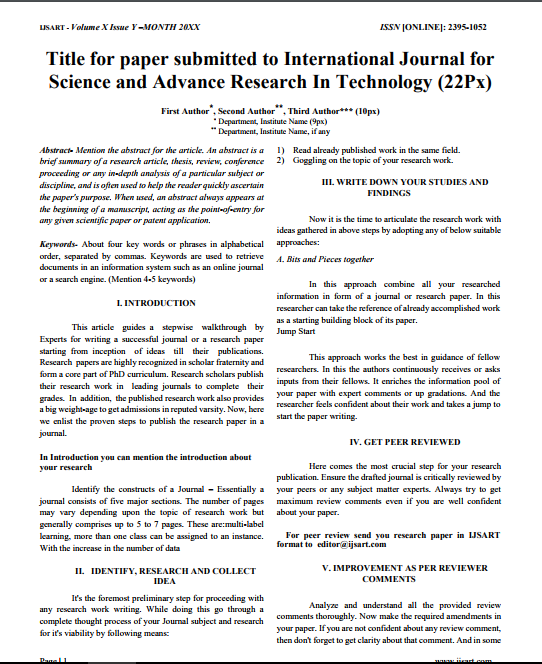
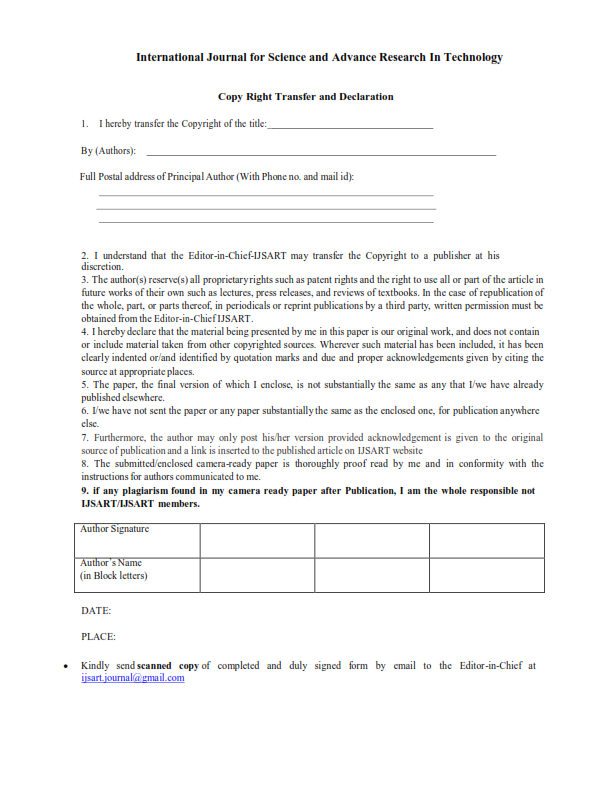
Copyright Form

Author(s)
Abstract
Ordinary Portland Cement (OPC) Is The Most Heavily Consumed Man-made Material On Earth. However, This Massive Scale Comes With A Severe Environmental Penalty: The 1:1 Carbon Ratio: As A Rule Of Thumb In Material Science, Manufacturing 1 Ton Of OPC Releases Approximately 0.8 To 1.0 Ton Of Carbon Dioxide Directly Into The Atmosphere. The Cement Industry Alone Is Responsible For Roughly 7% To 8% Of All Global Carbon Dioxide Emissions And Also Cement Manufacturing Is A Highly Energy-intensive Process, Requiring Temperatures Up To 1450°C Inside The Rotary Kiln. This Works Presents A Comprehensive Experimental Investigation Into The Mechanical Characterization And Acid-resistance Kinetics Of Sustainable Binary Blended Concrete Incorporating Agro-waste Rice Husk Ash (RHA) As A Partial Replacement For Ordinary Portland Cement (OPC). To Evaluate The Structural And Durability Performance, Cement Was Substituted With RHA At Varying Dosages Ranging From 0% To 25% At Increments Of 5%. M35 Grade Concrete Mixes Were Designed In Accordance With IS 10262 Guidelines, Keeping A Constant Water-binder Ratio. Mechanical Evaluation Was Conducted Via Compressive, Split-tensile, And Flexural Strength Tests At 7 And 28 And 56 Days Of Curing. The Core Focus Of This Study Centers On The Durability Kinetics Of The Blended Matrix When Subjected To Aggressive Chemical Environments. Concrete Specimens Were Fully Immersed In A 5% Hydrochloric Acid (HCl) Solution For Exposure Durations Of 7, 28 And 60 Days.
Keywords
Paper ID
IJSARTV12I5105483
Publication Date
May 24, 2026
Research Area
STRUCTURAL ENGINEERING