Impact Factor
Call For Paper
Volume 12 Issue 09
September 2026
Download Paper Format
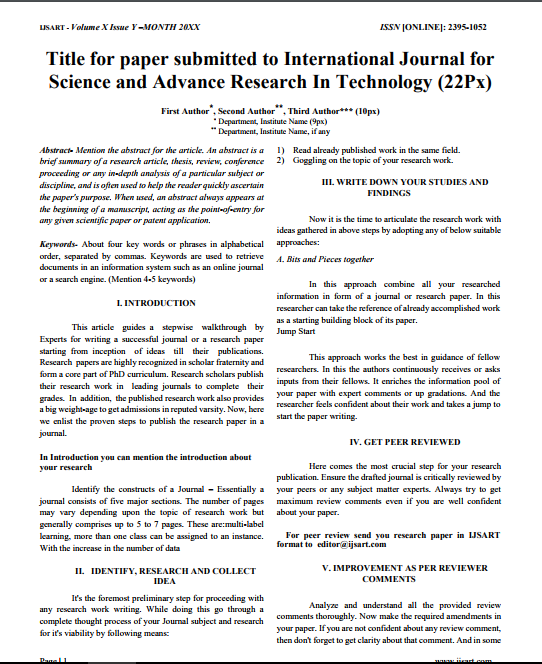
Copyright Form
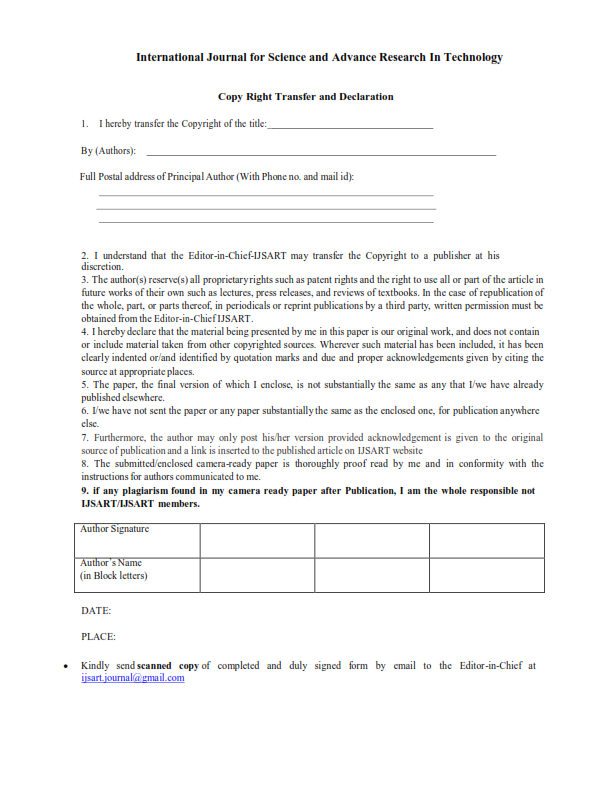

Author(s)
Abstract
An Increase In The World’s Demand For Renewable/sustainable Sources Of Energy Has Created Significant Interest In The Environmental Benefits Of Producing Biogas From Organic Waste For Both Energy Production And Managing Organic Waste On A Distributed Basis. The Traditional Biogas Plants Exhibit A Number Of Problems – Including Low Concentrations Of Methane, Instability In The Digestion Process, Poor Feedstock Management, And Lack Of Effective Systems To Purify Gas Produced – All Of Which Lower The Combustion Efficiency And Energy Output Of The Plant. In This Article, The Authors Provide A Conceptual Framework For Designing And Optimising A Smart Biogas Plant To Improve Yields And Quality Of Biogas Produced. The Proposed System Integrates Multiple Optimisation Strategies, Including Feedstock Balancing Through Controlled Carbon-to-nitrogen (C:N) Ratio Management, Mechanical And Thermal Pretreatment Of Biomass, Mesophilic Temperature Regulation Using Insulation And Solar-assisted Heating, Controlled Mixing Mechanisms, And Low-cost Biogas Purification Techniques For The Removal Of Carbon Dioxide, Hydrogen Sulfide, And Moisture. In Addition, The Incorporation Of Temperature Sensors And Automated Control Systems Is Proposed To Maintain Stable Anaerobic Digestion Conditions And Improve Process Efficiency. Theoretical Analysis And Findings From Existing Literature Indicate That The Integrated Optimisation Approach Can Significantly Improve Digestion Stability, Methane Concentration, Calorific Value, And Biogas Purity Compared To Conventional Biogas Systems. Furthermore, The Proposed Model Offers Potential Benefits In Terms Of Renewable Energy Generation, Waste Utilisation, Environmental Sustainability, And Reduced Greenhouse Gas Emissions. The Study Provides A Comprehensive Conceptual Foundation For Future Experimental Validation And The Development Of Intelligent High-efficiency Biogas Systems For Rural And Industrial Applications.
Keywords
Paper ID
IJSARTV12I6105585
Publication Date
June 2, 2026
Research Area
Computer Engineering