Impact Factor
Call For Paper
Volume 12 Issue 07
July 2026
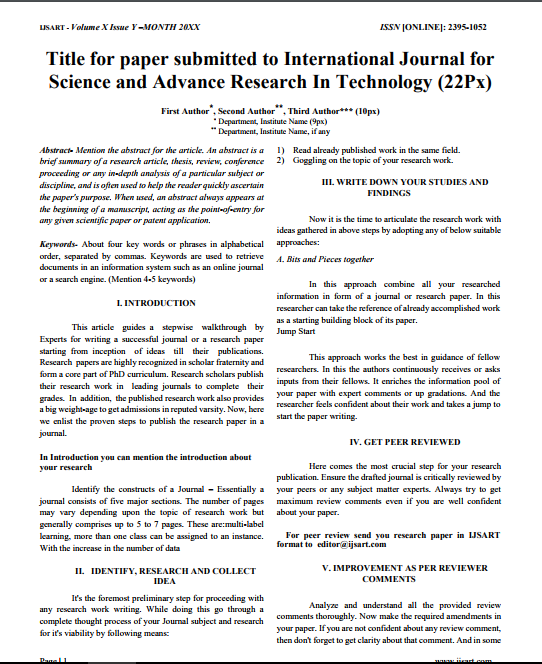
Download Paper Format
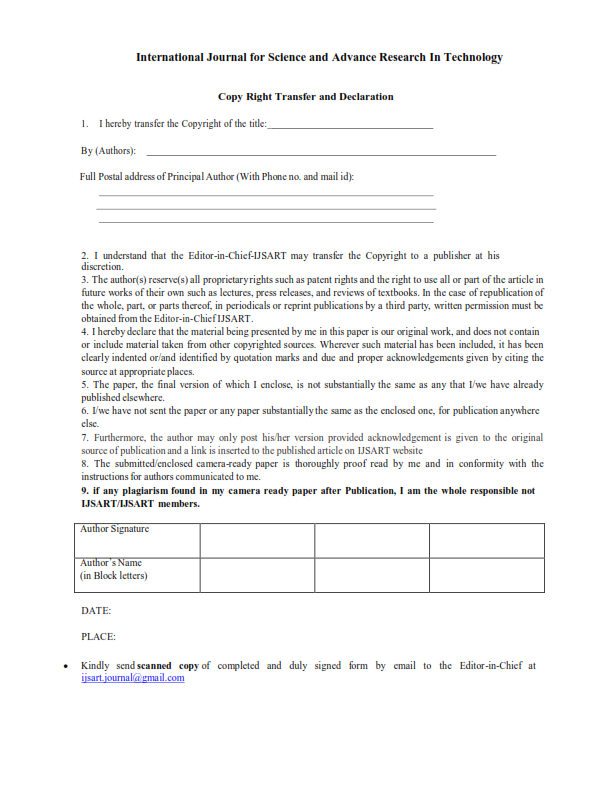
Copyright Form

Author(s)
Abstract
In Many Healthcare Facilities Across Low-resource Regions, Digital Infrastructure Is Either Underdeveloped Or Completely Absent. As A Result, Healthcare Providers Rely Heavily On Handwritten Medical Records To Document Patient Information, Diagnoses, Treatments, And Prescriptions. While These Paper-based Records Are Essential, They Are Difficult To Manage, Prone To Human Error, And Nearly Impossible To Analyse At Scale. This Project Addresses The Challenge By Proposing An Automated System That Extracts Valuable Medical Information From Handwritten Documents With Minimal Human Involvement. The System Combines Two Advanced Technologies: Optical Character Recognition (OCR) And Named Entity Recognition (NER). OCR, Powered By Google’s Vision API, Is Used To Convert Handwritten Notes Into Machine-readable Text. Despite The Variability In Handwriting Styles, The System Achieves High Accuracy In Text Extraction—over 90% In Most Cases. After The Text Is Digitized, It Is Processed Using A Specialized SpaCy NER Model (en_ner_bc5cdr_md) Trained On Biomedical Data. This Model Effectively Identifies And Categorizes Critical Medical Entities Such As Diseases, Symptoms, And Drug Names, Helping Structure The Data For Clinical Use. Designed With The Needs Of Under-resourced Healthcare Environments In Mind, This Approach Is Lightweight, Scalable, And Can Be Integrated Into Existing Systems With Minimal Cost. It Reduces The Burden On Medical Staff, Improves The Accessibility Of Patient Data, And Lays The Groundwork For Future Enhancements Like Analytics, Reporting, And Interoperability With Electronic Health Records (EHRs). Initial Experiments On Real-world Handwritten Medical Documents Show Promising Results. The OCR Engine Handled Variations In Handwriting With Impressive Robustness, And The NER Model Achieved A Strong F1-score Of 0.88, Indicating High Precision And Recall. Overall, This Solution Has The Potential To Transform How Handwritten Medical Records Are Handled In Underserved Areas—bridging The Gap Between Analog Documentation And Digital Healthcare Systems.
Keywords
Paper ID
IJSARTV11I5103592
Publication Date
May 17, 2025
Research Area
CSE