Impact Factor
Call For Paper
Volume 12 Issue 09
September 2026
Download Paper Format
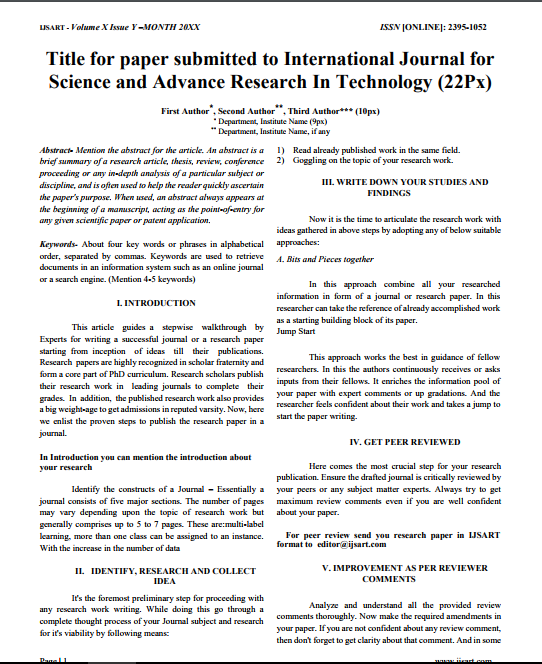
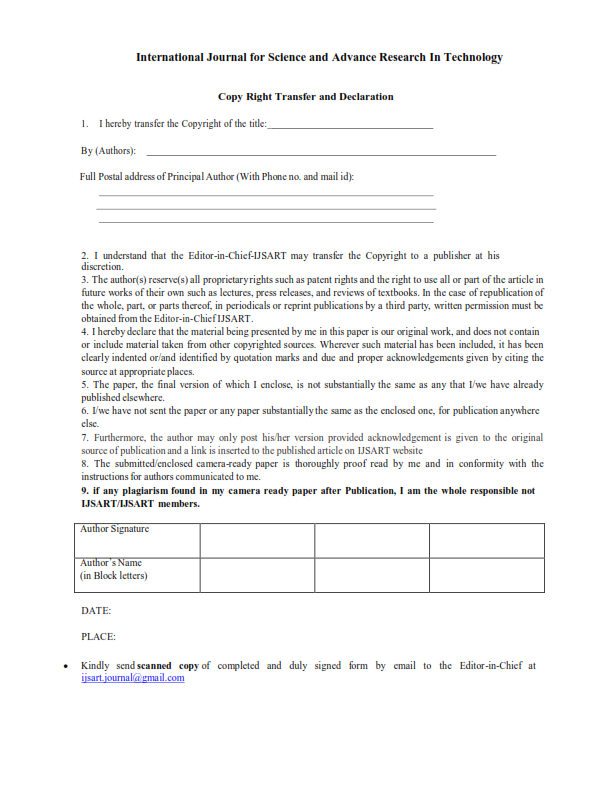
Copyright Form

Author(s)
Abstract
A Howe Truss Bridge Is A Widely Used Structural Configuration Known For Its Efficiency In Load Distribution And Suitability For Medium To Long Spans. This Study Presents A Comparative Analysis Of A Howe Truss Bridge Using Hollow Steel Sections And Open Steel Sections, Modeled And Analyzed With STAAD Pro. The Primary Objective Is To Evaluate The Structural Performance, Material Efficiency, And Economic Feasibility Of Both Section Types Under Identical Loading And Boundary Conditions. The Bridge Models Are Subjected To Dead Load, Live Load, And Environmental Loads In Accordance With Relevant Design Standards. Key Parameters Such As Deflection, Stress Distribution, Weight Of Structure, And Factor Of Safety Are Assessed. Hollow Steel Sections, Due To Their Closed Geometry, Exhibit Higher Torsional Rigidity And Improved Resistance To Buckling, Whereas Open Steel Sections Offer Ease Of Fabrication And Lower Initial Cost. The Analysis Results Highlight The Advantages And Limitations Of Each Section Type In Terms Of Strength, Stability, And Overall Performance. The Study Concludes By Identifying The More Efficient Section Type For Howe Truss Bridges Based On Structural Behavior And Cost-effectiveness, Providing Useful Insights For Engineers In The Design And Optimization Of Truss Bridge Systems.
Keywords
Paper ID
IJSARTV12I4105051
Publication Date
April 17, 2026
Research Area
Structural Engineering