Impact Factor
Call For Paper
Volume 12 Issue 09
September 2026
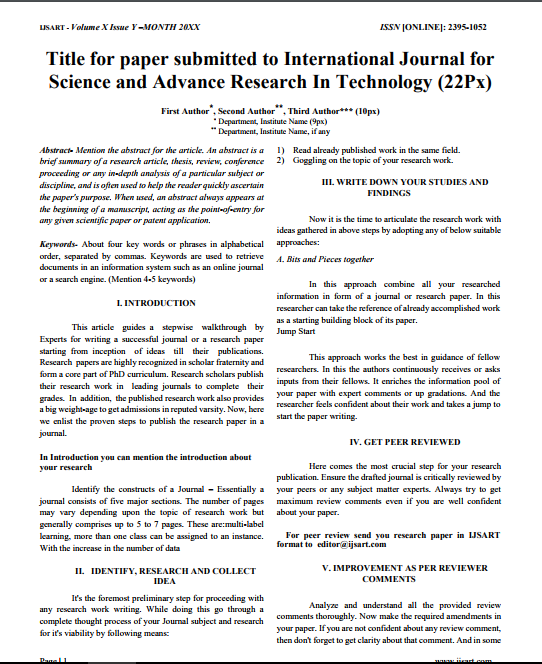
Download Paper Format
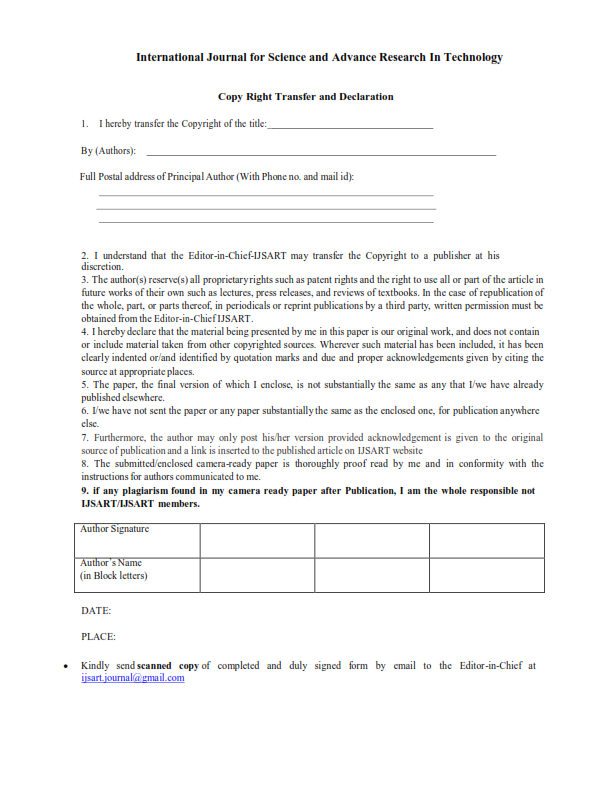
Copyright Form

Author(s)
Abstract
The Fast Pace At Which Artificial Intelligence Is Being Folded Into Library Work Is Reshaping Both Information Management And The Librarian's Professional Role. This Study Looks At How Librarians Perceive AI — Their Awareness Of It, How Much They Actually Use It, The Institutional Support (or Lack Of It) Behind That Use, Its Perceived Effects On Their Work, The Obstacles They Face, And How Ready They Feel For What's Coming. Survey Responses From 180 Librarians Were Analyzed Using Means And Standard Deviations. Awareness Levels Were Generally High (M = 3.75), With AI-based Plagiarism-detection Tools The Most Familiar (M = 4.21). Actual Use, However, Was Low (M = 2.59) Plagiarism Detection Was The Only Application Used Heavily, While Cataloguing, Analytics, And Automation Tools Saw Minimal Uptake. Institutional Support Was The Weakest Area Overall (M = 2.40), Reflecting Scarce Training, Tight Budgets, And No Formal AI Policies. Even So, Librarians Reported A Moderate-to-high Positive View Of AI's Professional Impact, Especially Around Service Efficiency And Information-retrieval Quality (M = 3.40). The Biggest Challenges Cited Were Inadequate Training, Limited Funding, Weak Infrastructure, And Ethical Or Privacy Concerns (M = 3.75). Notably, Librarians Showed Strong Enthusiasm And Readiness For AI (M = 4.19), Voicing Clear Willingness To Train And To See AI Literacy Built Into LIS Education. Overall, The Study Surfaces A Paradox: High Awareness And Eagerness Paired With Low Actual Use, Driven Mainly By Institutional Roadblocks Rather Than Personal Hesitation. Recommendations Include Beefing Up Training, Setting Aside Dedicated Budgets, Drafting Formal AI Policies, Upgrading Infrastructure, And Weaving AI Literacy Into Professional Curricula To Help Translate Awareness Into Everyday Practice
Keywords
Paper ID
IJSARTV12I9105875
Publication Date
September 7, 2026
Research Area
Library & Information Science