Impact Factor
Call For Paper
Volume 12 Issue 09
September 2026
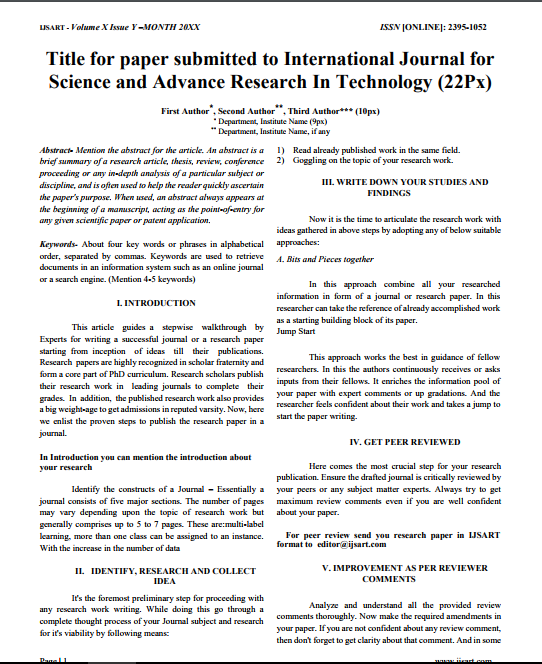
Download Paper Format
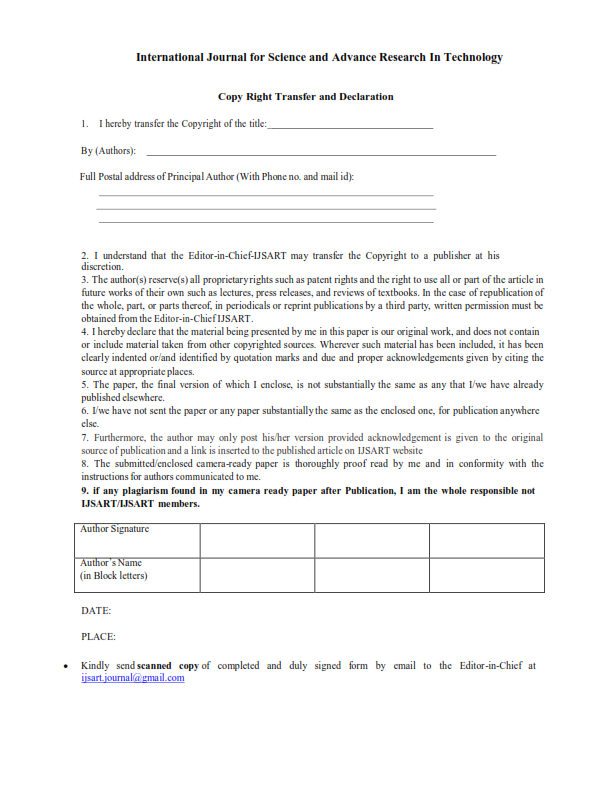
Copyright Form

Author(s)
Abstract
The NFC Library Management System Is An Innovative And Efficient Solution Designed To Streamline Library Operations By Leveraging NFC (Near Field Communication) Technology. The System Focuses On Two Primary Functionalities: Attendance Tracking And Book Borrowing Management, Making Library Interactions Seamless And Automated. When Students Scan Their NFC Tags, Their Attendance Is Automatically Recorded In The System, Ensuring Accurate Tracking By Avoiding Duplicate Entries For The Same Day. Additionally, The System Maintains A Count Of Unique Attendance Days For Each Student. For Book Management, Students Can Borrow Or Return Books By Scanning NFC Tags Associated With Both Their Account And The Book. The System Records Borrow Dates, Calculates Due Dates, And Dynamically Manages Fines For Overdue Returns. The Backend Is Developed Using Node.js And Express.js, With MongoDB Serving As The Database. The Frontend, Built Using React.js, Provides A User- Friendly Interface To Monitor Attendance And Manage Library Records. Integration With Arduino Uno R4 WiFi Enables Real- Time NFC Data Transmission To The Backend. Furthermore, An SMS Notification Feature Is Implemented Using Twilio API To Alert Students About Overdue Books, Accumulated Fines, And Upcoming Due Dates. This Project Aims To Replace Traditional, Manual Library Management Processes With An Automated System That Reduces Errors, Enhances Efficiency, And Improves The Overall User Experience.
Keywords
Paper ID
IJSARTV12I2104570
Publication Date
February 13, 2026
Research Area
Internet Of Things (IoT) / Artificial Intelligence And Data Science