Impact Factor
Call For Paper
Volume 12 Issue 09
September 2026
Download Paper Format
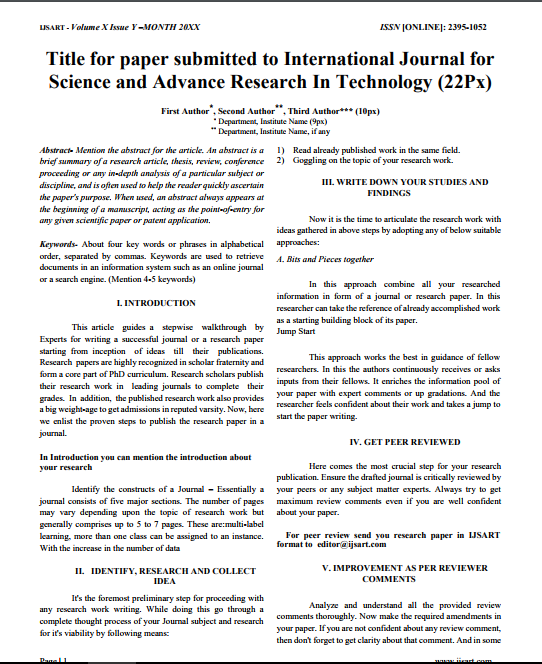
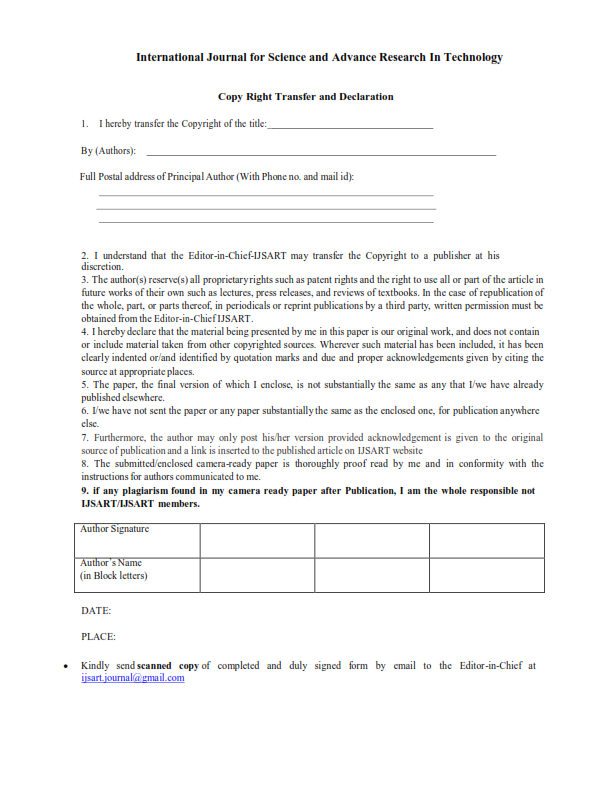
Copyright Form

Author(s)
Abstract
Managing Wastewater Is Essential For Keeping Our Environment Clean And Ensuring Water Resources Are Used Wisely. As Cities Grow And Environmental Conditions Worsen, Smarter Wastewater Management Methods Are Becoming More Important Than Ever. Modern Technologies Like Wireless Sensor Networks (WSN) And The Internet Of Things (IoT) Are Making Significant Improvements In This Area. The Proposed IoT-WMS Model Uses Blockchain Technology To Securely Store Information And Create An Incentive System That Encourages Recycling Wastewater. Blockchain Tracks Details About The Quality And Quantity Of Treated Water And Rewards Households And Industries With Tokens For Their Recycling Efforts. This Encourages Water Conservation And More Responsible Wastewater Management. However, Since Tokens Are Tied To Data, There’s A Risk Of Information Manipulation. To Prevent This, Anomaly Detection Algorithms Are Used To Spot Any Tampered IoT Sensor Data, Ensuring The Data’s Reliability. IoT Sensors Measure Important Metrics Like Chemical Composition, PH Levels, Turbidity, And Conductivity To Help Track Water Quality Accurately. SCADA (Supervisory Control And Data Acquisition) Systems Complement This Model By Adding Enhanced Monitoring And Control Features. SCADA Systems Collect Real-time Data From Treatment Plants, Tracking Flow Rates, Chemical Dosing Levels, Pump Status, And Storage Tank Conditions. With This Information, Operators Can Make Better Decisions And Respond Quickly To Changing Conditions. SCADA Can Also Automate Controls For Pumps, Valves, And Chemical Dosing Equipment Based On Sensor Data, Minimizing Manual Intervention And Improving Efficiency. The System Logs Detailed Data For Analysis, Which Supports Predictive Maintenance And Helps Identify Trends For Better Resource Management. SCADA Systems Can Alert Operators Instantly If There Are Issues Like Sensor Faults, Chemical Imbalances, Or Unexpected Changes In Flow Rates, Ensuring Swift Action Can Be Taken. Additionally, Remote Access Features Let Operators Monitor And Adjust System Settings From Afar, Providing More Flexibility When Managing Large-scale Wastewater Systems. When The IoT-WMS Model Is Enhanced With SCADA Integration, It Shows Impressive Results: A Wastewater Recycling Rate Of 96.3%, An Efficiency Ratio Of 88.7%, A Low Moisture Content Ratio Of 32.4% For Better Sludge Control, A 90.8% Increase In Wastewater Reuse, And An Anomaly Detection Accuracy Of 92.5%. By Combining IoT, Blockchain, And SCADA Systems, This Innovative Wastewater Management Model Delivers Improved Efficiency, Greater Security, And Meaningful Incentives For Water Conservation. This Forward-thinking Approach Aligns With The Goal Of Developing Smarter And More Sustainable Cities.
Keywords
Paper ID
IJSARTV11I4103220
Publication Date
April 20, 2025
Research Area
Environmental Engineering