Impact Factor
Call For Paper
Volume 12 Issue 09
September 2026
Download Paper Format
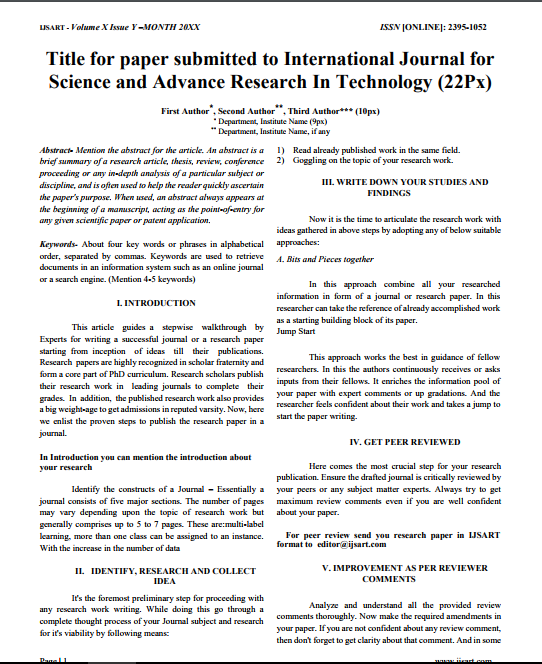
Copyright Form
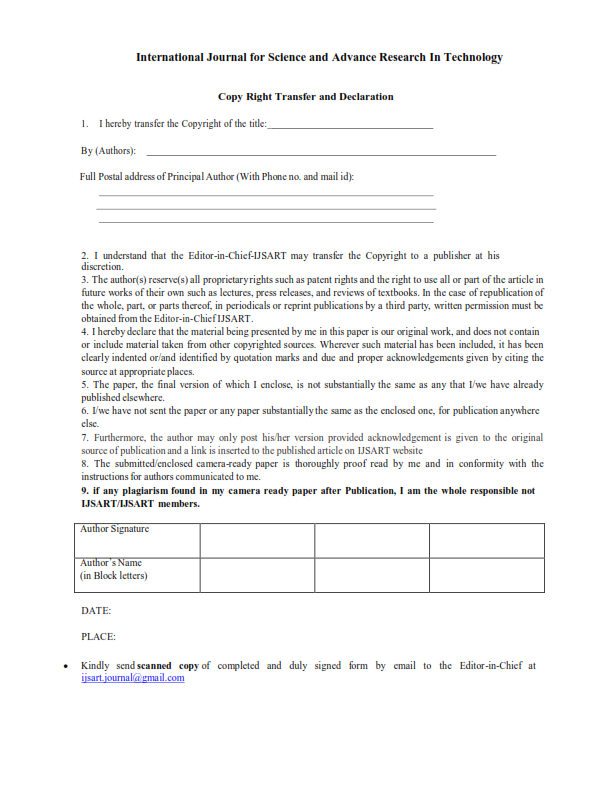

Author(s)
Abstract
The Rapid Adoption Of Distributed Systems In Modern Computing Has Introduced New Security Challenges, Particularly As Organizations Increasingly Rely On A Diverse Set Of Devices, Users, And Networks. Traditional Perimeter-based Security Models Are Insufficient For Securing Distributed Systems, Particularly In Environments Characterized By Remote Work, Cloud Computing, And Hybrid Infrastructures. Zero-trust Principles, Which Emphasize "never Trust, Always Verify" And Assume No Implicit Trust Within A Network, Have Emerged As A Promising Approach To Address These Challenges. However, Implementing Zero-trust Principles In Distributed Systems Introduces Practical Complexities, Including Performance Trade-offs, Scalability Issues, And Integration Challenges In Legacy Systems. This Paper Addresses These Gaps By Proposing A Framework For Applying Zero-trust Principles In Distributed Systems, Focusing On Secure Communication, Dynamic Authentication, And Resource Access Control. The Research Adopts A Design Science Research (DSR) Methodology, Which Is Widely Used In Information Systems And Software Engineering To Develop Innovative Solutions To Practical Problems. The Results Of The Evaluation Analyzed Showed That By Introducing Some Performance Techniques Such As Asynchronous Policy Caching, It Reduced The Number Of Requests To The Policy Engine By 40%, Significantly Lowering Latency During Access Control Checks. Lightweight Mutual TLS (mTLS) Technique Reduced The Cryptographic Overhead By 30%, To Address Scalability Issues, Load Balancing And Auto-Scaling Technique Was Used Which Reduced Request Latency By 15%, Ensuring Consistent Performance During Peak Loads. While Edge-based Processing Reduced Authentication Latency For IoT Devices By 50%, While The Framework Demonstrated Strong Security Against Lateral Movement Attacks, It Introduced Minor Latency Under High Workloads, Which Was Addressed Through Optimization In Subsequent Iterations.
Keywords
Paper ID
IJSARTV11I5103685
Publication Date
May 26, 2025
Research Area
Software Engineering