Impact Factor
Call For Paper
Volume 12 Issue 09
September 2026
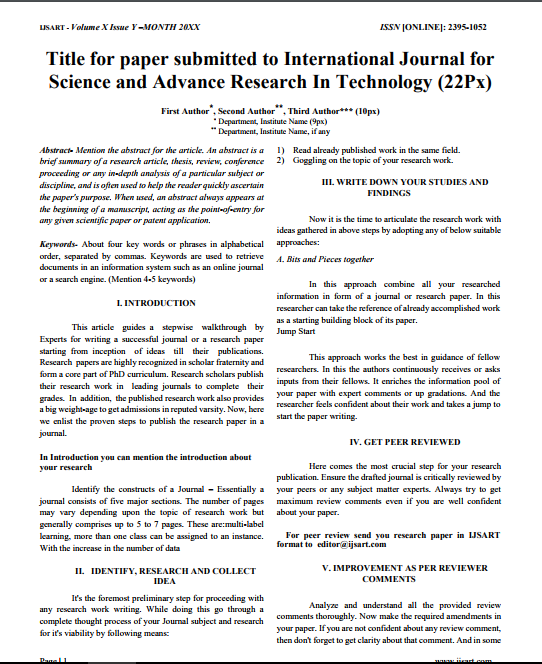
Download Paper Format
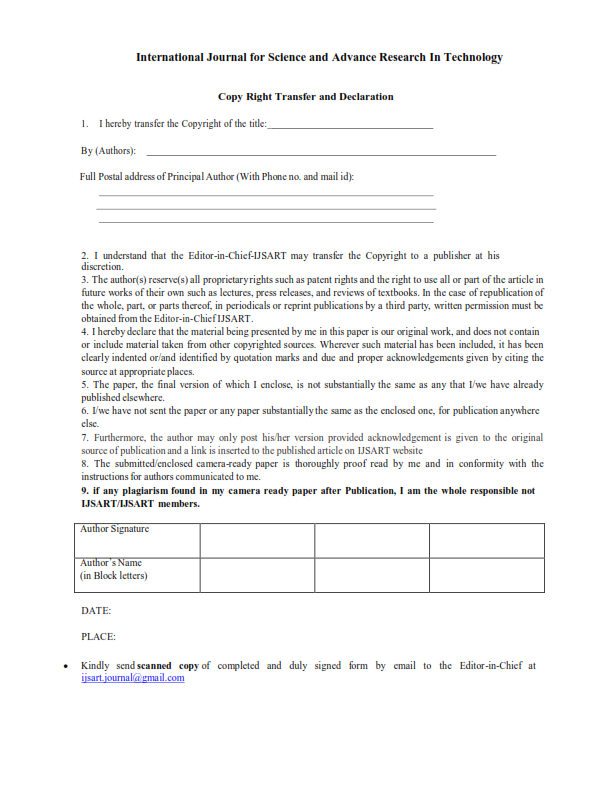
Copyright Form

Author(s)
Abstract
High-rise Buildings In Seismic Zones Are Vulnerable To Significant Damage During Earthquakes Due To Their Height And Stiffness. To Mitigate Seismic Risks, Base Isolation Has Emerged As A Vital Engineering Solution. This Research Aims To Evaluate The Seismic Performance Of High-rise Buildings With Varying Aspect Ratios, Both With And Without Base Isolation. The Study Focuses On G+30 And G+40 Storey Buildings Modeled In ETABS 2016, Considering Aspect Ratios Ranging From 0.25 To 2.0. The Research Compares Three Building Shapes: Square, T-shape, And C-shape, To Assess The Effectiveness Of Base Isolation In Reducing Seismic-induced Displacement, Drift, And Shear Forces. Using A Combination Of Response Spectrum And Time History Analysis, The Study Simulates Earthquake Forces Using Real Seismic Records (Bhuj Earthquake). Base Isolation, Implemented With Lead Rubber Bearings (LRB), Is Used To Decouple The Structure From Ground Motion, Thereby Reducing Seismic Forces Transmitted To The Building. The Results Show That Base Isolation Significantly Reduces Lateral Displacement And Drift, With Improvements Ranging From 30% To 60%, Depending On The Building Shape And Aspect Ratio. Additionally, Base Shear Is Reduced By Up To 60%, Demonstrating The System’s Efficiency In Minimizing Lateral Forces. The Study Concludes That Base Isolation Is Highly Effective In Enhancing The Seismic Performance Of High-rise Buildings, Particularly Those With Larger Aspect Ratios And Irregular Geometries. This Research Provides Valuable Insights Into The Application Of Base Isolation In Seismic Design And Offers Recommendations For Improving Building Resilience In Earthquake-prone Regions.
Keywords
Paper ID
IJSARTV12I5105358
Publication Date
May 14, 2026
Research Area
Civil Engineering