Impact Factor
Call For Paper
Volume 12 Issue 09
September 2026
Download Paper Format
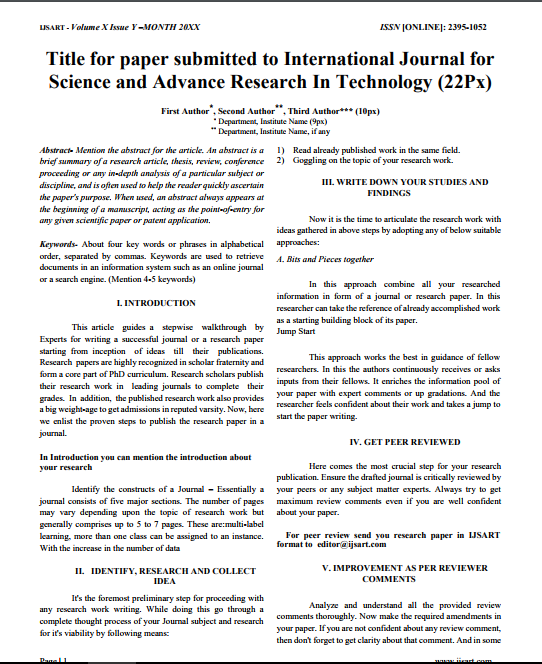
Copyright Form
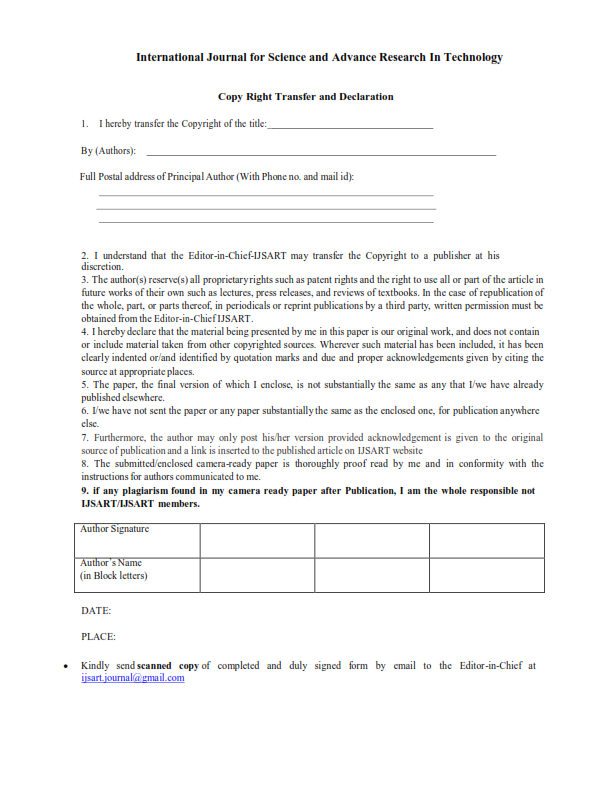

Author(s)
Abstract
Food Safety Is An Important Element In Public Health, Economic Stability, And Sustainable Development Since Foodborne Disease Continues To Affect Humans Around The World. Estimates Show That Almost 600 Million Individuals Contract Foodborne Diseases Every Year, Resulting In Substantial Death, Medical Expenses, And Reduced Efficiency. Rapid Globalization Of Food Supply Chains, Urbanization, And Changing Consumer Behaviors Have Made Food Safety An Even More Challenging Task To Accomplish Due To High Risks Of Contamination Throughout The Food Chain. The Current Research Paper Contains A Thorough Review Of Food Safety Standards And Measures Implemented To Reduce The Possibility Of Contamination Of Food From Its Initial Stage Until It Reaches Consumers. Specifically, The Study Analyzes The Most Common Forms Of Contamination, Biological, Chemical, And Physical Ones, Along With The Factors Contributing To Food Contamination And Food Safety Issues. Hygiene And Food Safety Management Failures Are Among These Factors, Along With Cross-contamination, Poor Food Handling Practices, And Inappropriate Storage Conditions. Environmental Factors, Such As Contaminated Soils, Can Also Be Considered To Be Among Food Safety Hazards Indirectly. This Paper Also Reviews Some Important Food Safety Approaches Nationally And Internationally, Which Include HACCP (Hazard Analysis And Critical Control Points), ISO 22000, Codex Alimentarius, And Regulations Set Forth By The Regulatory Agencies. The Focus Of These Frameworks Is To Adopt A Preventive And Risk-based Approach For Managing Food Safety In Identifying Food Hazards At Critical Control Points And Taking Action Against Them. Nevertheless, Even With The Presence Of Such Structured Frameworks, There Is Inconsistency In Applying These Methods On The Ground, Especially In Underdeveloped Areas And Unorganized Food Sector. This Research Applies A Mixed Methodology Involving Extensive Literature Search, Process Mapping Of Food Safety Practices, And Theoretical Models To Understand The Pathway Of Contamination And Means Of Controlling It. Moreover, A Descriptive Survey Is Included In This Study To Explore The Level Of Awareness, Attitude, And Behavior Of Consumers Regarding Food Safety Practices. It Is Evident From The Results Obtained Through The Research That Some Level Of Awareness About Food Safety Practices Is Present Among People, But There Is Still A Substantial Gap Between Awareness And Practice. The Paper Finds That For Effective Food Safety Management, It Is Imperative To Adopt A Holistic And Multidisciplinary Strategy That Encompasses Stringent Regulation, Constant Training, Incorporation Of Sophisticated Technology Such As Internet Of Things (IoT) Systems, And Engagement Of All Parties Concerned Such As Governments, Food Industries, And Consumers. This Would Greatly Minimize The Likelihood Of Food Contamination Incidences And Enhance Public Health Impacts.
Keywords
Paper ID
IJSARTV12I6105589
Publication Date
June 2, 2026
Research Area
Computer Engineering