Impact Factor
Call For Paper
Volume 12 Issue 09
September 2026
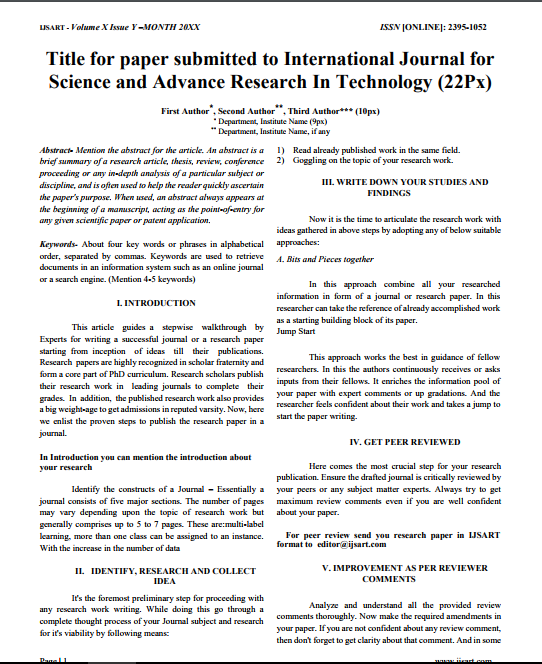
Download Paper Format
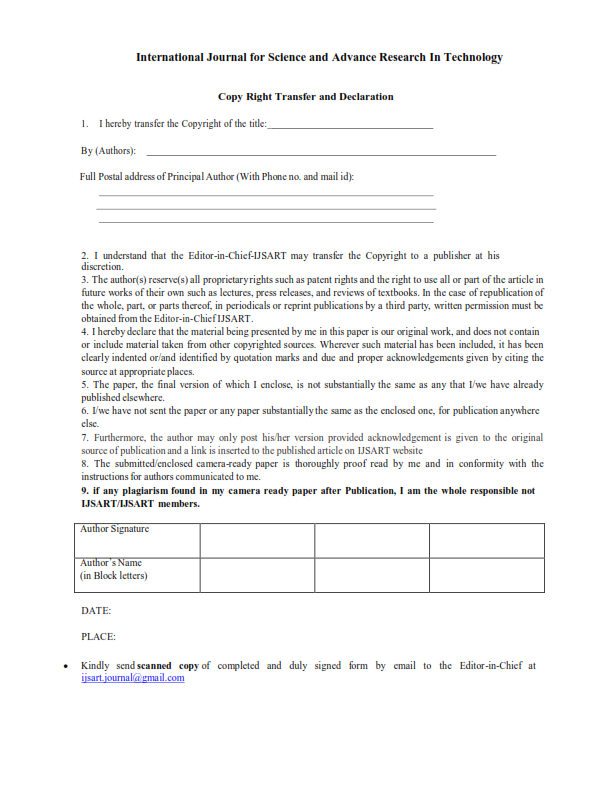
Copyright Form

Author(s)
Abstract
Cocopeat, Derived From Coir Pith, Has Emerged As A Sustainable Growing Medium In Soilless Farming Due To Its Excellent Water Retention, Aeration, And Eco-friendly Nature. It Provides A Stable Structure For Plant Roots, Reducing The Need For Excessive Watering While Preventing Soil-borne Diseases. However, Its High Lignin And Cellulose Content Slows Decomposition, Limiting Microbial Activity And Natural Nutrient Release. Since Cocopeat Alone Lacks Essential Nutrients For Long-term Plant Growth, It Is Often Enriched With Organic Amendments Like Compost, Vermicompost, Or Biofertilizers. These Additions Enhance Its Nutrient Profile, Promote Microbial Activity, And Improve Overall Plant Health. Beyond Agriculture, Cocopeat Plays A Crucial Role In Sustainability. Processing Coir Pith Into Cocopeat Reduces Waste From The Coconut Industry And Minimizes Environmental Pollution. Additionally, It Serves As An Eco-friendly Alternative To Peat Moss, Helping To Preserve Peatlands And Reduce Carbon Emissions. With Applications In Hydroponics, Greenhouse Farming, And Urban Agriculture, Cocopeat Is Becoming A Key Component Of Modern, Sustainable Farming. However, To Maximize Its Benefits, Proper Supplementation With Organic Matter And Nutrients Is Essential To Support Healthy Plant Growth And High-yield Production.
Keywords
Paper ID
IJSARTV11I4103374
Publication Date
April 28, 2025
Research Area
Computer Engineering