Impact Factor
Call For Paper
Volume 12 Issue 09
September 2026
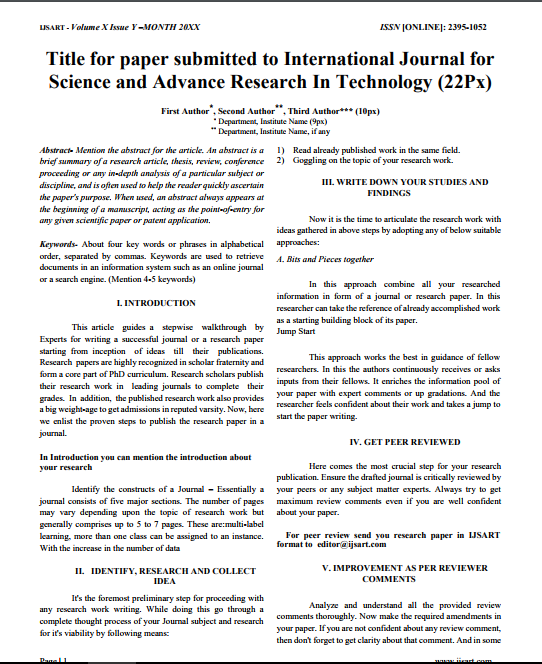
Download Paper Format
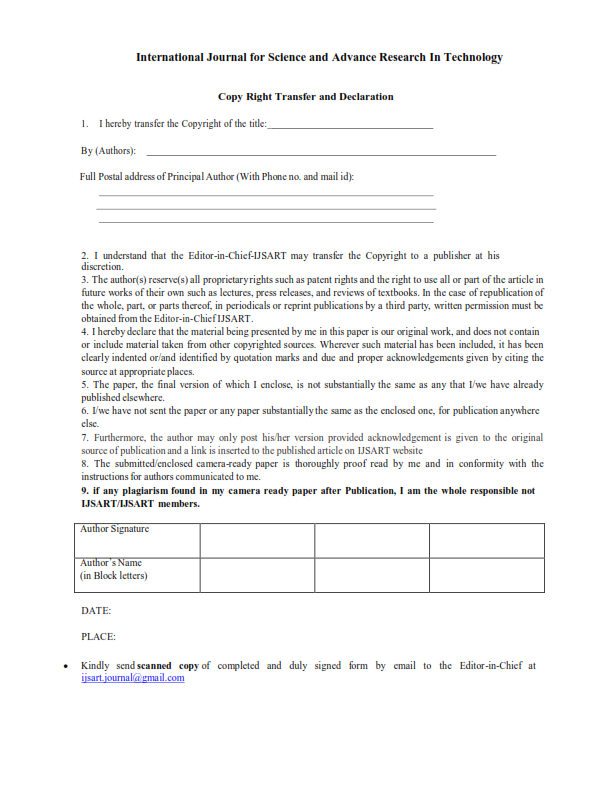
Copyright Form

Author(s)
Abstract
In This Study, An Experimental Investigation Was Carried Out On The Flexural Behaviour Of Glass Fibre Reinforced Polymer (GFRP) Reinforced Concrete Beams Incorporating Polypropylene Fibres And Waste Granite Aggregate. The Primary Objective Of The Research Was To Evaluate The Structural Performance, Strength Characteristics, And Crack Behaviour Of Sustainable Concrete Beams Reinforced With GFRP Bars. Waste Granite Aggregate Was Used As A Partial Replacement For Conventional Coarse Aggregate To Promote Sustainable Waste Management And Reduce Environmental Impact. Polypropylene Fibres Were Added To Improve The Ductility, Crack Resistance, And Overall Performance Of Concrete. GFRP Bars Were Adopted As Reinforcement Due To Their High Corrosion Resistance, Lightweight Nature, And Superior Tensile Strength Compared To Conventional Steel Reinforcement. Concrete Specimens Such As Cubesand Prisms Were Cast Added At Varying Percentages (0%, 0.5%, 0.75%) To Improve Ductility And Minimize Shrinkage Cracks. Waste Granite Aggregate, Obtained As A Byproduct Of Stone Cutting Industries, Was Partially Replaced With Natural Coarse Aggregates At 0%, 10%&20% By Volume To Improve Sustainability And Reduce Natural Resource Consumption.tested To Determine Compressive Strengthand Flexural Strength.This Study Presents An Experimental Investigation On The Flexural Behaviour Of Reinforced Concrete Beams Incorporating Glass Fiber Reinforced Polymer (GFRP) Bars, Polypropylene (PP) Fiber, And Partial Replacement Of Natural Coarse Aggregate With Waste Granite Aggregate. The Primary Objective Is To Evaluate The Improvement In Structural Performance, Particularly In Terms Of Load-carrying Capacity, Crack Resistance, Ductility, And Energy Absorption Characteristics Under Flexural Loading. A Series Of Beam Specimens Were Cast And Tested, Including Control Beams And Modified Beams With Varying Percentages Of Polypropylene Fiber And Waste Granite Aggregate Replacement. All Specimens Were Subjected To Two-point Loading To Simulate Flexural Conditions, And Their Structural Responses Were Recorded In Terms Of Load–deflection Behaviour, Crack Development, And Ultimate Failure Patterns. The Experimental Results Indicate That The Inclusion Of GFRP Reinforcement Significantly Enhances Corrosion Resistance And Increases Tensile Performance, While Polypropylene Fiber Contribute To Improved Crack Control And Post-cracking Behaviour. Furthermore, The Partial Replacement Of Natural Aggregates With Waste Granite Improves Sustainability Without Severely Compromising Mechanical Strength. The Combined Effect Of These Materials Leads To Enhanced Flexural Strength, Delayed Crack Propagation, And Improved Overall Ductility Of The Beam Specimens. The Study Concludes That The Synergistic Use Of GFRP Bars, Polypropylene Fiber, And Waste Granite Aggregate Can Be Effectively Adopted In Concrete Structures To Achieve Sustainable And High-performance Construction Materials With Improved Structural Efficiency Under Flexural Loading.
Keywords
Paper ID
IJSARTV12I6105674
Publication Date
June 11, 2026
Research Area
Civil Engineering