Impact Factor
Call For Paper
Volume 12 Issue 09
September 2026
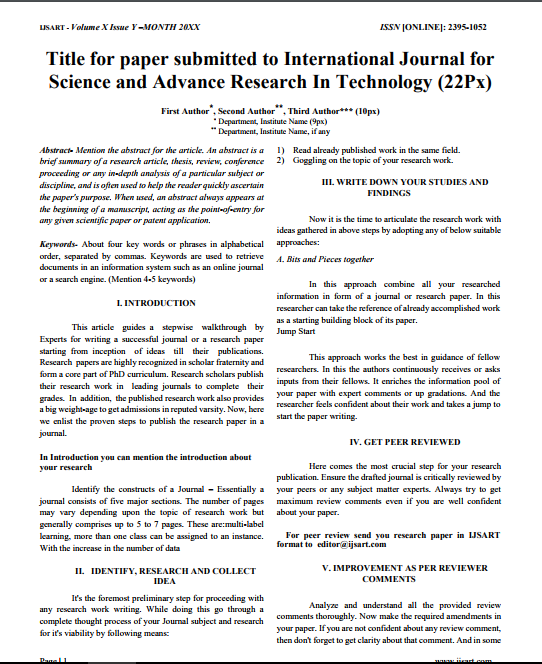
Download Paper Format
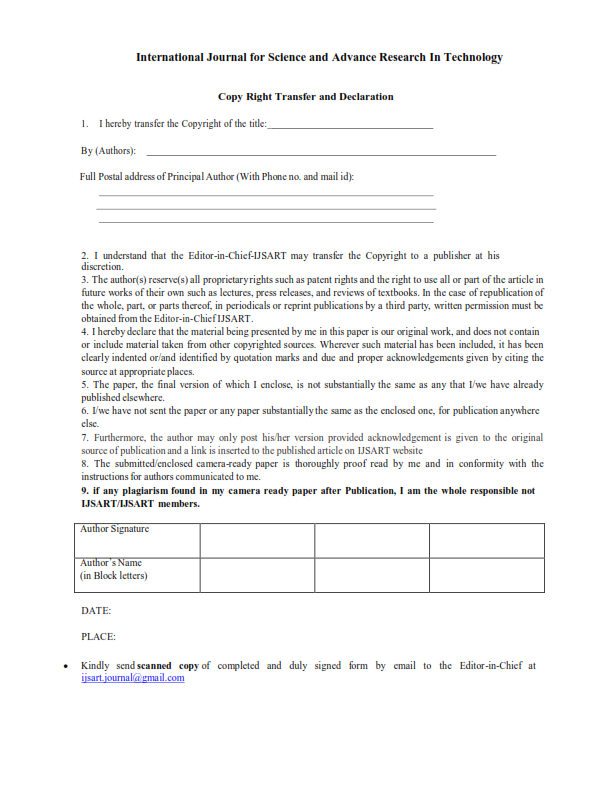
Copyright Form

Author(s)
Abstract
Understanding The Psychological Determinants Of Workforce Performance Has Become Increasingly Critical In Today's Competitive Organisational Landscape. This Study Examines The Relationship Of Emotional Intelligence On Employee Productivity, Incorporating Job Satisfaction As A Mediating Framework. A Structured Questionnaire Was Administered To 160 Employees Across Seven Functional Departments. The Instrument Measured Six Dimensions Of Emotional Intelligence Self-awareness, Self-regulation, Self-motivation, Empathy, Social Skills, And Adaptability Along With Ten Indicators Of Job Satisfaction And Eleven Parameters Of Employee Productivity, Using A Five-point Likert Scale. Statistical Tools Employed Include Percentage Analysis, Chi-Square Test, And Correlation. Chi-Square Test Results Confirmed Significant Associations Between Emotional Intelligence And Employee Productivity (p = .012), Emotional Intelligence And Job Satisfaction (p = .006), And Job Satisfaction And Employee Productivity (p = .021). Correlation Revealed Moderate Positive Relationships: Emotional Intelligence And Employee Productivity (r = .412), Emotional Intelligence And Job Satisfaction (r = .387), And Job Satisfaction And Employee Productivity (r = .356). The Findings Confirm That Emotionally Competent Employees Tend To Be More Satisfied With Their Work And Consequently More Productive. Practical Recommendations Are Drawn For Organisations Seeking To Improve Workforce Performance Through Emotional Competency Development And Job Satisfaction Enhancement.
Keywords
Paper ID
IJSARTV12I6105621
Publication Date
June 7, 2026
Research Area
Human Resorces