Impact Factor
Call For Paper
Volume 12 Issue 09
September 2026
Download Paper Format
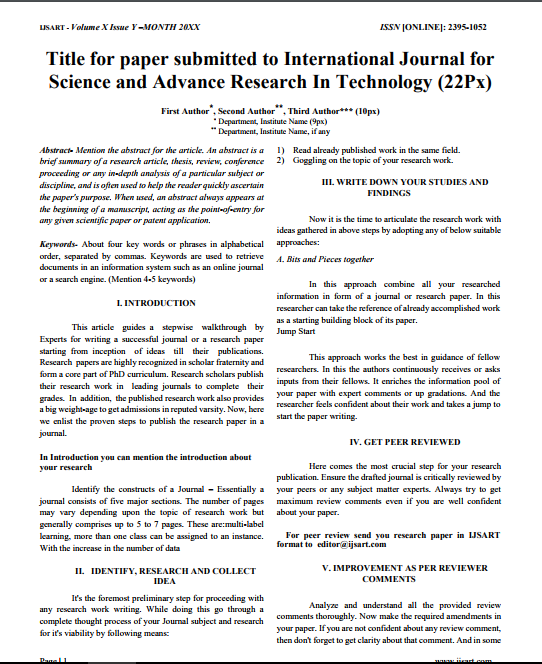
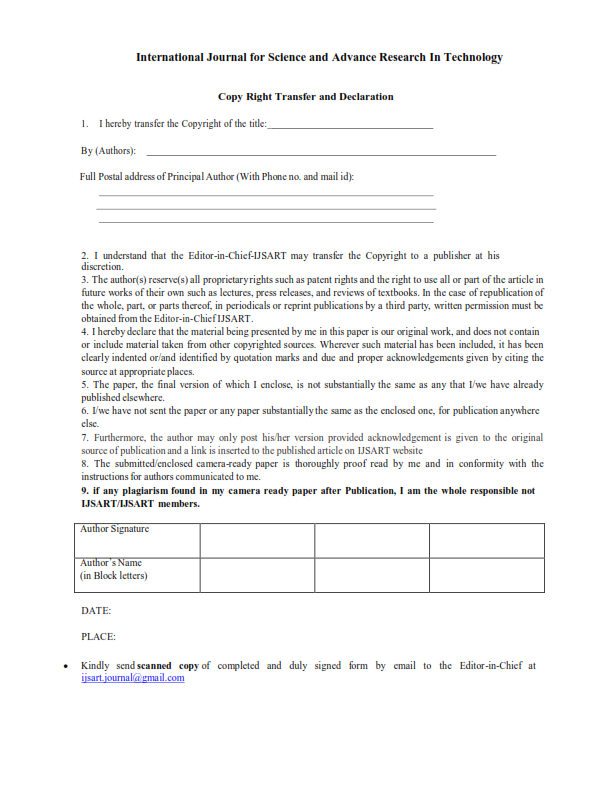
Copyright Form

Author(s)
Abstract
By Overcoming Physiological Challenges Such Short Gastric Residence Periods (GRT) And Unpredictably Long Stomach Emptying Times, Rate Controlled Oral Medication Delivery Devices Have Recently Made Scientific And Technological Strides (GET). Several Methods Are Now Used To Extend The GRT, Including Delayed Gastric Emptying Devices Such As Swelling And Expanding Systems, Polymeric Bio Adhesive Systems, Modified-shape Systems, High-density Systems, And Floating Drug Delivery Systems (FDDS), Also Known As Hydrodynamically Balanced Systems (HBS). The Two Approaches Are Taken In The Development Of FDDS By Creating Both Effervescent And Non-effervescent Floating Tablets With A Buoyancy Mechanism As Its Foundation. Drugs With Limited Solubility And Higher PH Levels Can Be Delivered By FDDS Because They Have A Restricted Window For Absorption In The Upper Gastrointestinal System, Are Unstable In The Lower Intestine Environment, And Have Local Activity. The Physiological And Formulation Factors That Affect Gastric Retention Time Are Included In The Most Recent Advancements In Floating Drug Delivery Systems. Additionally, Approaches To Formulating Single-unit And Multiple-unit Floating Systems, As Well As Their Classification And Formulation Aspects, Are Covered In Detail. The Application Of Floating Drug Delivery Devices And The Evaluation Criteria Are Also Summarised In This Paper. By Integrating IoT With Efficient Waste Segregation Mechanisms, This Project Aims To Revolutionize Waste Management In Metro Stations, Promoting Environmental Sustainability And Hygiene
Keywords
Paper ID
IJSARTV11I5103647
Publication Date
May 23, 2025
Research Area
Pharamcy