Impact Factor
Call For Paper
Volume 12 Issue 09
September 2026
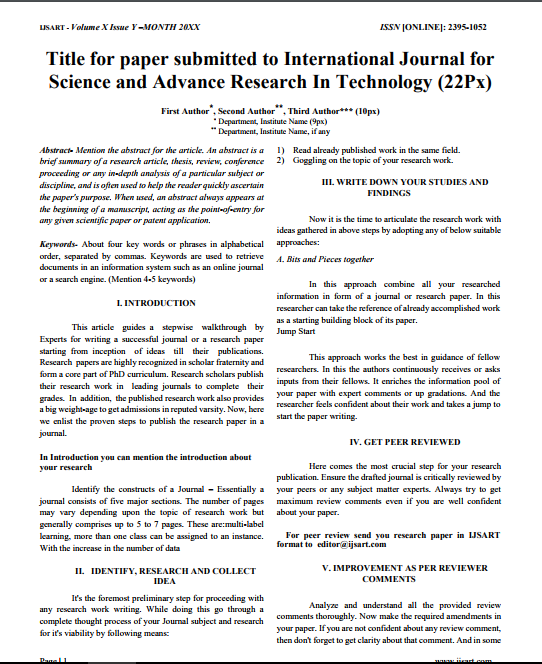
Download Paper Format
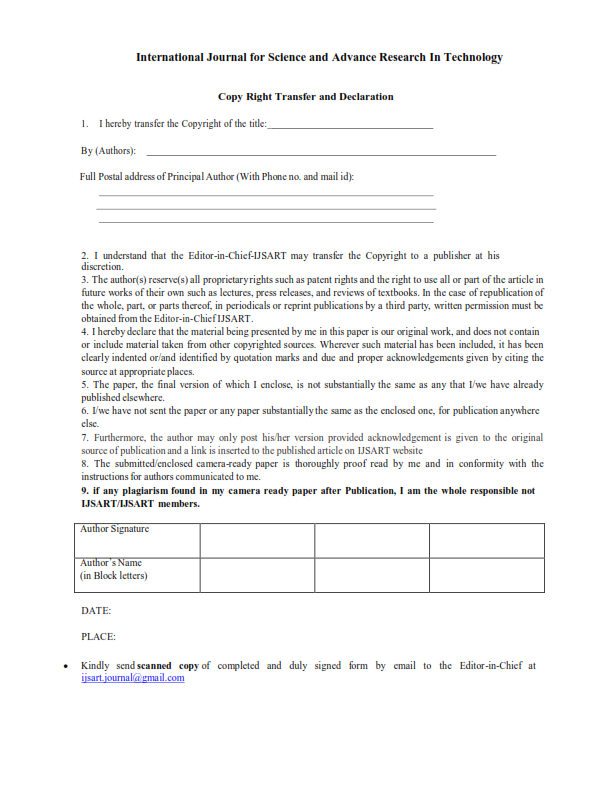
Copyright Form

Author(s)
Abstract
Traditional Phytotherapeutic Wisdom Constitutes An Invaluable Legacy Of Agrarian Societies In Bihar. This Investigation Was Carried Out To Systematically Record The Plant-based Medicinal Knowledge Of Indigenous Practitioners In Jehanabad, A District Of The Historic Magadh Zone. The District, Situated At 25°0'N To 25°28'N And 84°31'E To 85°08'E, Possesses Diverse Vegetation And Deeply Rooted Folk Healing Traditions. Extensive Fieldwork Was Performed Between January And October 2024 Covering 12 Villages Under Four Administrative Blocks: Jehanabad, Kako, Ghoshi, And Hulasganj. Data Acquisition Was Done Through Semi-structured Interviews, Focused Group Discussions, And Transect Walks With 28 Experienced Local Healers Comprising 21 Men And 7 Women In The Age Group Of 42-78 Years. The Survey Recorded 38 Therapeutic Species Distributed Across 26 Botanical Families. Fabaceae Emerged As The Most Represented Family With 5 Species, While Lamiaceae Was Second With 4 Species. Foliar Parts Accounted For Maximum Utilization (48.5%), Followed By Roots (18.2%) And Stem Bark (12.5%). Decoction And Topical Paste Were The Predominant Modes Of Drug Preparation. High Informant Consensus Factor Was Noted For Dermatological Ailments (0.86) And Digestive Disorders (0.82). The Highest Use Value Was Calculated For Azadirachta Indica (0.92) And Ocimum Sanctum (0.89). The Findings Confirm That Vaidyas Of Jehanabad Retain Profound Knowledge Of Herbal Medicine, Yet Intergenerational Transfer Is Weakening. Therefore, Immediate Documentation, Laboratory Screening, And Community-based Conservation Are Essential For Sustainable Use And New Drug Development.
Keywords
Paper ID
IJSARTV12I9105881
Publication Date
September 10, 2026
Research Area
Life Science Botany