Impact Factor
Call For Paper
Volume 12 Issue 09
September 2026
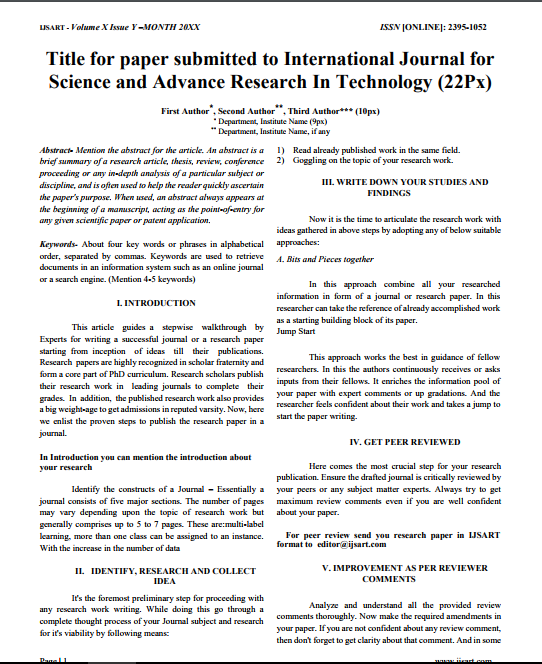
Download Paper Format
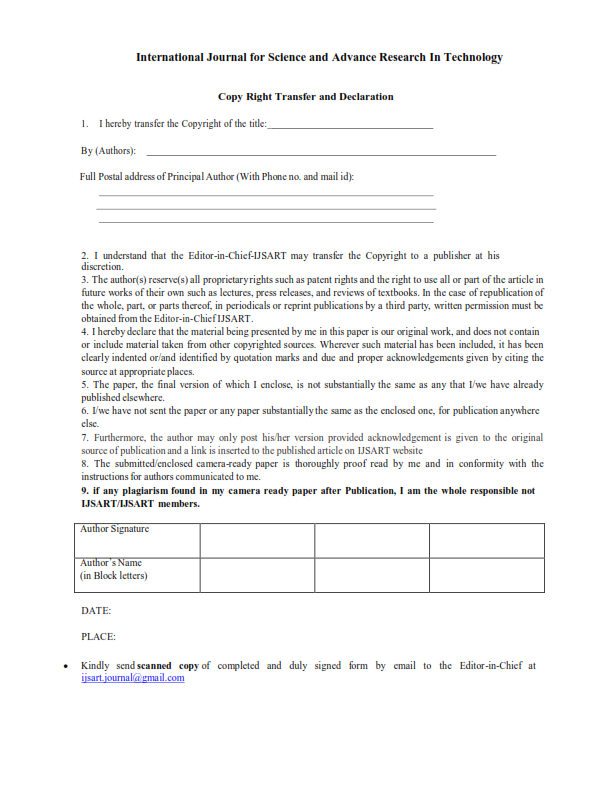
Copyright Form

Author(s)
Abstract
The Present Study Examined Emotional Intelligence, Educational Attitude, And Self-efficacy Among Tribal And Non-tribal College Students And Investigated Whether Self-efficacy Mediated The Relationship Between Emotional Intelligence And Educational Attitude. A Quantitative Comparative-correlational Design Was Employed With 220 College Students Aged 18–24 Years From Chhatrapati Sambhajinagar, Maharashtra, Comprising 110 Scheduled Tribe And 110 Non-tribal Students. Emotional Intelligence Was Measured Using The Mangal Emotional Intelligence Inventory, Self-efficacy Through The Self-Efficacy Scale (SES-SANS), And Educational Attitude Using C. Bhasin’s Educational Attitude Scale. Tribal Students Reported Significantly Higher Emotional Intelligence Than Non-tribal Students, Whereas Non-tribal Students Demonstrated Higher Self-efficacy And Educational Attitude. Emotional Intelligence Showed Significant Positive Correlations With Self-efficacy And Educational Attitude, While Self-efficacy Was Also Positively Associated With Educational Attitude. Mediation Analysis, Controlling For Community Group And Gender, Indicated That Emotional Intelligence Significantly Predicted Self-efficacy, Which In Turn Significantly Predicted Educational Attitude. The Bootstrapped Indirect Effect Was Significant, While The Direct Effect Of Emotional Intelligence Remained Significant, Indicating Partial Mediation. The Findings Suggest That Self-efficacy Represents An Important Psychological Mechanism Through Which Emotional Competence May Influence Students’ Educational Attitudes, While Community Differences Should Be Understood Within Broader Social, Cultural, And Educational Contexts. These Findings May Inform Culturally Responsive Student Support And Counselling.
Keywords
Paper ID
IJSARTV12I9105897
Publication Date
September 18, 2026
Research Area
Social Science (Psychology)