Impact Factor
Call For Paper
Volume 12 Issue 09
September 2026
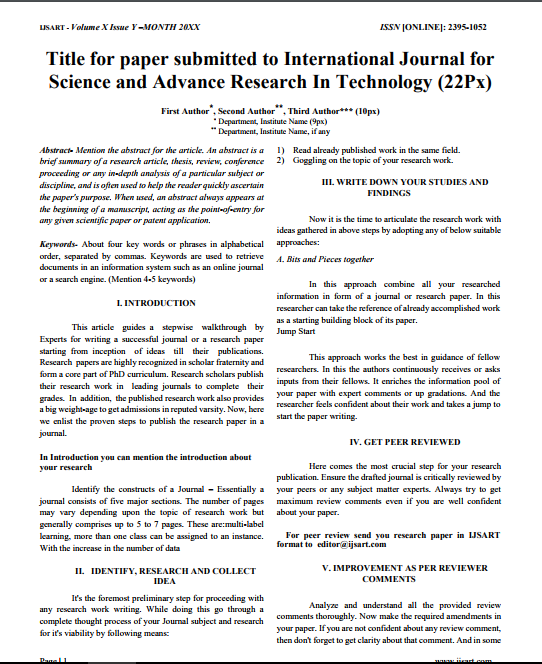
Download Paper Format
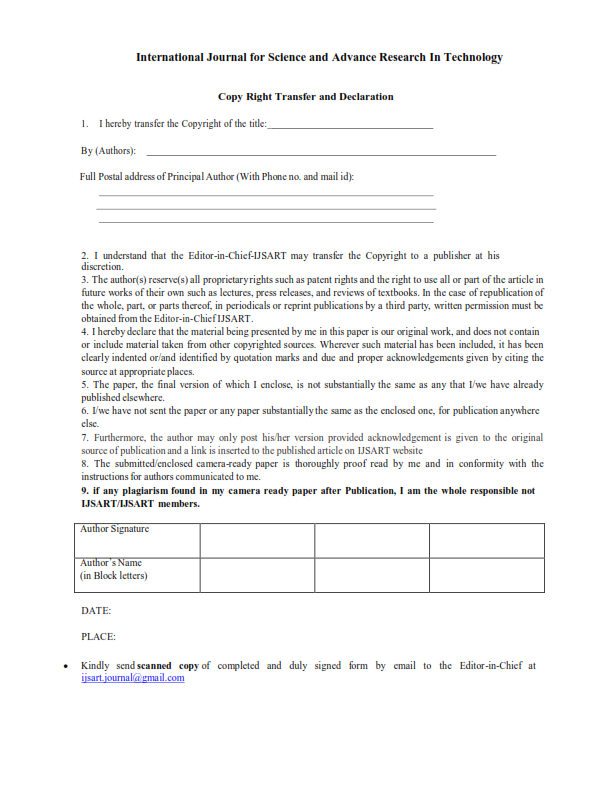
Copyright Form

Author(s)
Abstract
This Research Investigated The Effect Of Different Sources Of Water On The Compressivestrength Of Concrete. Water Samples From Different Sources Of Water Were Tested In Thelaboratory And Studied The Chemical Characteristics Of Water From Various Sources Of Water. 15×15×15 PCC Cube Samples Were Cast Of Ratio (1 : 2.73 : 2.80). 10% And 20% Of Cement Is Replaced By Fly Ash. While Mixing The Concrete Super Plasticizer Was Usedas Admixture Named As FOSROC Auzamix 400. Suitability Of A Particular Source Of Water Forcuring Can Be Checked By Casting Concrete Cubes Using Water And Comparing Its 7 Days, 14 Days And 28 Days Strength. Canal Water, Tap Water And RO Water Was Taken For Curing. Submerged Curing Method Adopted To Evaluate The Compressive Strength Of Concrete. Cubes Were Investigated After Subjecting Them To Curing Conditions. Testing Indicate That Submerged Curing Method Provide Best Results. Sources Of Water Used In Curing Have A Significant Impact On The Compressive Strength On The Resulting Concrete. The Result Shows That RO Water Curing Had The Highest Compressive Strength. RO Water Curing Was The Best As Compared To Canal Water And Tap Water. It Was Concluded That RO Water Could Be Used For Curing Because Of Canel Water Contains More Hardness And Chloride In The Sample Of Water
Keywords
Paper ID
IJSARTV11I5103514
Publication Date
May 9, 2025
Research Area
Civil Engineering