Impact Factor
Call For Paper
Volume 12 Issue 09
September 2026
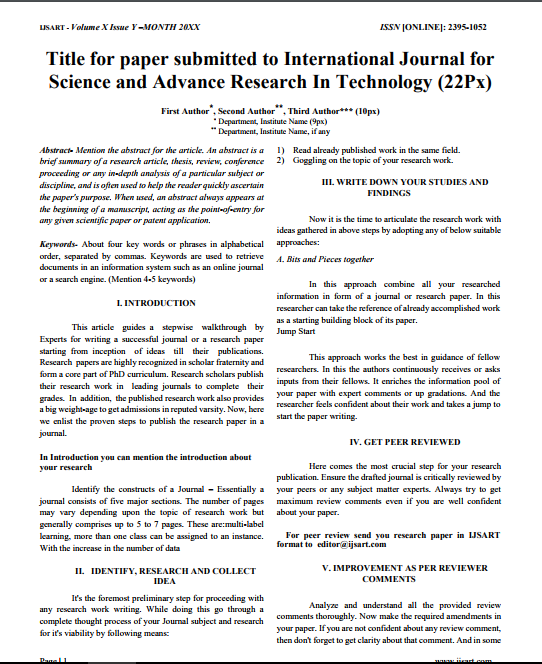
Download Paper Format
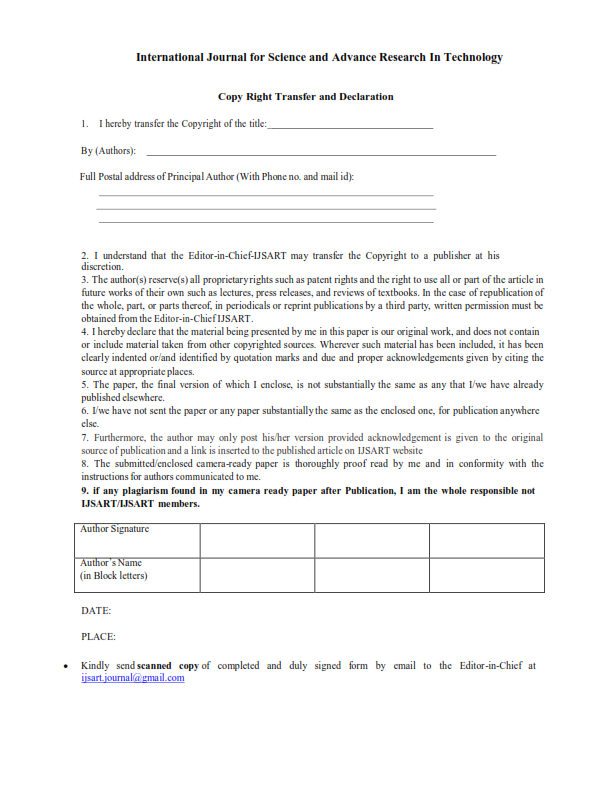
Copyright Form

Author(s)
Abstract
The Mechanics Of Composite Material Laid The Foundation For The Utilization Of Composites In Various Fields. The Demand Of Composite Materials Has Been Highly Augmented In Vehicle Industry. In This Work, I Investigated The Use Of Composite Material For Leaf Spring Of Light Weight Vehicles. For This Purpose, I Selected The Leaf Spring Of Suzuki Mehran Car For The Study. The Main Goal Of This E Ort Is To Obtain Optimal Geometry For Leaf Spring With Light Weight And That Can Sustain External Loading Without Failure. The Analytical And Numerical Analysis Were Performed On The Leaf Spring Under Static Loads. The Values Of Stress And Detection Obtained From Numerical Analysis Were Verified By Analytical Analysis While Optimization Was Performed On The Basis Of The Results Obtained From Static Stress Analysis To Decrease The Weight Of The Composite Leaf Spring While Conserving Its Strength. Also, The Dynamic Analysis Was Performed To Determine Maximum Cycles Of Fail Grounder Dynamic Loads. Moreover, Stresses Against Each Dynamic Load Were Also Determined. The Composites Used To Design Such Leaf Spring Were Kevlar/epoxy And E-glass/Epoxy. The Results Of Values Of Stresses And Detection Obtained From Analytical And Numerical Analysis For Composite Leaf Spring Were Compared And Are In Compliance. The Results Of Optimization Showed A Linear Variation Of Width With Length And Linear Variation In Thickness Along The Length From Eyes To The Axle Seat. The Proposed Optimization Method Can Be Efficiently Used To Reduce The Weight Of The Springs. However, The Modal Analysis Showed That Natural Frequency Of The Composite Leaf Springs Was Higher Than The Steel Leaf Spring. Finally, The Result Of Dynamic Analysis Shows That Kevlar/Epoxy Leaf Spring Has Better Tendency To Sustain Dynamic Loads Up To 90000 Cycles At The Speed Of 120 Km/h As Compared To E-glass/Epoxy Leaf Spring Which Can Sustain Dynamic Loads Up To 60000 Cycles At The Speed Of 120km/h. Furthermore, Comparison Based On Strength And Weight Among Both Conventional And Composites-based Leaf Spring Was Conducted.
Keywords
Paper ID
IJSARTV11I11104267
Publication Date
November 10, 2025
Research Area
Mechanical Design And Analysis