Impact Factor
Call For Paper
Volume 12 Issue 09
September 2026
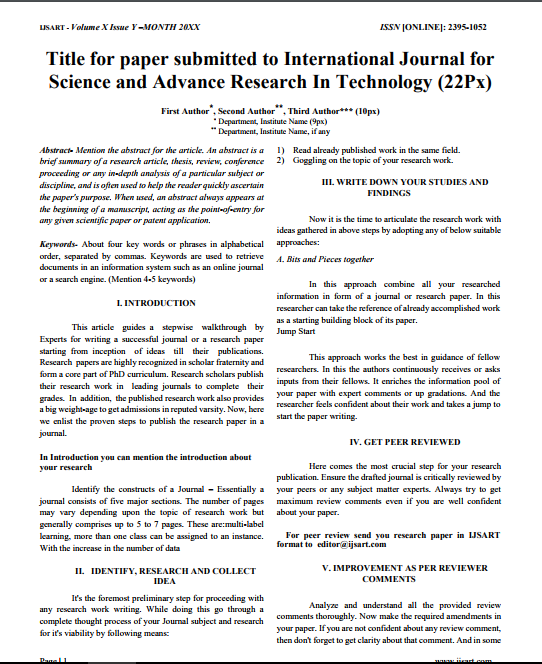
Download Paper Format
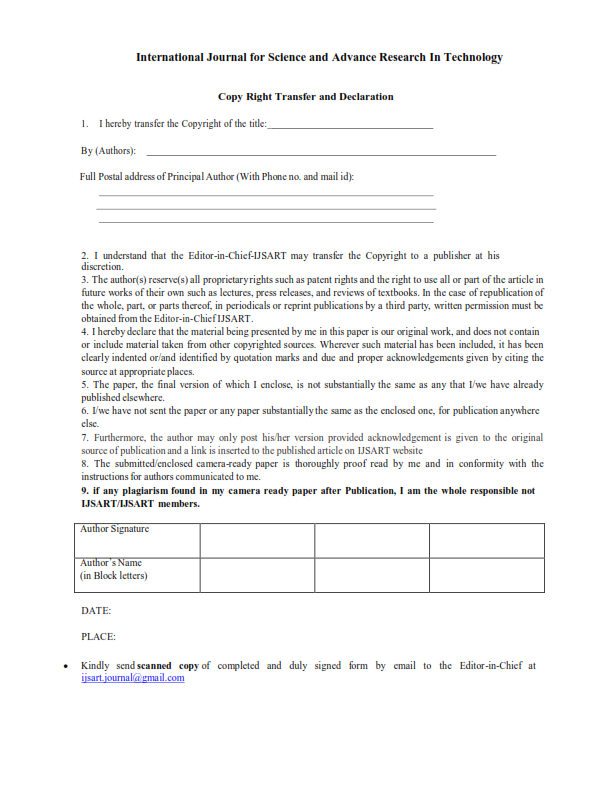
Copyright Form

Author(s)
Abstract
The Quality Of Drinking Water Supplied To Consumers Depends Not Only On Treatment Efficiency At The Water Treatment Plant (WTP) But Also On Conditions Within The Distribution System. In Many Indian Towns, Variations In Water Quality Are Observed During Distribution Due To Intermittent Supply And Increased Water Residence Time. This Study Evaluates The Stability Of Drinking Water Quality In The Shirpur Water Distribution System, Maharashtra. Water Samples Were Collected From The WTP Outlet And Household Taps In Selected Residential Areas And Analyzed For Key Physical And Chemical Parameters Using Standard Methods. The Results Were Compared With IS 10500 And WHO Drinking Water Standards. The Findings Indicate That Most Parameters Remain Within Permissible Limits; However, A Gradual Reduction In Residual Chlorine Was Observed Along The Distribution Network, Mainly Due To Increased Residence Time. Pipeline Leakages Were Found To Contribute Primarily To Water Losses And Reduced Supply Efficiency Rather Than Direct Deterioration Of Water Quality. The Study Highlights The Importance Of Regular Water Quality Monitoring, Effective Leakage Control To Minimize Water Loss, And Proper Maintenance Of Distribution Infrastructure To Ensure A Safe And Reliable Drinking Water Supply.
Keywords
Paper ID
IJSARTV12I1104514
Publication Date
January 20, 2026
Research Area
Civil Engineering