Impact Factor
Call For Paper
Volume 12 Issue 09
September 2026
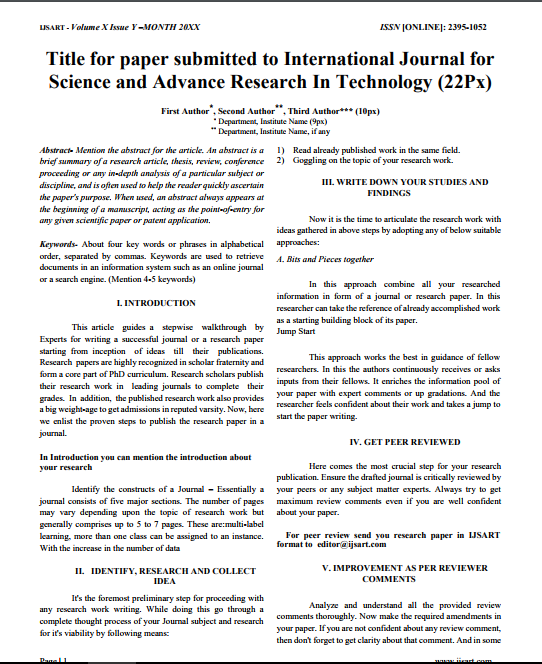
Download Paper Format
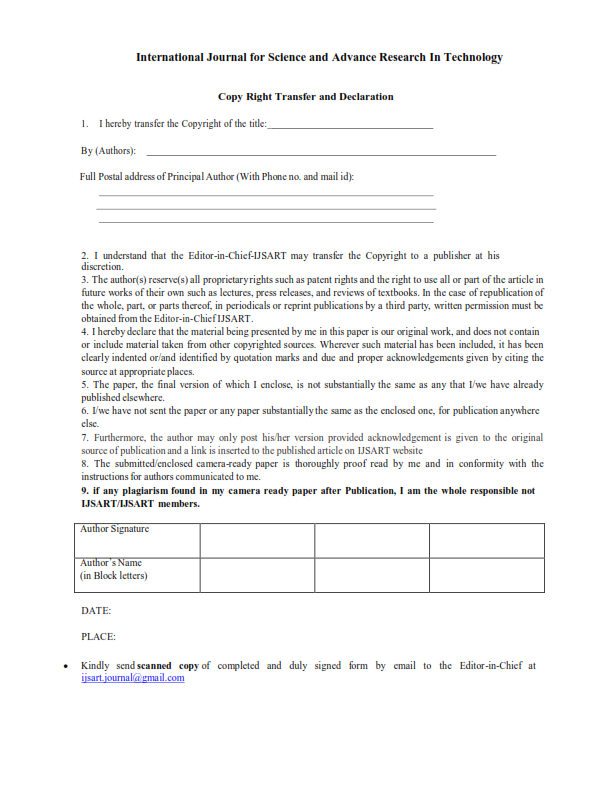
Copyright Form

Author(s)
Abstract
Heavy Metal Contamination In Wastewater Poses Significant Environmental And Health Hazards, Necessitating Efficient Removal Strategies. Industrial Discharges Contribute To The Accumulation Of Toxic And Carcinogenic Heavy Metals In Aquatic Ecosystems, Leading To Severe Consequences For Both Human And Marine Life. Among The Various Remediation Techniques, Adsorption Has Emerged As A Highly Effective, Cost-efficient, And Environmentally Sustainable Method For Heavy Metal Removal. This Study Explores The Potential Of Biochar Derived From Cowpea Husk Powder Through KOH-assisted Pyrolysis As A Novel Adsorbent For Heavy Metal Remediation. The High Surface Area And Enhanced Adsorption Capacity Of Biochar Significantly Improve Metal Removal Efficiency. Experimental Findings Demonstrate A 93% Removal Efficiency For Heavy Metals At An Initial Concentration Of 10 Ppm And PH 8. The Study Further Investigates The Impact Of Key Operational Parameters, Including Adsorption Time, PH Variation, Feed Concentration, And Adsorbent Dosage, On Metal Removal Efficiency. The Results Underscore The Viability Of Biochar As A Sustainable Alternative To Conventional Adsorbents For Wastewater Treatment, Offering A Promising Solution For Mitigating Heavy Metal Pollution.
Keywords
Paper ID
IJSARTV11I4102981
Publication Date
April 2, 2025
Research Area
Civil Engineering