Impact Factor
Call For Paper
Volume 12 Issue 09
September 2026
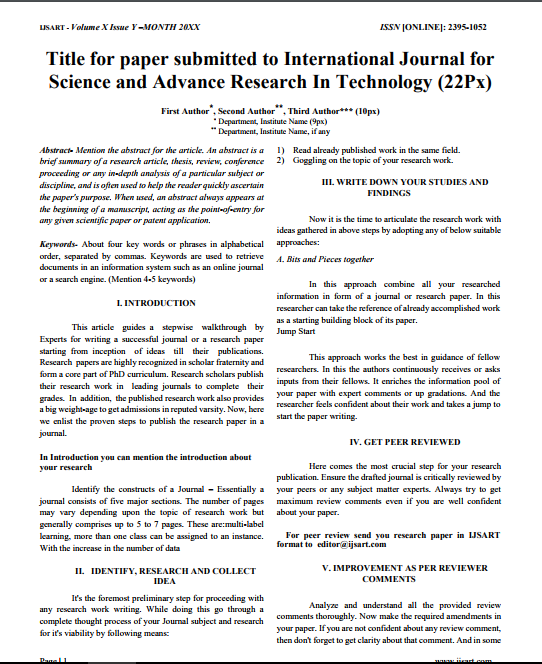
Download Paper Format
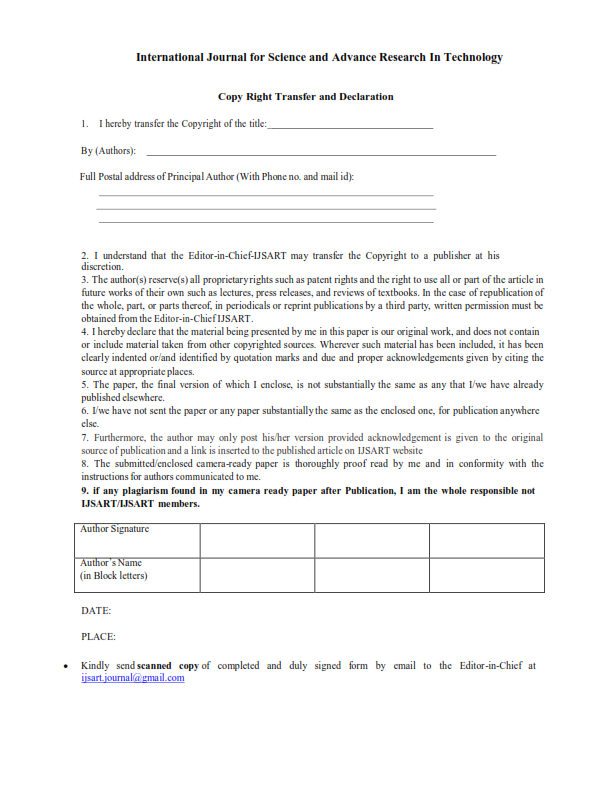
Copyright Form

Author(s)
Abstract
The Rapid Proliferation Of Highly Realistic Synthetic Media, Commonly Known As Deepfakes, Poses A Severe Threat To Digital Identity Verification And Media Authenticity. Current Deepfake Detection Methodologies Predominantly Rely On Single-modality Neural Networks Or Computationally Prohibitive Feature-level Fusion, Rendering Them Inefficient For Real-time Web Deployment. This Paper Surveys Existing Unimodal And Multimodal Deepfake Detection Frameworks And Proposes A Novel, Highly Scalable Alternative: A Decoupled, Tri-Modal Late-Fusion Architecture. The Proposed System Evaluates Media Through Three Parallel, Asynchronous Pipelines: A Spatial Engine Utilizing Error Level Analysis (ELA) Paired With A Convolutional Neural Network (CNN) For Compression Artifact Detection; A Biometric Engine Employing A ResNeXt-50 And LSTM Network For Temporal Facial Tracking; And An Auditory Engine Converting 1D Waveforms Into 2D Mel-Spectrograms For Synthetic Frequency Classification. By Intercepting Live WebRTC Streams Via A Zero-dependency DOM Injection Protocol, The Architecture Bypasses Traditional File-download Bottlenecks. Utilizing A Weighted Confidence Algorithm For Decision-level Fusion, The System Achieves A 97.8% Ensemble Accuracy And Gracefully Degrades In The Absence Of Specific Data Streams, Analyzing 5-second Media Buffers With A Maximum Latency Of 2.1 Seconds. This Survey Demonstrates That Decoupled, Parallel Modality Processing Offers A Vastly Superior, Fault-tolerant Framework For Commercial Deepfake Interception Compared To Traditional Synchronous Models.
Keywords
Paper ID
IJSARTV12I6105660
Publication Date
June 10, 2026
Research Area
Computer Engineering