Impact Factor
Call For Paper
Volume 12 Issue 07
July 2026
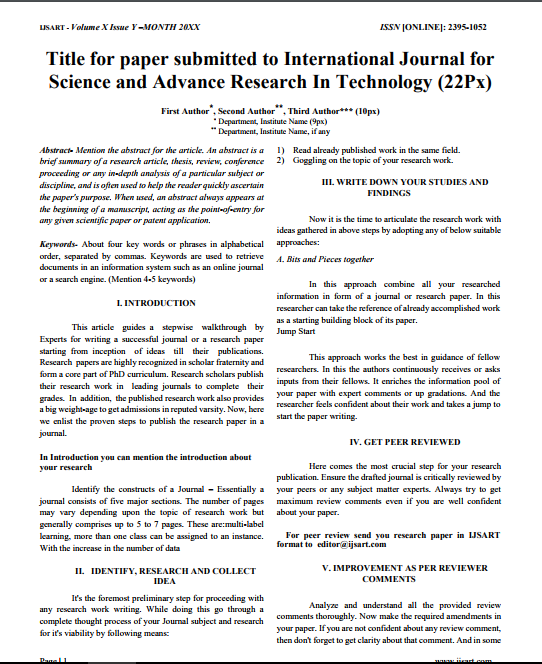
Download Paper Format
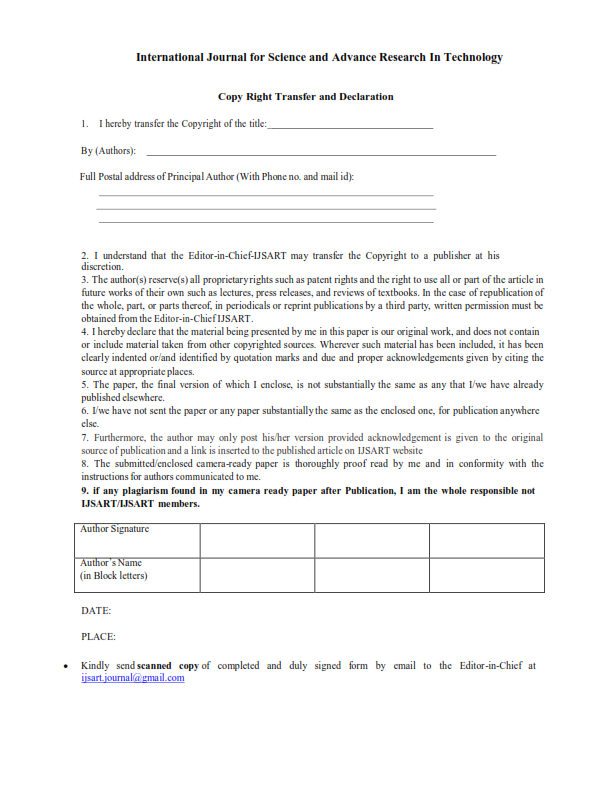
Copyright Form

Author(s)
Abstract
This Research Investigates Logistics And Supply Chain Management Practices Within A Technology Manufacturing Organization And Assesses Their Influence On Operational Efficiency And Customer Satisfaction Outcomes. Effective Supply Chain Operations Require The Coordinated Management Of Procurement Activities, Transportation Systems, Inventory Handling, Warehousing Facilities, And Distribution Networks. The Central Objectives Of This Study Are To Evaluate The Logistics Practices Adopted By The Selected Organization, Determine Their Effectiveness In Sustaining Service Levels, And Identify Operational Challenges That Limit Supply Chain Performance. Primary Data Were Gathered Through A Structured Questionnaire Administered To 70 Employees Working Across Logistics And Operations Departments. Secondary Data Were Derived From Academic Journals, Company Records, And Relevant Industry Publications. Statistical Analysis Using Percentage Analysis, Chi-square Test, And Correlation Analysis Was Employed To Interpret The Collected Data. The Findings Reveal That Effective Inventory Management, Transportation Planning, Digital Tracking, And ERP System Adoption Significantly Enhance Supply Chain Visibility And Operational Coordination. Key Challenges Identified Include Supply Chain Delays, Inadequate Automation, Communication Gaps Across Departments, And The Need For Greater Technology Investment. The Study Concludes That Efficient Logistics And Supply Chain Management Practices Lead To Reduced Operational Costs, Improved Delivery Performance, And Elevated Customer Satisfaction. Recommendations Include Increased Investment In Advanced Technologies, Enhanced Interdepartmental Communication, Strengthened Supplier Relationships, And Continuous Performance Monitoring To Optimize Logistics Operations.
Keywords
Paper ID
IJSARTV12I6105667
Publication Date
June 11, 2026
Research Area
Management