Impact Factor
Call For Paper
Volume 12 Issue 09
September 2026
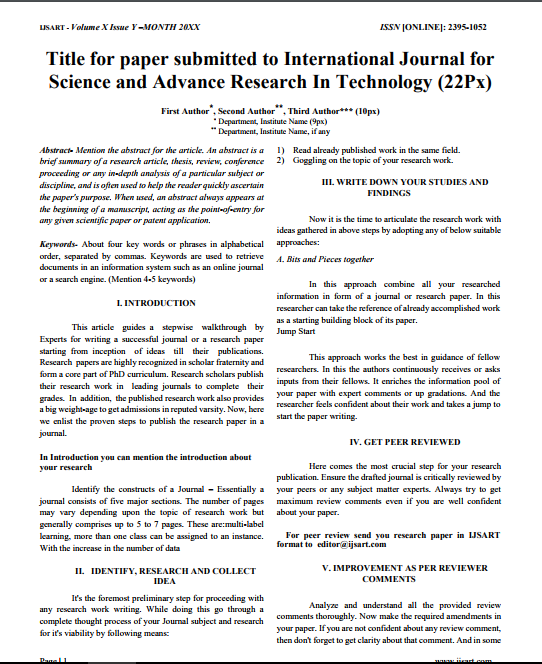
Download Paper Format
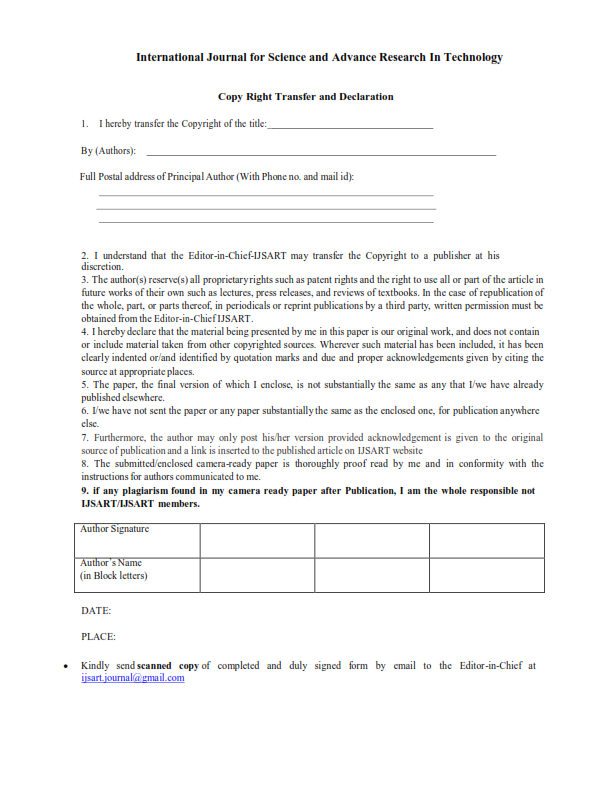
Copyright Form

Author(s)
Abstract
This Review Aims To Demonstrate The Combined Power Of Artificial Intelligence (AI) And Machine Learning (ML) With Green Chemistry, An Active Process For Designing Chemicals That Seeks To Suppress Or Eliminate Deleterious Substances Right From The Source. With The Gradual Shift In The Chemical Industry And Pharmaceutical Sectors Towards The Concept Of The Circular Economy, The Manual Process Required For The Optimization Of Chemical Synthesis Routes And Analysis Of Environmental Effects Has Become Inadequate In Dealing With Complex Regions Within Chemical Compounds. This Review Evaluates Various Computational Technologies, Particularly The Use Of ChemPager For Process Mass Intensity Prediction, MUCT-dc-V Algorithm For Optimal Retrosynthetic Analysis, And Accuracy In Carbon Footprint Predictions Offered By FineChem2. In Addition, It Also Weighs The Use Of Open-source Platforms In The Measurement Of Molecular Complexity And The "Five Pillars" Framework For Predictive Toxicity. This Review Brings Together Different Use Cases Of “artificial Intelligence” And Combines Them In An Innovative Manner By Highlighting The Ways In Which “green By Design” Intelligence Derived From These Use Cases Can Be Utilized To Optimize Chemical Structures By Removing Waste, Making Them Less Toxic, As Well As Making Them Energy-efficient. It Also Discusses Some Of The Key Issues That Exist In “black Box” Intelligence And The Energy Needs Of “computational Intelligence” Training.
Keywords
Paper ID
IJSARTV11I12104470
Publication Date
December 30, 2025
Research Area
Green Chemistry, Artificial Intelligence