Impact Factor
Call For Paper
Volume 12 Issue 09
September 2026
Download Paper Format
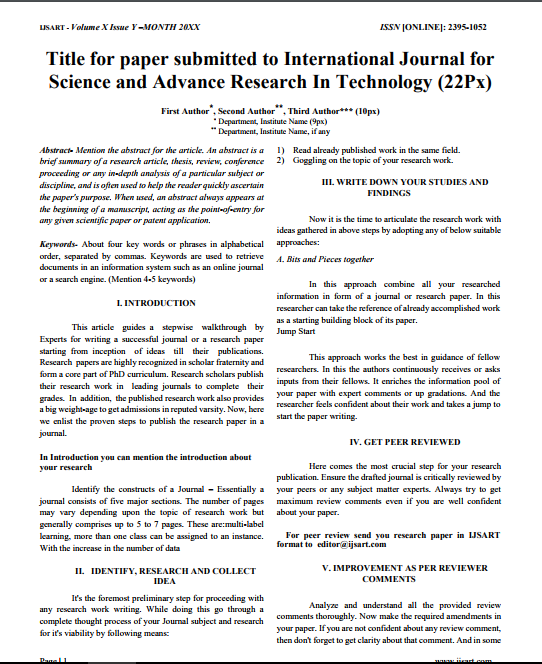
Copyright Form
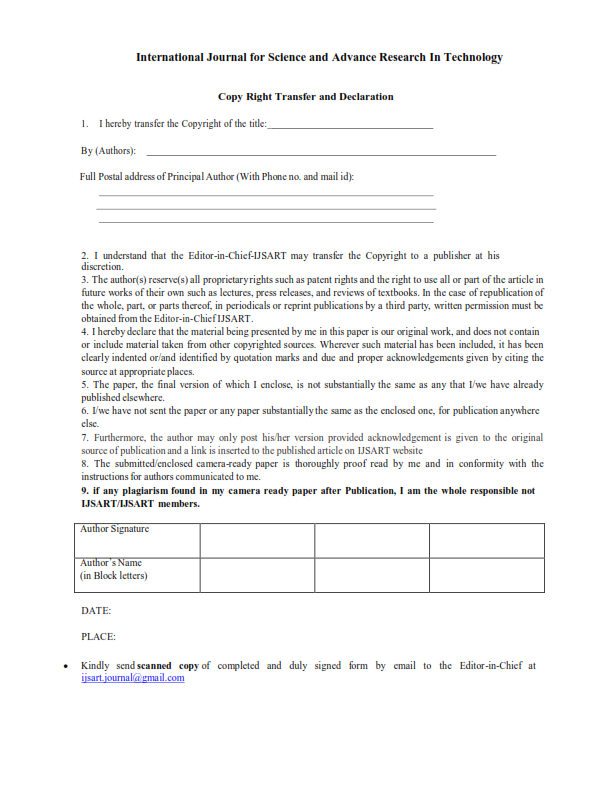

Author(s)
Abstract
Digital Banking Infrastructure Faces Escalating And Sophisticated Threats Including Phishing, Man-in-the-Middle (MITM) Interceptions, Session Hijacking, Replay Attacks, Credential Stuffing, And Denial-of-service (DoS) Campaigns. Conventional Single-factor Authentication Mechanisms Based On Username-password Pairs Offer Insufficient Protection, While Existing Multi-Factor Authentication (MFA) Implementations—such As SMS-based One-Time Passwords (OTP), Hardware Tokens, And Basic Biometric Checks—continue To Exhibit Exploitable Vulnerabilities. This Paper Proposes A Novel Five-layer Secure Authentication And Transaction Authorization Framework Tailored To Digital Banking Environments. The System Integrates: (i) Grassmann Manifold-based Facial Recognition For Biometric Enrollment And Live Verification, Replacing Hardware USB Tokens With A Mathematically Robust Biometric Factor; (ii) Multi-factor Login Combining Credential-based Authentication With Biometric Matching; (iii) Dynamic Per-session Cryptographic Key Generation Using SHA-512 With User-specific Salts; (iv) QR-code Least Significant Bit (LSB) Steganography For Covert Session Key Transmission To The User's Registered Email, Hiding Sensitive Token Data Within An Innocuous Carrier Image; And (v) Per-transaction Session Key Validation With Real-time Unauthorized-access Alerting. The Proposed Architecture Extends And Improves Upon The Secure Multi-Factor Authentication (SMFA) Framework By Sarower Et Al. [1] By Eliminating Physical Device Dependency, Adding Biometric Security, And Introducing A Banking-domain-specific Steganographic Session Key Channel. Security Analysis Via Burrows-Abadi-Needham (BAN) Logic Demonstrates Protocol Correctness. The Facial Recognition Module Achieves A 97.3% True Acceptance Rate (TAR) With A False Acceptance Rate (FAR) Below 0.8%. Steganographic Embedding Achieves A PSNR Of 43.2 DB, Well Above The 40 DB Imperceptibility Threshold. Total Authentication Pipeline Latency Is Approximately 2.3 Seconds On Standard Hardware.
Keywords
Paper ID
IJSARTV12I4105038
Publication Date
April 17, 2026
Research Area
Computer Science And Engineering