Impact Factor
Call For Paper
Volume 12 Issue 09
September 2026
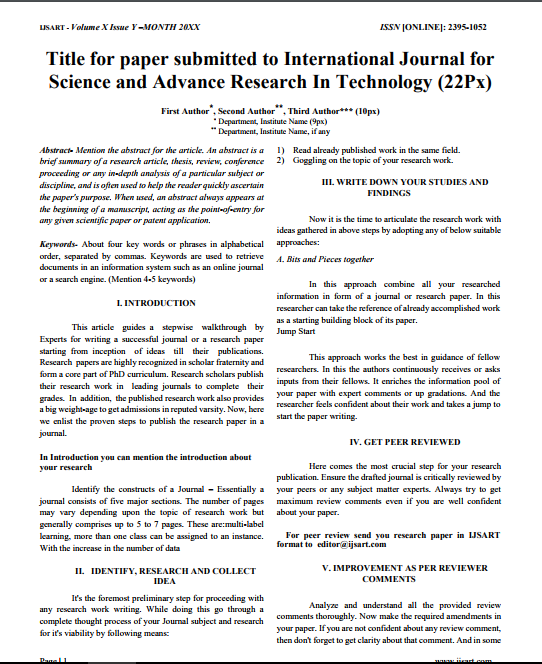
Download Paper Format
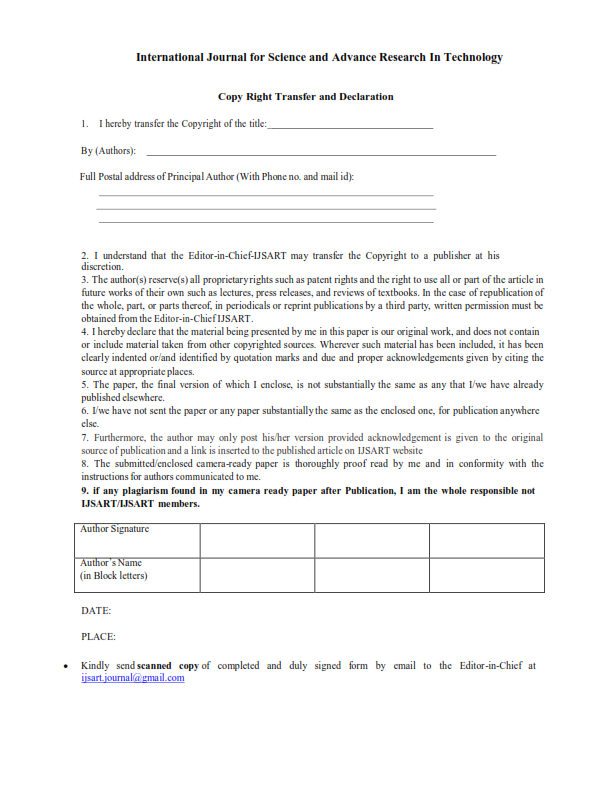
Copyright Form

Author(s)
Abstract
Distributed Denial-of-Service (DDoS) Attacks Represent A Significant Threat In Contemporary Network Security, Compromising The Availability And Integrity Of Services Across Diverse Platforms. These Attacks Overwhelm Target Networks With Substantial Traffic Volumes, Frequently Causing System Failures Or Rendering Services Unresponsive. As DDoS Attacks Continue To Increase In Scale And Sophistication, Conventional Detection Methodologies, Including Signature-based Systems And Threshold-based Approaches, Demonstrate Insufficient Effectiveness. These Traditional Methods Often Exhibit Elevated False Positive Rates And Detection Delays, Potentially Resulting In Considerable Damage Or Service Disruption Before Remedial Actions Can Be Taken. To Overcome These Limitations, This Paper Presents The Development Of An Adaptive Detection System (ADS) For Identifying And Mitigating Network DoS And DDoS Attacks. The Proposed System Employs Advanced Sampling Techniques And Machine Learning (ML) Algorithms To Perform Dynamic Network Traffic Analysis And Achieve More Precise Identification Of Malicious Patterns. In Contrast To Conventional Approaches, The Proposed System Demonstrates The Capability To Adapt To The Continuously Evolving Landscape Of Cyberattacks, Thereby Minimizing The Probability Of Undetected Attacks Or False Positives. The Research Concentrates On Determining The Upper Bounds Of DoS Attack Frequency And Duration, Particularly The Threshold Parameters At Which Systems Can Withstand Attacks While Maintaining Network Consensus. Through The Integration Of Adaptive Detection Capabilities, Reduced Computational Complexity, And Enhanced System Resilience, This Approach Presents A Viable Solution For Protecting Networks Against Increasingly Sophisticated DDoS Attacks.
Keywords
Paper ID
IJSARTV12I4105199
Publication Date
April 29, 2026
Research Area
CSE