Impact Factor
Call For Paper
Volume 12 Issue 09
September 2026
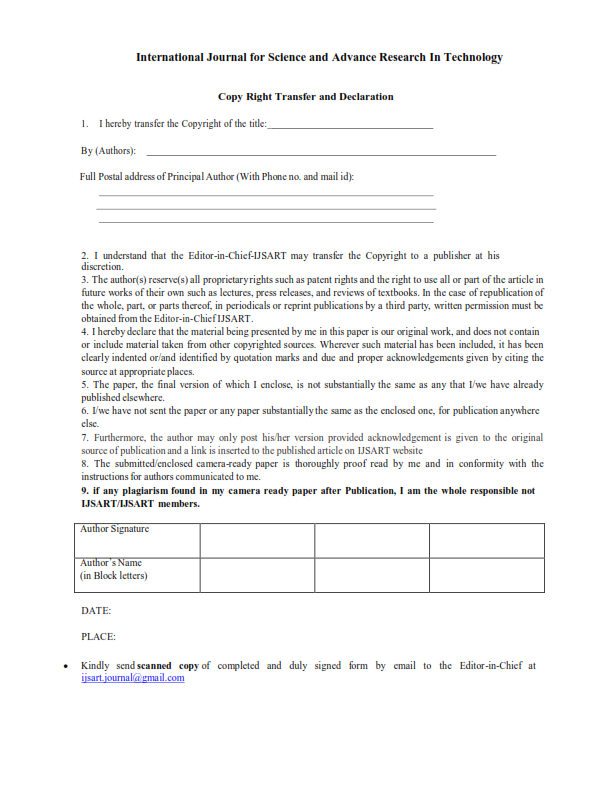
Download Paper Format
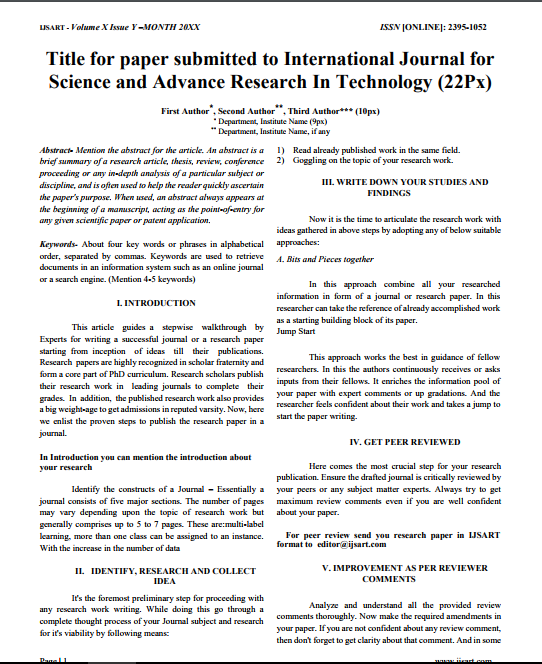
Copyright Form

Author(s)
Abstract
Cardiovascular Disorders Are Still Causing Morbidity And Mortality, Including Coronary Heart Disease, Structural Heart Disease With Congenital Heart Defects As Well As Atrial fibrillation. Such Measures Would Be Critical For Effective Early Diagnosis And Risk Stratification That Could Impact On Mortality And long-term Complications. Traditional Diagnosis Methodologies, Including Electrocardiography (ECG), Echocardiography And Clinical Risk Scoring Systems, Are Subject To The Experience Of Clinicians With The Underpinning Knowledge That Human Expert May Not Be Sufficient To Model Complex Nonlinear Interactions As They Exist Between Many of The Aforementioned Variables. In Recent Years, Artificial Intelligence (AI), And in Specific Machine Learning (ML), Deep Learning (DL) And Explainable AI (XAI) Have Shown Promising Results In Providing Diagnosis And Prognosis Of The Pathologies Of Cardiovascular Diseases. Ensemble Learning And Hybrid Optimization Methods, as Well As ECG-based Deep Learning Models Provided High-predictive Performance. In Addition, Explainable Systems Based On SHAP and LIME Increase Interpretability And Clinical Trust. Nevertheless, Several challenges Must Be Addressed Such As Data Imbalance, Poor Generalization Ability, Little Multi-center Validation And Non-transparency. This Review Offers An Extensive Overview Of Existing AI Approaches For Predicting Heartdisease Covering Their Techniques, datasets, Performance Metrics, Comparative Studies, Challenges And Future Work Needed For Enabling Clinically Commercialized AI Models.
Keywords
Paper ID
IJSARTV12I2104584
Publication Date
February 16, 2026
Research Area
Artificial Intelligence And Data Science